Levy Adjustment Redirects Funds from Older to Younger Apprentices
Plans to increase costs for over-25 apprenticeships by 25 percent seek to steer employers toward younger hires following a decade of declining youth starts.
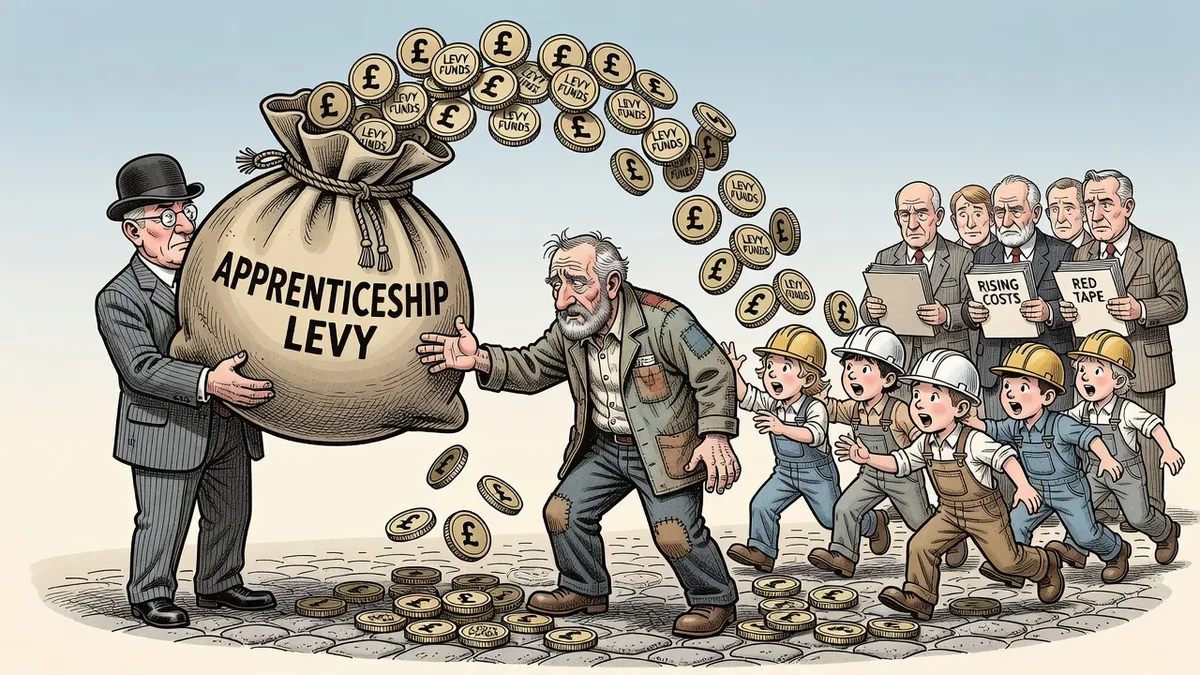
The government plans to increase the cost of training workers over 25 by 25 percent under the apprenticeship levy, with the explicit aim of steering employers toward younger recruits.
Levy funds would cover the full cost for those under 25 but only 75 percent for older workers. This adjustment follows a 40 percent decline in youth apprenticeship starts over the past decade and the identification of one million 16- to 24-year-olds outside education, employment or training.
Funding Reallocation Mechanics
Ministers expect the change to rebalance a system where over-25s already account for more than half of new enrolments. The proposal forms part of the response to the Milburn review and accompanies a £3.3 billion commitment to deliver 50,000 additional young apprenticeships plus a £2,000 hiring payment for small firms.
Employers across manufacturing, the CBI and chambers of commerce have stated that the measure will not expand total training volume. It will instead force businesses to choose between age groups within fixed budgets already strained by higher national insurance contributions and energy costs.
Evidence of Prior Shortfalls
The foundation apprenticeship scheme recorded just 160 enrolments in its first eight months against a target of 30,000 over the current parliament. Past attempts to redirect the £4 billion annual levy have produced similar patterns of budget cuts followed by reallocation rather than net growth in places.
Business representatives note that adult training supports entry-level roles and mid-career adaptation, particularly as workplace demands shift. Restricting access for older workers removes flexibility without addressing the underlying shortage of training capacity.
Institutional Patterns
The approach treats the levy as a fixed pool that can be rationed by administrative rule rather than expanded through higher employer participation or reformed delivery. Successive governments have adjusted eligibility and funding shares while youth unemployment metrics and overall apprenticeship numbers remain below historical benchmarks.
Employers have consistently requested reduced wider business costs and greater spending discretion instead of new price signals that penalise one cohort to subsidise another. The current design continues the cycle of targeting symptoms through fiscal tweaks while core constraints on skills supply persist.
This episode illustrates how UK skills policy repeatedly substitutes internal redistribution for measures that would increase the total number of training opportunities available to employers and workers alike.
Commentary based on Higher training costs for older workers risks plan to tackle youth jobs crisis, employers say by Richard Partington on the Guardian.
← Back to commentary