London Raids Target Network Supplying Staged Evidence for Bangladeshi Asylum Claims
Arrests expose a group charging up to £4,500 for fake photos and letters supporting sexuality-based claims, prompting review of over 100 applications previously advanced through weak verification.
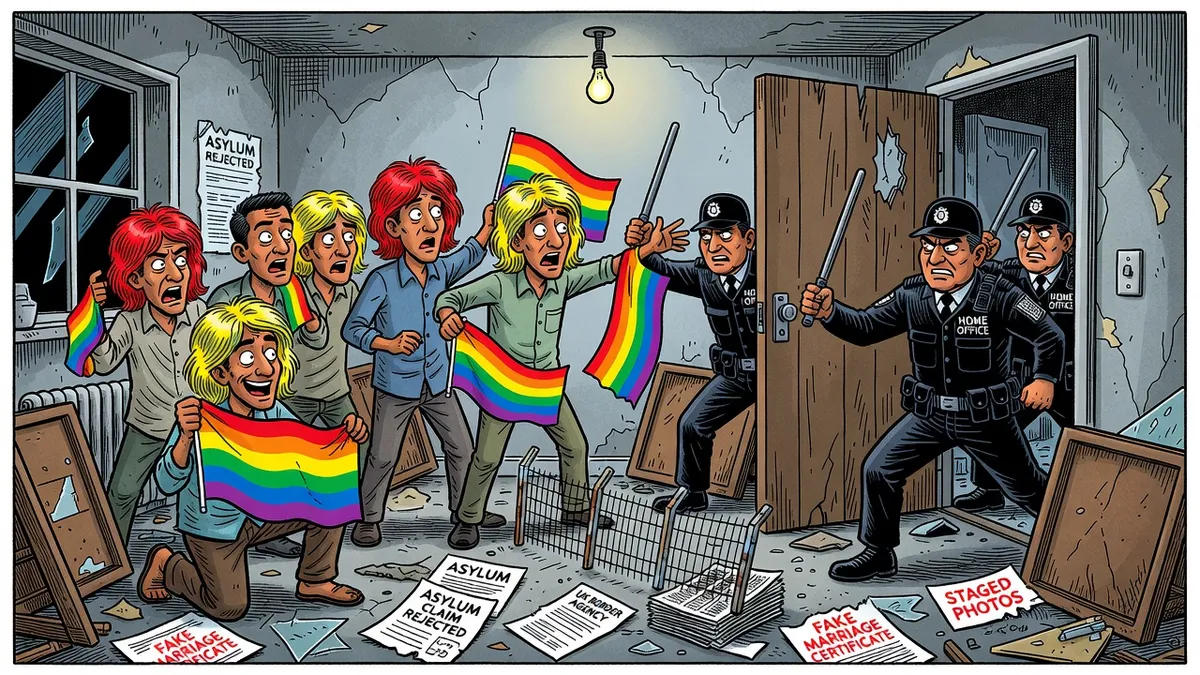
The arrests of three individuals in London expose how fabricated personal narratives can penetrate the UK’s asylum process with minimal initial detection. Home Office officers seized phones, cash and jewellery during raids targeting a network that charged migrants up to £4,500 for staged photographs, fake letters and invented relationships. The operation focused on Bangladeshi men who claimed fear of persecution based on sexuality.
More than 100 linked claims are now under review. Some of these applications would have been granted without the intervention. Immigration judges had already flagged evidence from the Apanjon group in Whitechapel as unreliable in earlier cases, including the use of staged event photographs.
Verification Shortfalls
Caseworkers identified patterns only after repeated submissions raised flags. The group allegedly stepped in after initial claims on political grounds failed, introducing sexuality assertions years later. One applicant waited nine years before raising the issue.
This sequence reveals that initial screening relies heavily on self-reported information and third-party letters. When those letters originate from organisations later tied to the claims, the verification loop collapses.
Institutional Response
Home Secretary Shabana Mahmood condemned the fraud and promised prosecutions. Two earlier arrests occurred in May following a separate BBC investigation into similar tactics at another community group. Those groups closed or faced scrutiny only after media exposure.
The pattern shows enforcement action follows public reporting rather than proactive system design. Officials now face the task of reassessing claims that passed earlier stages.
Broader Process Weakness
Dozens of applications were supported by identical methods: staged club photographs, friendship letters and organisational endorsements. The same approach appeared across separate London-based operations. Migrants interviewed at one event openly stated no genuine participants were present.
Such organised fabrication succeeds when decision-making depends on unverifiable personal testimony without consistent cross-checks. The financial incentive of £1,000 to £4,500 per case sustains the networks that supply the required material.
Britain’s asylum framework continues to process high volumes while lacking mechanisms to exclude coordinated deception at scale. The current reviews and arrests address symptoms after claims have already advanced, leaving the underlying verification gaps intact.
Commentary based on Three arrested after raid on gang accused of helping migrants pretend to be gay to get asylum at BBC.
← Back to commentary