London's Native Population Plummets 48 Points Uncontested
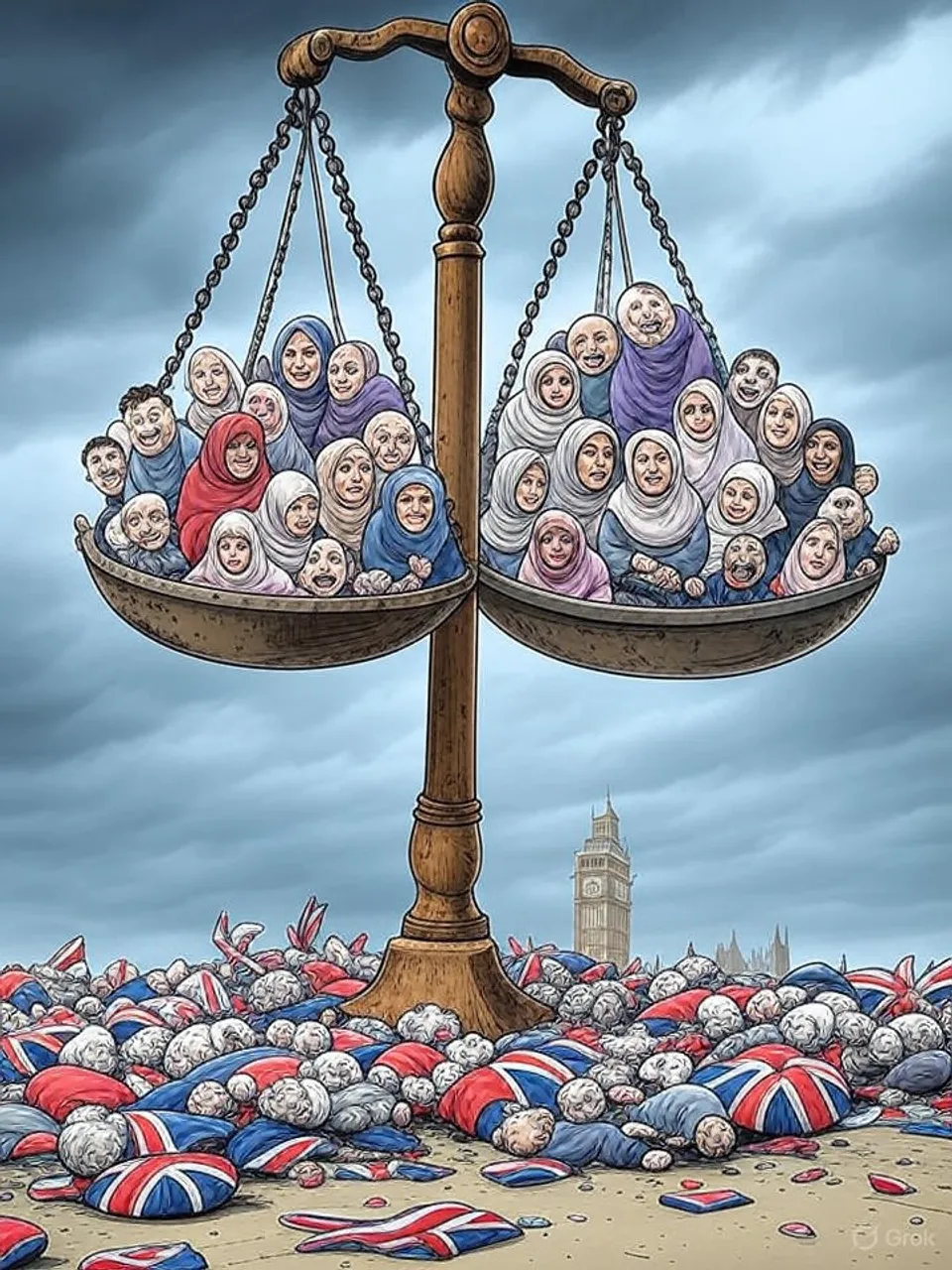
From 85% white British in 1975 to 37% today
London's white British population share collapsed from 85% in 1975 to 37% now, a peacetime shift unmatched without conquest. Policy failures across governments enabled it, eroding cohesion without public consent.
White British residents comprised 85% of London’s population in 1975. Census data now records 37% in 2021, a drop continuing into 2025. No election mandated this shift.
Official statistics confirm the trajectory. The Office for National Statistics tracks white British as 59.8% of England and Wales in 2001, falling to 74.4% nationally by 2021. London’s concentration of change outpaces the rest.
High migration drives the numbers. Net inflows hit 944,000 in 2024 alone, with London absorbing disproportionate shares through work, study, and family routes. Small boat arrivals, at 45,659 last year, add to the pressure despite policy rhetoric.
Successive governments enabled this. Labour’s 1997-2010 expansion of visas quadrupled non-EU entries yearly. Conservatives pledged tens of thousands caps in 2010, then overshot to record highs by 2022.
No party reversed course. Post-Brexit points systems slowed some work visas, yet overall net migration fell only two-thirds from peaks while asylum claims soared to 110,051. Outcomes defy stated controls.
Cultural Markers Fade
Tower Hamlets exemplifies the change. Once Cockney heartland, it flies Palestine flags from lamp posts amid 35% white British residents. Local elections reflect ethnic bloc voting, diluting historic identities.
Phnom Penh’s parallel underscores rarity. That city saw 80% population turnover post-Khmer Rouge evacuation. London’s peacetime equivalent lacks conquest or expulsion—purely policy-led influx.
Historical peacetime precedents falter. New York and Buenos Aires built on deliberate settler waves. London absorbed arrivals without comparable public consent or infrastructure scaling.
Strain on Cohesion Emerges
Public services buckle under growth. Housing waits stretch to decades in boroughs like Newham, where white British fell below 20%. NHS pressures mount as population density hits 5,700 per square kilometer.
Trust erodes accordingly. Polls show 60% of Britons view immigration levels as too high, per Ipsos. Yet Westminster ignores signals, prioritizing international obligations over domestic capacity.
Cambodia’s lesson applies. Prosperity masks demographic grief there, Vannak noted. UK’s stagnating productivity—1.3% annual since 2008 versus 2.2% pre-2008—amplifies risks if growth stalls.
Accountability gaps persist. Ministers across parties announce white papers and Rwanda schemes, then deliver partial removals of 10,000 foreign offenders amid 53,298 missing illegals. Officials face no reckoning.
This reveals institutional detachment. Demographic policy operates on autopilot, detached from voter mandates or capacity audits. Londoners inherit a transformed city without agency.
The pattern signals deeper decline. Uncontrolled change frays the social fabric successive governments swore to preserve. Britain remakes itself piecemeal, leaving natives as minorities in their capital—and accountability nowhere in sight.
Commentary based on London’s demographic change is unprecedented in peacetime by Sean Thomas on The Telegraph.