Mahmood Exempts Care Workers From Extended Settlement Periods
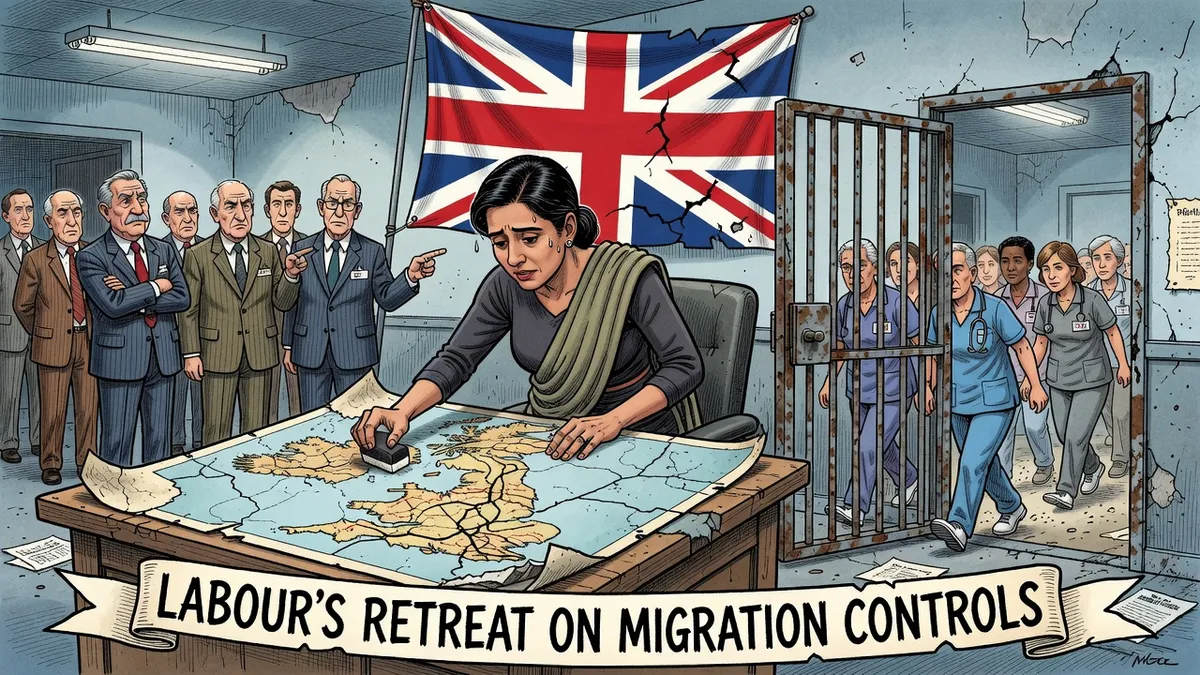
Home Office retreats on care sector timelines after union pressure but retains retrospective extensions for lower earners and irregular arrivals.
500,000 migrants face longer waits while 1.4 million from recent surge retain five-year eligibility
The home secretary has carved out an exemption allowing an estimated 280,000 care workers and their dependants to apply for indefinite leave after five years. Most other changes announced last year remain in place, including ten-year waits for those earning under £50,000 and up to thirty-year delays for irregular arrivals.
Home Office figures indicate roughly 500,000 migrants will face longer qualifying periods under the revised rules. At the same time, 1.4 million of the 1.9 million arrivals during the recent legal migration surge will still qualify after the original five-year term.
Selective Adjustments
The exception for care workers followed direct intervention from health unions and cabinet colleagues including Angela Rayner. Lower earners in other sectors, including some public service roles outside the protected categories, now face doubled timelines. Highest earners above £125,000 retain a three-year route.
Refugees face a baseline ten-year wait, with further extensions for those accessing public funds or arriving without designated legal routes. These distinctions create multiple tiers without addressing the underlying volume of inflows.
Retrospective Application
Rules will apply changes to people already resident, a step the Law Society warned undermines legal certainty. Labour MPs including Diane Abbott and Abtisam Mohamed flagged risks of repeating earlier administrative failures that left long-term residents without status.
Business organisations noted the retrospective element will complicate retention in sectors reliant on skilled worker visas. The CBI stated the narrow exemption leaves higher costs concentrated on a small number of employers without resolving the original policy objective.
Persistent Patterns
Governments since the 2010s have repeatedly announced tighter settlement criteria only to adjust them under operational and political pressure. The current framework continues this cycle, preserving automatic paths for the largest recent cohort while extending waits for smaller groups.
Ordinary citizens experience the results through sustained pressure on housing, public services and wages in lower-skilled segments. Institutional capacity to enforce consistent rules across changing administrations remains limited.
The adjustments confirm that settlement policy functions through case-by-case exemptions rather than uniform application. This approach sustains high inflows while fragmenting the system into categories that prove difficult to administer or defend over time.
Commentary based on Shabana Mahmood softens immigration plans in face of cabinet backlash by Rajeev Syal on the Guardian.
← Back to commentary