Mandelson Texts Euro Bailout to Epstein Day Before Announcement
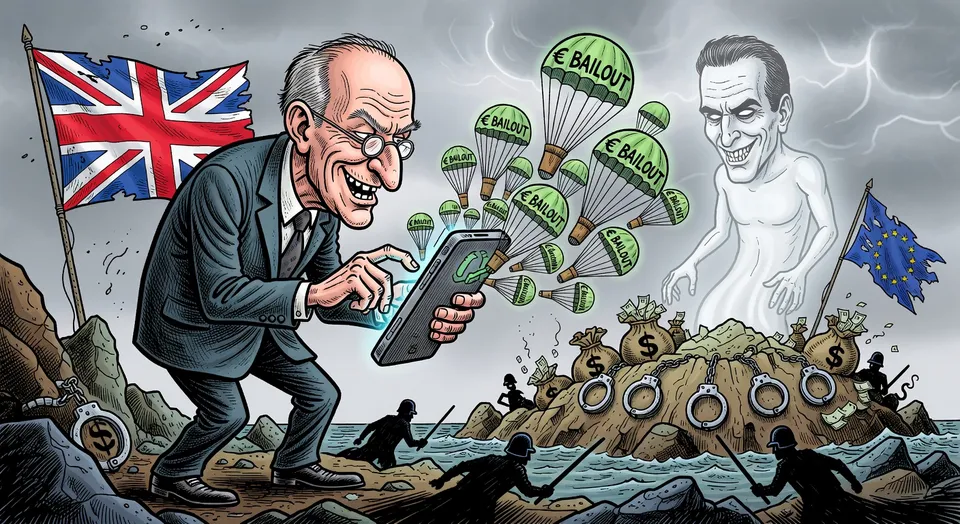
Labour peer arrested over 2009-10 leaks to convicted paedophile financier
Lord Mandelson's arrest for passing market-sensitive data to Jeffrey Epstein reveals elite vetting failures and impunity across Labour governments. Starmer's ambassador pick sours amid ongoing probe.
Metropolitan Police arrested Lord Peter Mandelson, 72, on Monday at his Camden home. Officers from the central specialist crime division took him to Wandsworth station for questioning on suspicion of misconduct in public office. He returned home on bail hours later, pending further inquiries.
The allegations centre on emails from 2009 and 2010. While a government minister under Gordon Brown, Mandelson passed an adviser’s assessment on policy measures, including an asset sales plan. He also discussed a tax on bankers’ bonuses and confirmed an imminent Euro bailout package one day before its public announcement.
Jeffrey Epstein, the recipient, was a convicted paedophile and financier who died in 2019. US Department of Justice documents released last month exposed these exchanges. Mandelson’s team insists no criminality or financial gain occurred.
Appointment Despite Warnings
Prime Minister Keir Starmer appointed Mandelson British ambassador to the US in February 2025. Downing Street sacked him in September after “new information” surfaced on the depth of his Epstein ties. Starmer now claims Mandelson lied during vetting.
Government documents on the appointment, due in early March, aim to support this claim. Education Secretary Bridget Phillipson cited an ongoing police probe as reason for caution in disclosures. Consultations with prosecutors continue.
US politicians have urged Mandelson to testify to Congress on Epstein. No such appearance has materialised.
Elite Networks Persist
Mandelson shaped New Labour from the 1980s, engineering Tony Blair’s 1997 landslide. His career spans multiple Labour governments without prior formal sanction. This arrest marks the first police action tied to his Epstein contacts.
Virginia Giuffre’s family praised UK authorities for urgency, contrasting US inaction. Conservative leader Kemi Badenoch called it “the defining moment” of Starmer’s premiership, labelling him weak.
Search warrants executed at Wiltshire and Camden addresses preceded the arrest. The probe began earlier this month.
Vetting Routinely Fails
UK diplomatic appointments bypass rigorous security checks for political allies. Mandelson’s selection ignored prior Epstein links, exposed in earlier file releases. Starmer’s government repeated this error despite public scrutiny.
Cross-party precedent exists. Prince Andrew retained privileges amid Epstein associations until external pressure forced retreat. Institutional deference shields high-profile figures from immediate consequences.
Police confirm Crown Prosecution Service involvement. No charges filed yet.
Accountability Evaporates
Ministers promise transparency but delay documents until investigations clear. This sequence—appointment, exposure, sacking, arrest—spans governments from Brown to Starmer. No prior administration pursued Mandelson’s leaks.
Financial markets reacted minimally to the news, but the 2010 bailout tip-off carried billions in potential value. Ordinary citizens face insider trading laws; elites exchange state secrets with impunity.
The pattern holds: power appoints from compromised networks, scandals emerge, inquiries drag, careers endure.
Britain’s elite insulation accelerates institutional decay. Mandelson’s detention exposes how vetting, appointments, and probes serve protection over public interest. Governments rotate actors, but the machinery rewards those who leak to predators while eroding trust in every layer of state.
Commentary based on Lord Mandelson arrested on suspicion of misconduct in public office at BBC News.