Maths Paper Difficulty Exceeds Calibration Controls
An A-level maths paper triggered mass complaints over elevated difficulty, exposing gaps in pre-release standardisation that affect student outcomes directly.
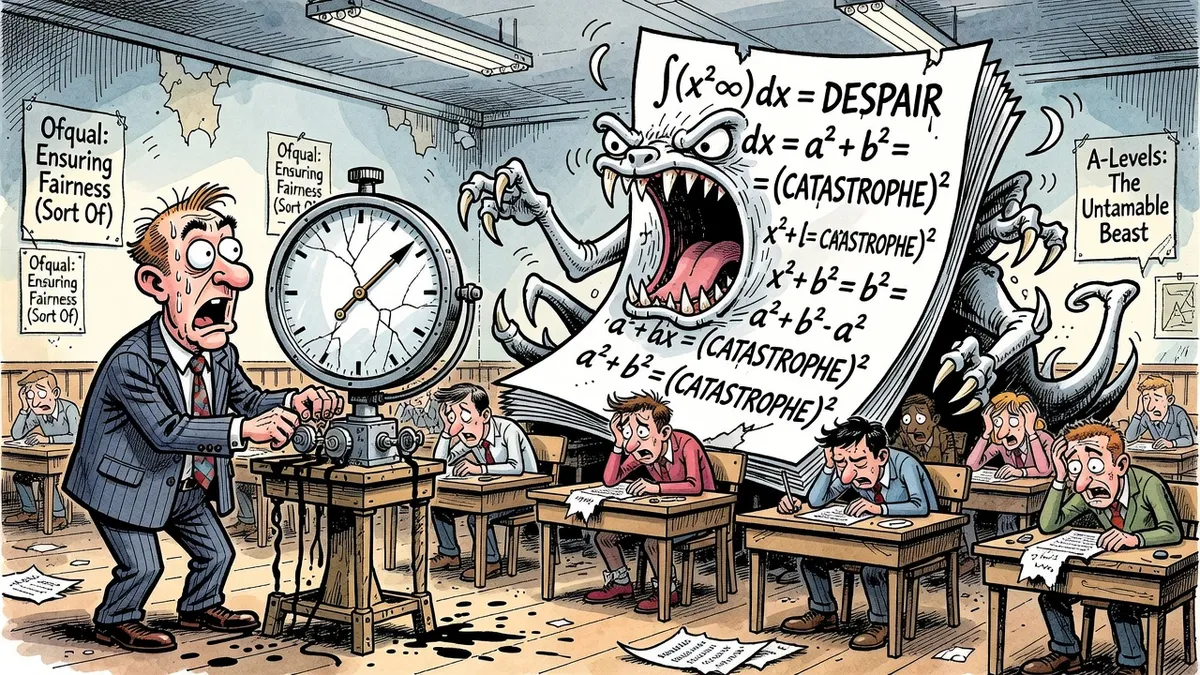
20,000 signatures force Ofqual monitoring after Edexcel exam
A 20,000-signature petition has forced England’s exam regulator Ofqual to monitor marking of this year’s Pearson Edexcel A-level maths paper one after widespread complaints that its difficulty exceeded prior years by a clear margin.
Students described questions that demanded chained reasoning steps and prolonged algebraic work without the scaffolded entry points common in earlier papers. One 18-year-old from Leeds reported that revised topics could not be demonstrated because the structure removed familiar question formats such as “show that” prompts. The result left candidates unable to display competence within the time limit despite prior preparation.
Grade boundaries are adjusted after the fact using statistical data and examiner judgment. This mechanism produces final marks that regulators claim remain comparable across series. It does not, however, restore the lost opportunity for candidates to perform at the level their course records indicated was achievable.
The petition explicitly requested boundaries that account for the paper’s elevated challenge. Officials at Pearson stated they remain committed to fair outcomes. Ofqual reiterated its focus on reliable indications of student knowledge. Neither body addressed why difficulty calibration failed before the exam reached candidates.
University admissions depend on these grades for competitive courses. Resit students who missed narrow margins the previous year now confront another layer of uncertainty. The psychological effect on cohort morale receives no formal correction in the boundary-setting process.
This episode fits a longer record of variable exam standards that shift year to year without transparent controls. Successive governments have retained the same regulatory architecture while outcomes for individual candidates continue to depend on unpredictable paper design. The absence of pre-release difficulty audits leaves thousands of students exposed to the same risk in future cycles.
The pattern shows institutions prioritising post-hoc statistical fixes over consistent assessment conditions. Ordinary candidates absorb the variance in their results and subsequent opportunities while the system registers no institutional cost.
Commentary based on A-level maths exam marking to be watched closely by regulator after students say paper was 'unfair' at BBC News.
← Back to commentary