Merthyr Tydfil Eatery Shut After Rodent Droppings and Falsified Logs
The Taj Restaurant received a zero hygiene rating and £8,000 fine after inspectors found rodent droppings, contaminated equipment, grease leaks and altered cleaning records.
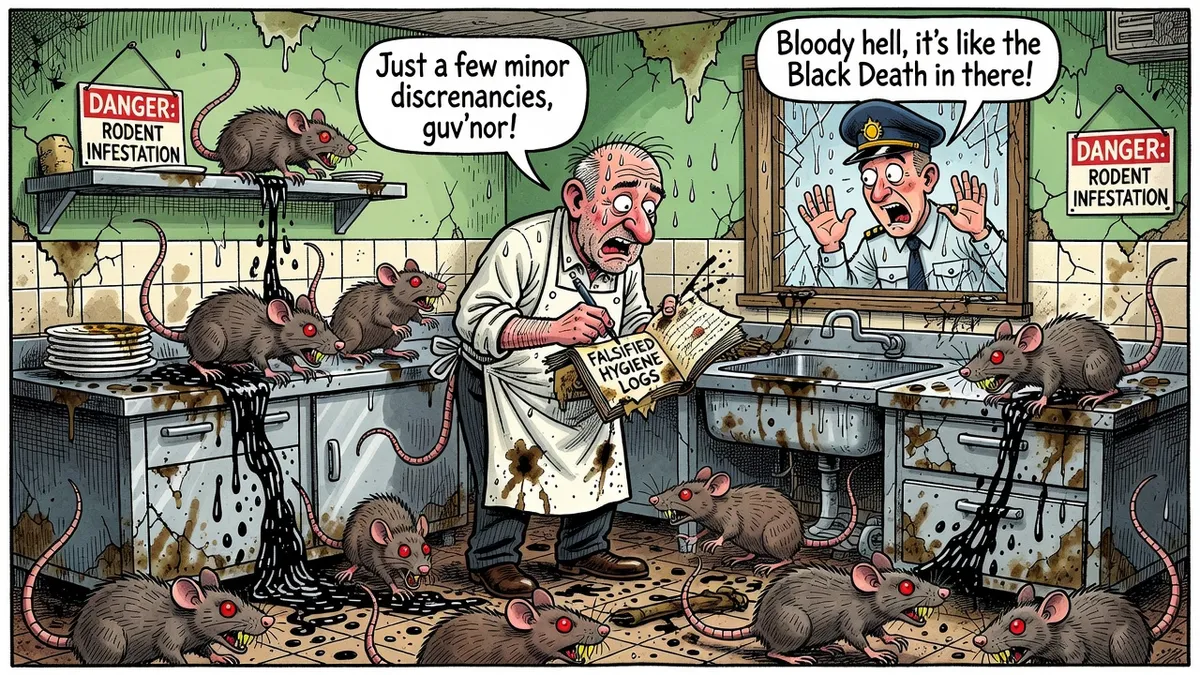
A Merthyr Tydfil restaurant continued trading with rodent droppings, contaminated equipment and falsified cleaning records until council inspectors recorded a zero hygiene rating and ordered closure.
The Taj Restaurant faced twelve admitted offences after the November 2025 inspection. Officers documented leaking grease extraction systems, dirty protective clothing on food handlers, rice stored outside temperature controls, and chopping boards carrying visible contamination. A bucket collected dripping grease beneath the ventilation duct.
Re-inspection in January 2026 found persistent cross-contamination risks. Merthyr Tydfil Magistrates’ Court imposed an £8,000 fine plus more than £4,000 in costs, describing the conditions as stomach-churning and the regulatory breaches as blatant disregard.
Enforcement Mechanics
Local environmental health teams retain statutory powers to close premises and prosecute operators. Mohammed Sueb, the registered food business operator, accepted the charges without contest. The restaurant’s website now displays a notice of temporary closure.
These powers exist on paper. Their application here required two separate visits and court proceedings after initial detection. The gap between first inspection and final sanction stretched across months of potential public exposure.
Compliance Patterns
Falsified cleaning records indicate deliberate misrepresentation rather than oversight. Operators who maintain false documentation undermine the self-monitoring system that regulators rely upon between visits. This case joins others where visual evidence of rodent activity and grease accumulation appeared alongside altered logs.
Economic pressures on small restaurants have intensified through energy costs, ingredient inflation and staffing constraints. Cutting corners on cleaning and pest control offers immediate cash savings. The incentive structure rewards short-term survival over sustained adherence to standards.
Local Authority Capacity
Merthyr Tydfil Council conducted the inspections and secured the conviction. The outcome demonstrates that some enforcement still functions at district level. Yet the severity of the violations that reached court suggests earlier detection failed or prior warnings produced no lasting change.
Repeated offences across multiple premises in recent years point to systemic shortfalls in inspection frequency and follow-up. Resource limits on environmental health teams reduce the deterrent effect of sporadic visits.
The restaurant posed a documented public health risk until external intervention stopped operations. Similar lapses recur because the cost of non-compliance remains lower than consistent investment in hygiene infrastructure and staff training. This pattern reflects declining baseline standards in routine commercial regulation rather than isolated operator failure.
Commentary based on Merthyr restaurant fined for 'stomach-churning' hygiene offences at BBC News.
← Back to commentary