Milburn Review Targets Disability Support to Tackle Youth Inactivity
Alan Milburn’s review proposes cutting disability benefits for ages 18-24 to finance youth training, yielding little net fiscal change despite £3.6bn in projected reductions by 2037.
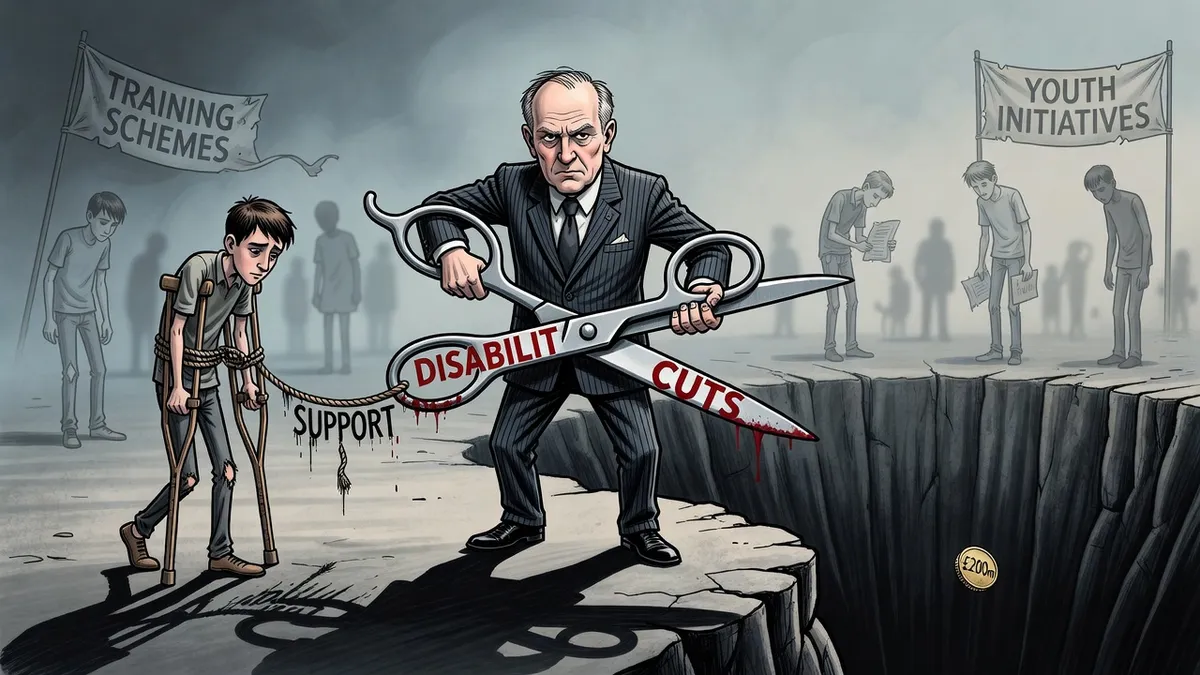
Youth unemployment has reached one million, or 13 percent of young people, exceeding rates in every European country except Romania. Alan Milburn’s year-long review proposes cutting disability and sickness benefits for those aged 18-24 to fund a new youth opportunity service and expanded training. The projected net saving stands at £200 million annually once the £5.8 billion annual cost of the replacement system is met.
The report details £3.6 billion in benefit reductions by 2036-37 plus £2.4 billion in extra tax receipts. These figures are almost entirely offset by spending on vocational courses, apprenticeships, direct employer payments and a new youth allowance available only for “well established, significant and ongoing” conditions. Personal independence payments would end for this age group under the plan.
Limited Fiscal Impact
Ministers present the package as a shift from compensating inactivity to creating routes out of it. Official projections show the new structures consume nearly all anticipated reductions in welfare expenditure. The outcome leaves total public spending on this cohort little changed while altering eligibility rules.
Previous attempts under the prior Labour leadership to cut benefits by around £5 billion triggered parliamentary rebellion and forced retreats. The current proposals, backed by Prime Minister Andy Burnham and Work and Pensions Secretary Pat McFadden, avoid that scale of reduction yet still face the same structural constraint: new support mechanisms absorb the savings.
Persistent Patterns
One million young people outside education, employment or training reflects outcomes across multiple governments since the 1990s. Successive reviews have identified the same cohort and proposed variations of training subsidies and tightened eligibility. Participation rates remain elevated compared with peer economies despite repeated interventions.
The review explicitly warns against cherry-picking individual measures and calls for wholesale change to benefits and education systems. Implementation details rest with ministers who have already scaled back earlier welfare ambitions. No mechanism is outlined to ensure the full package survives parliamentary or fiscal pressures.
The approach continues the established cycle of reclassifying payments and expanding administrative layers without measurable reduction in the underlying stock of economically inactive young adults. Net fiscal relief remains marginal while eligibility criteria tighten for those with health conditions.
This episode illustrates how UK welfare adjustments repeatedly generate administrative cost and political friction while leaving core participation metrics and expenditure levels largely intact.
Commentary based on Alan Milburn says his plan to get young people into work will save only £200m a year by Kiran Stacey on the Guardian.
← Back to commentary