Modella Capital Auctions TG Jones After Rapid Store Reductions
Modella Capital's swift closures at TG Jones, reducing the estate by a third since its £42m acquisition, prompt a 2025 sale process that highlights private equity's focus on rapid restructuring.
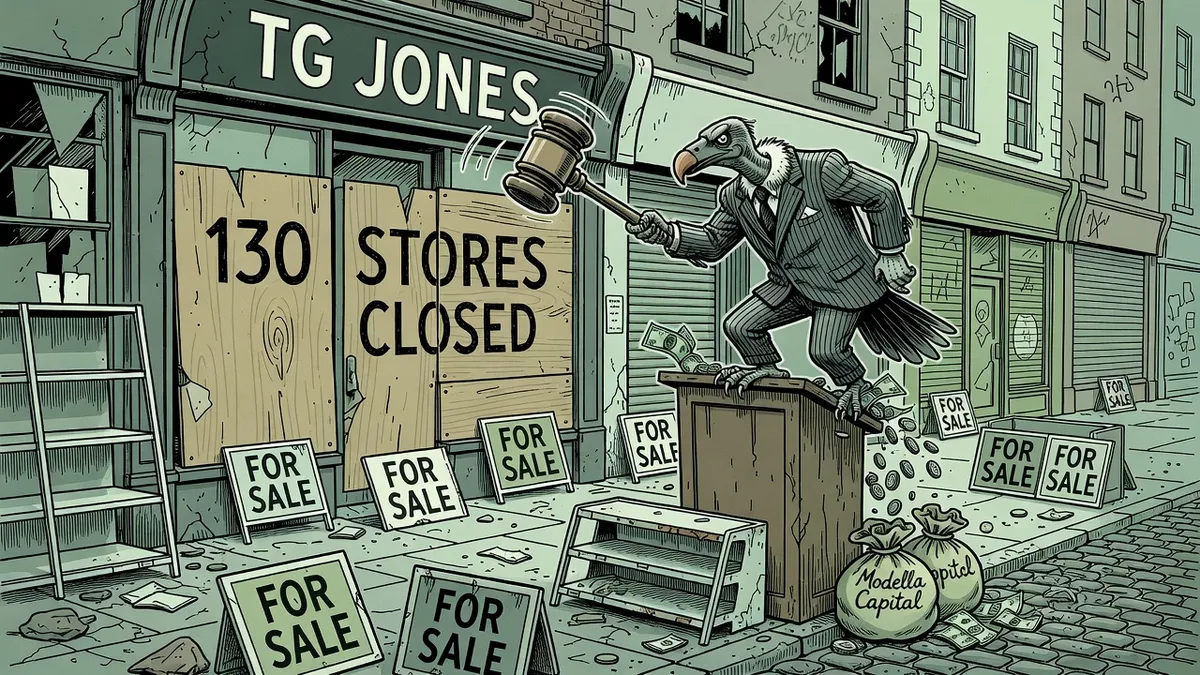
Britain’s high streets continue to shed established retailers as ownership structures prioritise rapid restructuring over continuity. TG Jones, the rebranded high street arm of the former WH Smith, now enters its second ownership review in 18 months after Modella Capital closed roughly 150 of its 480 stores.
Modella acquired the business for £42 million in June 2023. Within months it secured court approval for closures that reduced the estate by more than one third. The company now reports unsolicited offers and has instructed Teneo Corporate Finance to run an auction scheduled for 2025, deliberately timed after the Christmas trading period.
Store Reductions and Staffing
The closures removed outlets that once formed part of a 233-year-old chain. Approximately 3,500 employees remain at the surviving locations. No public data has been released on redundancy costs or the proportion of staff transferred versus dismissed during the cuts.
High street footfall has fallen steadily since the pandemic, yet the speed of contraction under Modella exceeds typical market adjustment. Similar patterns appear at Poundland, where another private-equity owner seeks court protection while evaluating bids that may or may not preserve jobs.
Retained Assets and Brand Split
WH Smith kept its 1,300 travel outlets, website and brand name when it sold the high street division. The separation left TG Jones with the weaker locations and no online platform. This division of assets concentrated value in the transport network while exposing the remaining stores to direct competition from discounters and online platforms.
The pattern of carving out profitable segments before disposal has repeated across multiple UK retailers. Each transaction reduces the number of viable high street sites without addressing underlying demand weakness.
Ownership Incentives
Private-equity models reward asset realisation within short timeframes. Modella’s decision to test the market so soon after acquisition indicates the original purchase price already reflected anticipated closures rather than long-term trading prospects. Staff and local authorities bear the adjustment costs while investors seek exit opportunities.
No regulatory mechanism currently requires buyers to publish post-acquisition employment plans or store retention targets. Successive governments have left such oversight to insolvency courts that intervene only after distress becomes acute.
The TG Jones episode illustrates how UK retail assets move between financial owners with minimal regard for accumulated local presence. Each cycle removes physical outlets and erodes the remaining commercial fabric of town centres without replacement investment.
Commentary based on Former WH Smith chain TG Jones put up for sale after closing 130 stores at the Guardian.
← Back to commentary