Mortgage Rates Breach 6% as Funding Costs Rise Without Base Rate Moves
Bond market volatility has pushed fixed mortgage rates back to 6 percent despite unchanged Bank of England policy, squeezing borrower choices and housing activity.
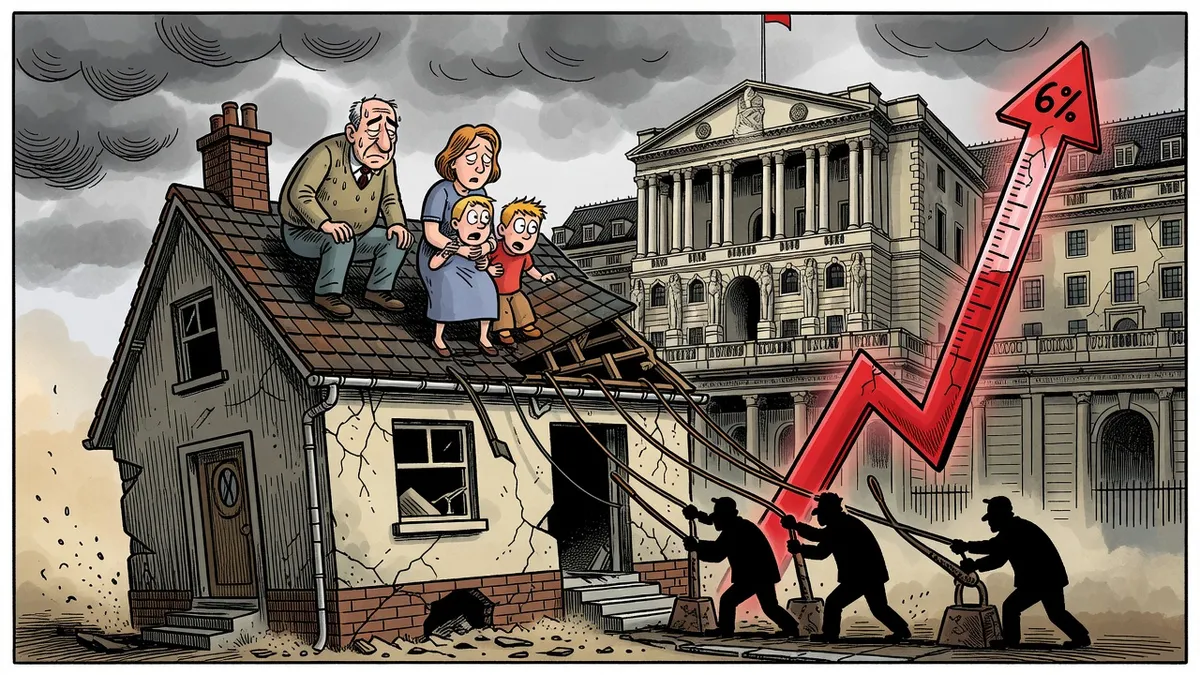
Average five-year fixes hit three-year highs while sub-5% options fall 99 percent in a month
Britain’s five-year fixed mortgage rates have climbed back to 6 percent for the first time since 2023, even though the Bank of England has left its base rate unchanged since December.
Moneyfacts data records the average at exactly 6.00 percent. Two-year fixes sit at 5.98 percent. Only nine products remain below 5 percent, down from 1,494 at the start of last month.
Lenders cite swap rate increases driven by global bond market swings. These movements have raised the cost of funding fixed-rate loans without any corresponding shift in official policy.
Household Impact
A £250,000 loan fixed at 6 percent now costs £158 more per month than one taken at February’s 4.94 percent average. Borrowers ending existing deals face immediate resets at these higher levels.
Choice has collapsed. The near-total disappearance of sub-5 percent options leaves most applicants with rates clustered near the new ceiling.
Market Signals
Nationwide reported annual house price growth halved in September. Estate agents note buyers reducing budgets or withdrawing entirely when monthly payments rise even modestly.
The pattern shows a market that prices in future rate pressure before the central bank acts. Volatility in funding costs transmits directly to households without requiring formal policy changes.
This dynamic repeats across recent years. External shocks and domestic borrowing needs keep effective rates elevated long after headline inflation peaks. Successive governments have offered no durable fix to the underlying supply of credit or the scale of public debt that amplifies market reactions.
Structural Exposure
Fixed-rate mortgages were meant to provide stability. Their pricing now tracks global sentiment more closely than domestic base-rate decisions. When bond markets move, British borrowers absorb the cost regardless of Bank of England restraint.
The result is sustained pressure on living standards. Higher monthly outgoings reduce disposable income and slow housing transactions. Both effects feed into weaker consumption and investment.
The data shows no reversal. Rates have returned to levels last seen during earlier tightening cycles, and the pipeline of affordable products has evaporated. This trajectory documents the limits of current monetary arrangements in shielding households from repeated cost shocks.
Commentary based on Average five-year fixed mortgage rate hits 6% for first time in three years at the Guardian.
← Back to commentary