Northern Ireland's Classrooms Still Preach Christianity
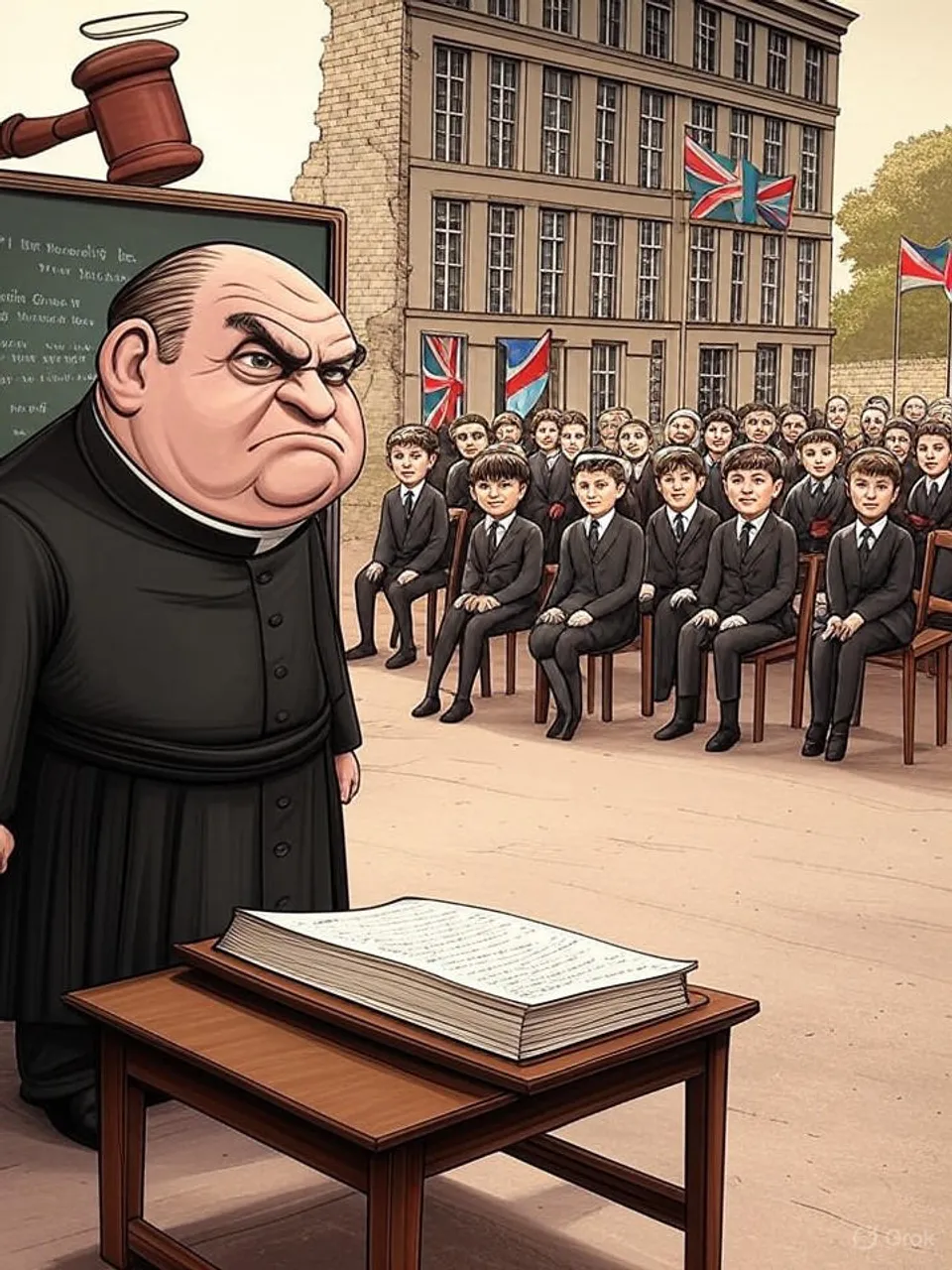
Supreme Court voids Bible-based RE as human rights breach
UK Supreme Court rules Northern Ireland's mandatory Christian religious education unlawful for lacking pluralism, exposing outdated laws that burden dissenting families and ignore societal diversity.
Northern Ireland’s state schools enforce Bible-based lessons on all pupils, Supreme Court declares unlawful.
A Belfast primary school’s curriculum required a child to join Christian religious education and worship in 2019, despite parental objections.
The UK Supreme Court ruled this practice breaches human rights under the European Convention on Human Rights. It reinstated a 2022 High Court decision that found the teaching lacked objectivity, criticism, and pluralism.
Schools labeled their program “non-denominational,” but evidence showed it centered on the Bible as core syllabus.
Lord Stephens, delivering the judgment, equated non-pluralist teaching with indoctrination. The court rejected the Department of Education’s defense that withdrawal options sufficed for dissenting parents.
Withdrawal forces children into isolation, the ruling stated. This burdens families and risks stigmatizing pupils who opt out.
The case originated from JR87, a pupil at a controlled school, and her father G. They sought judicial review after the school confirmed its Christian focus.
The High Court sided with them, deeming the education unlawful. The Court of Appeal overturned this, distinguishing information from indoctrination—a distinction the Supreme Court called erroneous.
Legal Path Reveals Institutional Rigidity
Northern Ireland’s education laws, set in the late 1980s, mandate daily collective worship and religious education in grant-aided schools. These rules predate the 1998 Good Friday Agreement and rising societal diversity.
No updates have incorporated ECHR requirements for pluralist approaches. The Department of Education cross-appealed, defending the status quo without reforms.
This persistence spans devolved governments from multiple parties since 1998. Unionist and nationalist administrations alike maintained the Christian-centric model.
Solicitors for the family called the ruling a watershed for educational rights. It affirms that states cannot justify religious instruction through mere opt-outs.
Yet implementation remains unclear. The judgment directs the Department to reconsider its policies, but no timeline or enforcement mechanism follows.
Broader Educational Fault Lines
Northern Ireland’s system divides schools by religion—Catholic maintained, Protestant controlled, and integrated options scarce. Only 7% of pupils attend integrated schools, per 2023 Department data.
This structure entrenches sectarian lines from the Troubles era. The Supreme Court ruling exposes how even “controlled” schools perpetuate one faith’s dominance.
Compare to England, where similar laws exist but face less challenge due to weaker enforcement. Scotland and Wales have shifted toward secular curricula since devolution.
UK-wide, religious education enrollment has declined, with 2022 surveys showing 40% of teachers avoiding the subject amid diversity pressures. Northern Ireland’s lag highlights devolution’s uneven progress.
Parents in pluralist families bear the cost. Opting out disrupts routines and exposes children to peer judgment, as noted in the judgment.
Systemic Human Rights Gaps
The European Convention binds the UK, yet compliance falters in education. The court’s unanimous decision underscores repeated judicial overrides of lower rulings.
This pattern mirrors other UK human rights cases, like prisoner voting or deportation delays, where appeals drag without resolution. Resources for legal challenges favor the state.
Northern Ireland’s population has grown more diverse: 2021 census data shows 17% non-Christian or no religion, up from 10% in 2011. Policies ignore this shift.
Watering down pluralism benefits entrenched interests. Faith-based groups influence curricula, while secular voices litigate at personal expense.
The ruling demands objective teaching, but without legislative change, schools may continue old practices pending review. This delays actual reform.
Northern Ireland’s education system clings to post-colonial Christian norms, now ruled incompatible with modern rights. The Supreme Court exposes a devolved institution’s failure to evolve, mirroring UK’s broader retreat from pluralist governance. Citizens face coerced conformity in classrooms, a quiet erosion of freedoms that no party has confronted.
Commentary based on RE and prayer in NI schools 'unlawful,' Supreme Court rules | ITV News at ITV News.