Parliament Keeps Alcohol Available From Midday Without Formal Limits
Free drinks during legislative hours persist despite hospital incidents and documented behaviour problems in Westminster.
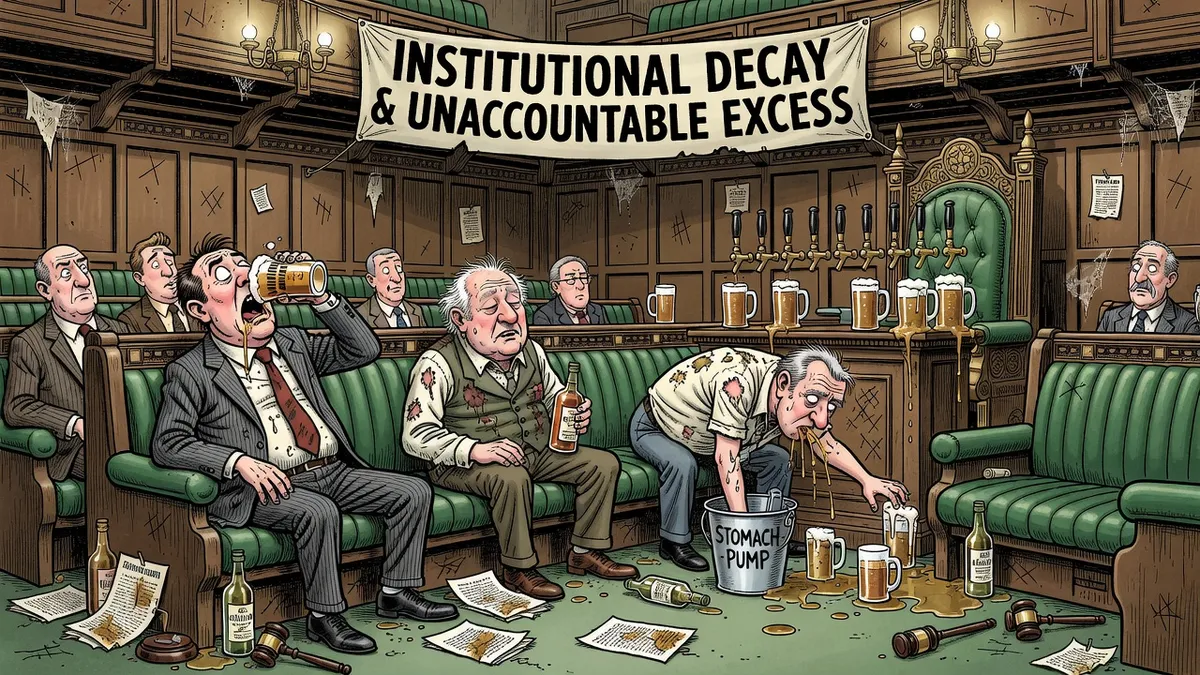
Survey data shows routine offers during working hours alongside repeated misconduct findings
Parliament maintains alcohol service from midday across multiple venues on the parliamentary estate. Survey responses from 190 MPs and staff confirm that free drinks appear at daytime meetings and lobbying events as standard practice. Some participants reported colleagues requiring hospital treatment to have their stomachs pumped before returning to votes the next day.
The Institute of Alcohol Studies collected these accounts in 2024. Forty-two percent of respondents said they had been offered alcoholic drinks at work meetings or events at least weekly in the preceding six months. Thirteen percent encountered such offers daily. Twenty-two percent expressed concern about a colleague’s drinking.
Decision-Making Exposure
Parliament sets laws that bind the rest of the country. The same environment supplies alcohol during hours when votes and committee work occur. The independent complaints scheme recorded alcohol as a frequent factor in misconduct investigations between 2021 and 2022, including cases of shouting, swearing and intimidation inside the bars.
No formal workplace alcohol policy exists. Parliament’s standards commissioner noted behaviour problems linked to on-site drinking in 2023 yet left any restriction to members themselves. A spokesperson stated that changes would ultimately rest with MPs and described the estate as a unique working environment that includes public access and events.
Institutional Insulation
Long sitting hours, separation from home and career networking incentives are cited as reasons the pattern continues. These factors have existed for decades across multiple governments. The result is a workplace where normal professional boundaries on substance use during decision-making do not apply.
One in ten respondents reported a negative experience caused by someone else’s drinking at work. Seventy percent either did not know or were unsure how to raise concerns about a colleague. These figures sit alongside repeated incidents, including drink spiking allegations and documented high-volume consumption by sitting members.
The same standards of impairment that disqualify surgeons or drivers from their duties remain unapplied to legislators. Free alcohol at events sponsored by outside organisations continues without daily limits or mandatory recording. Parliament has introduced low-alcohol options and staff refusal rights, yet the underlying availability structure stays intact.
This arrangement demonstrates how core institutions sustain practices detached from those imposed on the population they govern. The absence of enforceable rules on substance use during legislative activity forms one measurable element of reduced governing capacity.
Commentary based on ‘MPs have had their stomachs pumped’: concerns over ‘alcohol-soaked’ culture in Westminster at the Guardian.
← Back to commentary