Parliament Votes Out Andrew's Trade Envoy Secrets
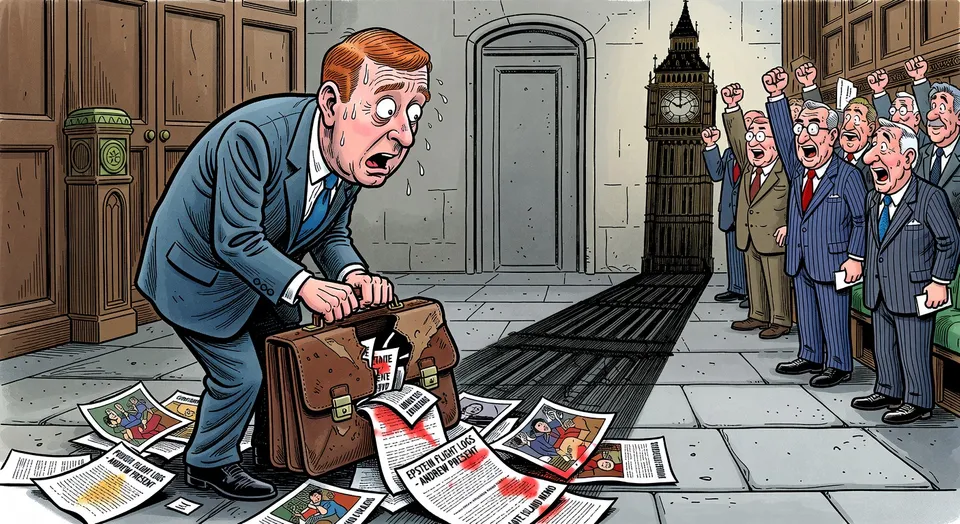
Arrest for Epstein leaks prompts document release amid elite fallout
Lawmakers approve confidential files on Prince Andrew's trade envoy role after his arrest for sharing secrets with Epstein. This pierces royal protections but reveals persistent Establishment networks shielding power from accountability.
Commentary Based On
AP News
UK lawmakers approve release of confidential documents on former Prince Andrew
Lawmakers forced the release of confidential documents on Prince Andrew’s tenure as trade envoy, days after his arrest for allegedly passing government reports to Jeffrey Epstein.
The motion passed Tuesday with government support, spotlighting Andrew’s friendship with the convicted sex trafficker over national duty.
This breaks decades of parliamentary tradition shielding royals from criticism.
Arrests Pierce Elite Immunity
Police arrested Andrew at his brother’s estate on Thursday, then released him pending investigation.
Former minister Peter Mandelson faced arrest Monday on similar suspicions of leaking to Epstein.
Both deny wrongdoing, but the timing underscores Epstein’s reach into Britain’s power centers.
Trade Minister Chris Bryant labeled Andrew a “rude, arrogant and entitled man” locked in a “self-enriching hustle.”
Lawmakers tied this to Epstein’s web, where aristocrats and politicians traded influence for access.
Establishment Networks Exposed
Ed Davey, Liberal Democrat leader, introduced the motion, alleging Mandelson lobbied for Andrew’s 2001 envoy role—a favor between Epstein associates.
This echoes U.S. document releases revealing Epstein’s global elite ties.
In the UK, fallout questions the “Establishment”—aristocracy, politicians, businessmen wielding unchecked soft power.
King Charles stripped Andrew’s titles and evicted him from a rent-free mansion after 20 years.
Buckingham Palace draws lines, but arrests on royal grounds signal deeper rot.
Historical Protections Crumble
Parliament rules long barred criticizing royals, preserving monarchy’s symbolic role as head of state for Britain and 14 realms.
Debate demanded reform to shield the institution from scandals like this.
Commentators invoke 1936’s abdication crisis, but today’s scrutiny targets governance, financing, and accountability.
Unlike Edward VIII’s swift exit, Andrew’s case drags, with police probes delaying full document release.
Soft Power Turns Toxic
Royals make hundreds of annual appearances for charities and military, bolstering continuity.
Yet Andrew’s envoy role blurred public service with private gain, sharing secrets amid Epstein ties.
Victim advocates demand transparency as the bare minimum.
Government assent to release signals rare accountability push under Starmer.
But delays until investigations end preserve elite maneuvering space.
This pattern defines UK governance: scandals surface, elites deny, institutions adapt minimally, power endures.
Cross-party figures—Mandelson under Labour, Andrew across reigns—entwine in the same networks.
No party disrupts them; all rely on Establishment goodwill.
Monarchy’s Reckoning Accelerates
Republic campaigners seize the moment, pushing for an elected head of state.
Whitelock’s analysis in the Sunday Times frames this as the monarchy’s overdue public audit.
Functional governance would preempt such leaks through vetting and oversight, not post-arrest disclosures.
Instead, Britain reacts to exposures from abroad, like U.S. files.
Ordinary citizens fund the monarchy’s £100 million annual cost while elites evade scrutiny.
Decline in Institutional Trust
These events erode the constitutional monarchy’s veneer of neutrality.
Public trust in royals already polls low post-Epstein; arrests compound it.
Power concentrates without counterweights, from Windsors to Westminster.
Parliament’s vote marks progress, but only exposes how late accountability arrives.
Britain’s decline manifests here: elite impunity persists across governments, hollowing democratic oversight and fueling cynicism.
The Establishment closes ranks until forced open, leaving victims and taxpayers to foot the bill.
Commentary based on UK lawmakers approve release of confidential documents on former Prince Andrew by Danica Kirka on AP News.