Paycheque Dependency Defines Life for 49 Percent of UK Adults
Oxford Saïd research finds 49 percent of UK adults live paycheque to paycheque, attributing outcomes to emotion and habit rather than wages while noting limited effects from financial education alone.
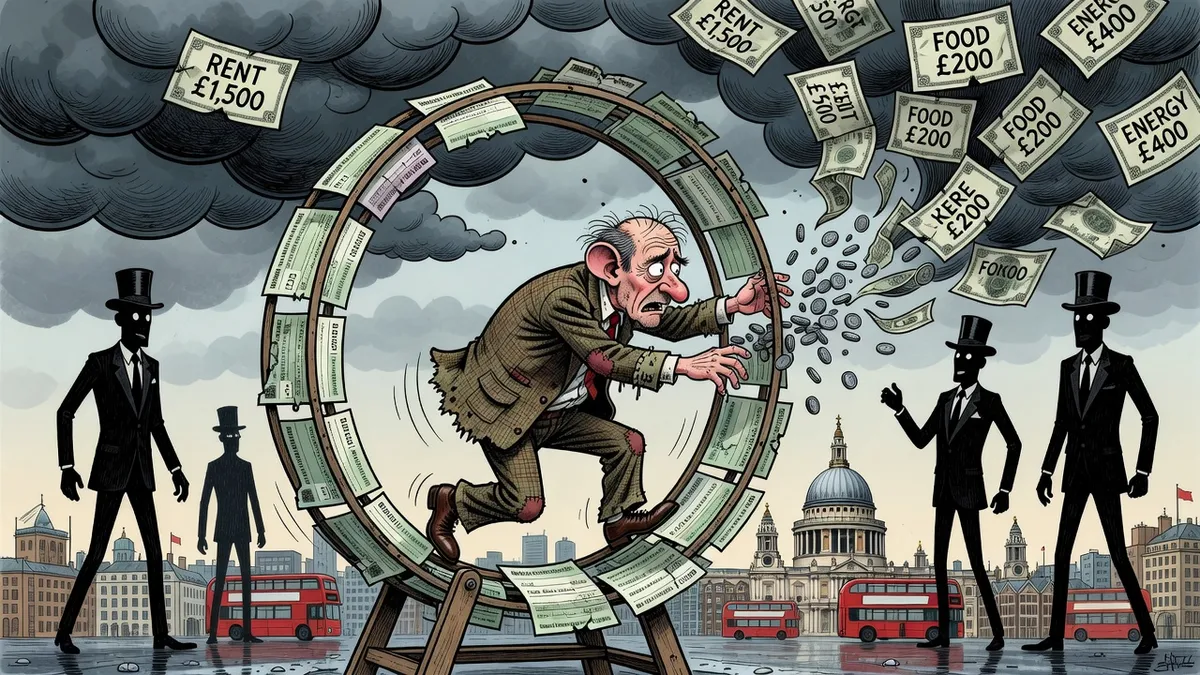
Nearly half of UK adults now live paycheque to paycheque according to Oxford Saïd Business School research. The figure stands at 49 percent, with 13 million adults showing low financial resilience and one in three on a financial knife edge. Only 26 percent of households qualify as financially secure.
The white paper attributes these outcomes to emotion, habit, shame, and stress rather than insufficient wages or rising costs. Researchers reviewed around 60 studies and concluded that information alone fails to improve decisions because cognitive functions degrade under scarcity. Official responses continue to emphasise financial education despite the paper’s own evidence that such programmes show limited effect without behavioural interventions.
Structural Conditions Ignored
The data records persistent outcomes across multiple governments. Real wages have stagnated for over a decade while housing, energy, and transport costs have risen faster than earnings. Thirteen million adults with low resilience represent a measurable expansion of households unable to absorb even minor income shocks or unexpected bills.
The study notes similar patterns worldwide yet offers no comparison to periods when UK households maintained higher cash buffers. Post-2010 policy choices on benefits, minimum wage growth, and housing supply directly shaped disposable income distribution. These factors receive no weighting in the behavioural analysis.
Incentive Structures at Work
Ministers retain the narrative that individual decisions drive financial outcomes. This framing avoids examination of productivity stagnation, regional employment quality, and the concentration of gains in asset ownership. When 49 percent of adults lack reserves, the economy operates with a built-in consumption floor sustained only by continuous wage receipt.
Employers benefit from a workforce unable to negotiate or relocate without immediate risk. Lenders gain from repeated short-term borrowing. Public services face higher demand for crisis support when routine expenses exceed monthly income for large sections of the population.
The pattern shows no reversal under current projections. Successive administrations have documented rising insecurity yet maintained the same policy mix of education initiatives and targeted credit schemes. The Oxford findings reinforce this approach by locating the problem inside individual psychology rather than aggregate economic capacity.
Britain now runs an economy in which half the adult population cannot sustain basic continuity between pay cycles. This condition reflects accumulated policy choices on wages, housing, and public provision rather than isolated failures of personal discipline.
Commentary based on Half of are UK adults are now living paycheque to paycheque: study at HotMinute.
← Back to commentary