Planning System Delivers Logistics Growth at Expense of Local Veto
England approved 8,566 warehouse units in a decade at a 95% rate across 9,009 applications. Communities lack appeal rights, bearing traffic and environmental costs without recourse.
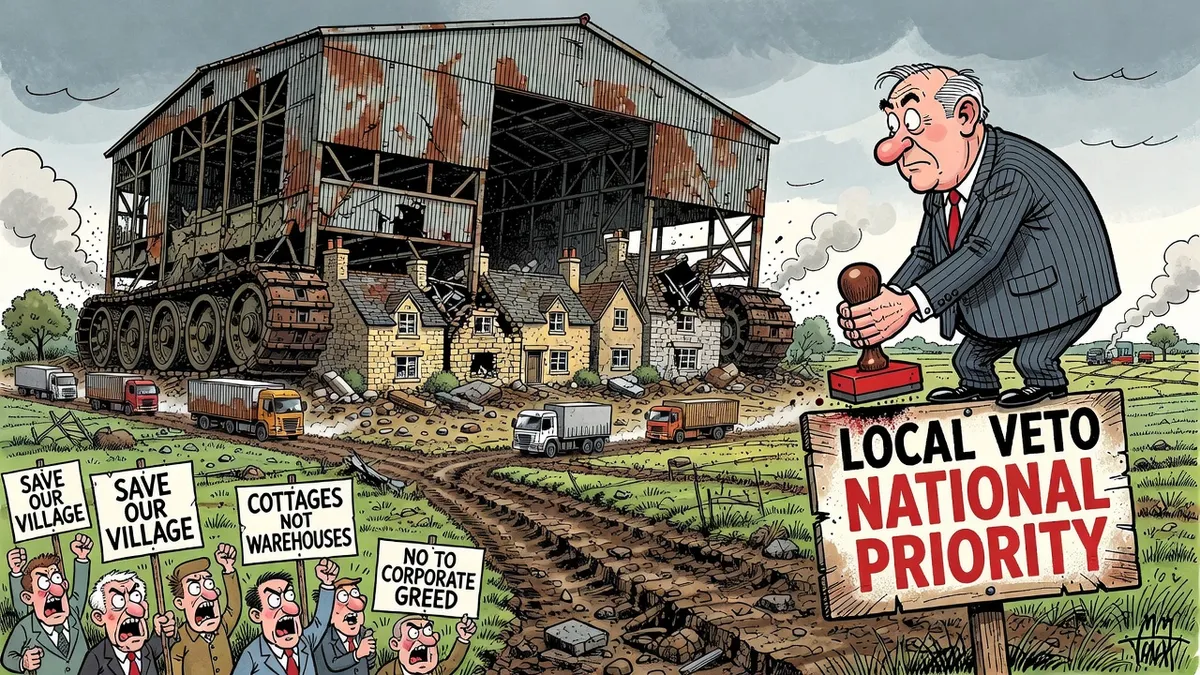
England’s planning system approved 8,566 warehouse and distribution units over the past decade. Nearly all applications succeeded. Local residents received no equivalent right of appeal once approvals were granted.
Data from official records show the approval rate reached 95 percent across 9,009 applications. Four thousand three hundred of those decisions fell in the most recent five years. Nearly half landed in the east, south-east and north-west regions. Seventeen projects entered national parks despite formal protections.
Local Impacts
Residents in Bingham, Nottinghamshire, learned of eight 21.5-metre warehouses and 400 daily HGVs planned beside new housing. Similar projects in Astley, Wigan, and Gibfield prompted campaigns over noise, light pollution and loss of open land. In Northamptonshire, six years of objections failed to block two warehouses beside a protected bird reserve.
Councils cited national planning policy and economic demand. Developers retained six months to appeal refusals. Communities held no parallel right and faced judicial review costs estimated at £60,000 within six weeks.
Policy Patterns
The National Planning Policy Framework tightened community challenges further in August. Grey belt designations, introduced for previously developed land, produced approvals on untouched sites in 88 percent of appeal cases according to CPRE analysis. Reform-led councils in Newark and Wigan recorded the same outcomes as previous administrations.
Protected areas offered limited defence. Six industrial schemes entered the South Downs since 2021. Five entered the North York Moors. One reached the Lake District.
Institutional Record
The pattern shows consistent prioritisation of logistics capacity over stated environmental and residential safeguards. Successive governments maintained the framework while online retail growth sustained developer demand. No mechanism reversed the imbalance once permissions were issued.
The record documents a planning process that delivers measurable expansion of warehousing while removing effective local veto. Ordinary households bear the resulting traffic, visual intrusion and habitat loss without statutory recourse.
Commentary based on ‘National scandal’: residents in England rally against surge in mega-warehouse developments at the Guardian.
← Back to commentary