Police Label Attackers British-Born, Exposing Integration's Hollow Core
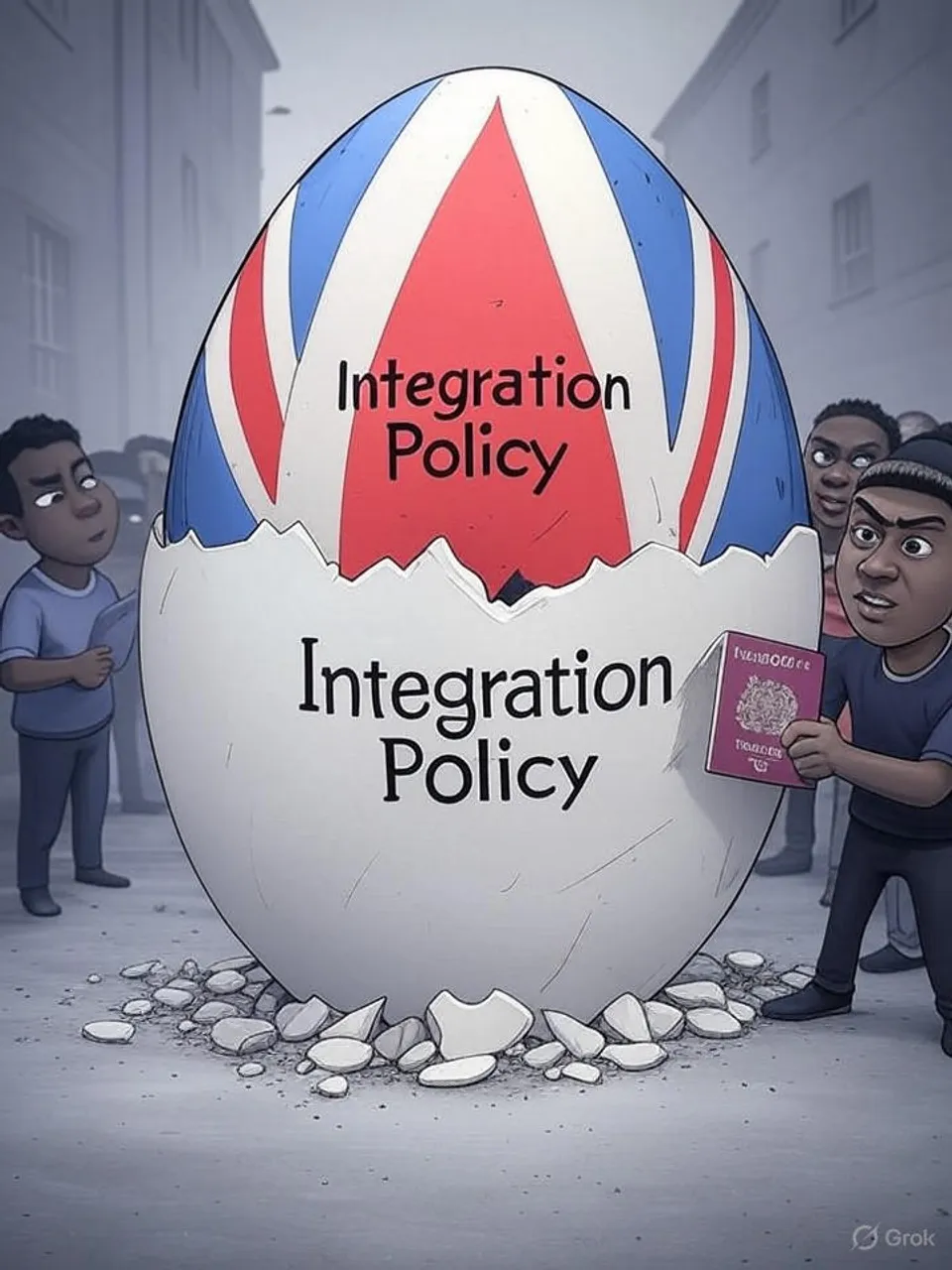
Second-generation criminals highlight policy failures across decades
Police emphasis on UK birth for violent offenders reveals integration gaps, with anecdotal cases and sparse data underscoring cultural legacies that persist despite citizenship. Governments evade accountability through data taboos, perpetuating social divides.
Anthony Williams, arrested for the LNER knife attack, drew immediate police emphasis on his UK birth. Authorities described him as a “black British national” born in the UK, alongside another suspect of Caribbean descent also UK-born. This framing aims to separate the incident from immigration debates, yet it underscores a persistent gap: decades of policy have failed to forge unified national identity from diverse origins.
The article catalogs high-profile cases where perpetrators were UK-born but of immigrant heritage. Three of the four 7/7 London bombers were British-born sons of Pakistani immigrants; the fourth, Germaine Lindsay, grew up in the UK after birth in Jamaica. Khalid Masood, behind the 2017 Westminster Bridge attack, was born here as Adrian Russell Elms to Afro-Caribbean parents; Salman Abedi, the Manchester Arena bomber, was Manchester-born to Libyan parents with jihadist ties.
These examples reveal a pattern authorities rarely acknowledge outright. Michael Adebolajo and Michael Adebowale, who killed Lee Rigby in 2013, were also UK-born children of immigrants and recent Muslim converts. Axel Rudakubana, the 2024 Southport killer of three girls, was Cardiff-born to Rwandan parents, with reported obsessions tied to his family’s genocide-haunted history.
Official reticence stems from fears of unrest. Police highlight UK birth to preempt anti-immigrant backlash, as seen after Southport riots. Yet this tactic inadvertently spotlights intergenerational cultural carryover, where ancestral conflicts endure despite British upbringing.
Cultural Inheritance Persists Unchecked
The piece argues violence may “run in families,” rooted in imported honor cultures or aggression. It posits that British education alone cannot erase such legacies, citing Rwanda’s ethnic violence influencing Rudakubana. This challenges the taboo on linking heritage to crime, suggesting assimilation policies demand scrutiny beyond surface-level citizenship.
Evidence remains anecdotal, not statistical. The article notes foreign-born criminals like Ahmed Hassan (Parsons Green bomber, asylum seeker) and Emad Al Swealmeen (Liverpool taxi bomber), but pivots to their UK-raised counterparts. No comprehensive data tracks second-generation crime rates, leaving claims reliant on selective cases.
A rare data point emerges from a 2022 London Assembly survey: black Londoners, 13 percent of the population, accounted for 61 percent of knife murders. This disparity highlights uneven integration outcomes, where socioeconomic factors intertwine with cultural ones, yet governments avoid granular breakdowns to evade controversy.
Policy Failures Span Governments
Integration efforts have faltered across administrations. Labour’s 1997-2010 era expanded multiculturalism without robust assimilation mandates; Conservatives from 2010 onward tightened borders but neglected community cohesion programs. Both sides promised social harmony, delivering instead fragmented identities that fuel alienation.
Schools and media bear blame, per the analysis. Curricula emphasizing Britain’s “racism and exploitation” over “freedom against the odds” erode patriotism, especially among immigrant-descended youth. This ideological tilt, consistent since the Blair years, prioritizes critique over shared narrative, widening generational rifts.
Immigration policy ignores origin-based risks. The article urges selectivity, noting higher violence likelihood from “belligerent cultures” versus stable ones like Switzerland. Yet UK systems grant entry based on asylum claims or economic needs, not cultural compatibility assessments—a blind spot persisting through EU membership, Brexit, and beyond.
Data Taboos Undermine Accountability
Authorities withhold ethnicity-crime statistics, citing sensitivity. The Office for National Statistics publishes broad demographics but shies from linking heritage to offenses, unlike the US or Sweden. This opacity shields politicians from scrutiny, allowing vague pledges on “community safety” to substitute for targeted interventions.
Ordinary citizens suffer the consequences. Knife crime, disproportionately affecting urban youth, claims 262 lives yearly, per recent reports. Second-generation immigrants, raised in deprived areas with fractured families, face amplified risks—yet policies address symptoms like policing, not roots like education reform or selective inflows.
The pattern exposes systemic inertia. Governments rotate, but integration voids remain: no mandatory civics emphasizing British values, no tracking of cultural adaptation metrics. Power structures benefit from ambiguity, as vocal minorities on all sides deter honest discourse.
This revelation—that UK-born status masks imported tensions—signals deeper social fracture. Decades of unchecked migration and half-hearted assimilation have bred parallel societies, where ancestral grievances clash with national life. Britain’s decline manifests not in borders alone, but in the failure to build cohesion from within, leaving streets vulnerable and trust eroded.
Commentary based on The truth about 'UK-born' criminals by Daniel Hannan on The Spectator.