Portsmouth Docks Field Britain's Sole Ready Destroyer
MoD waste leaves one destroyer for Middle East duties amid £6bn carrier overruns and sickness-inducing Ajax vehicles. Cross-party failures in procurement expose defence unaccountability and vulnerability.
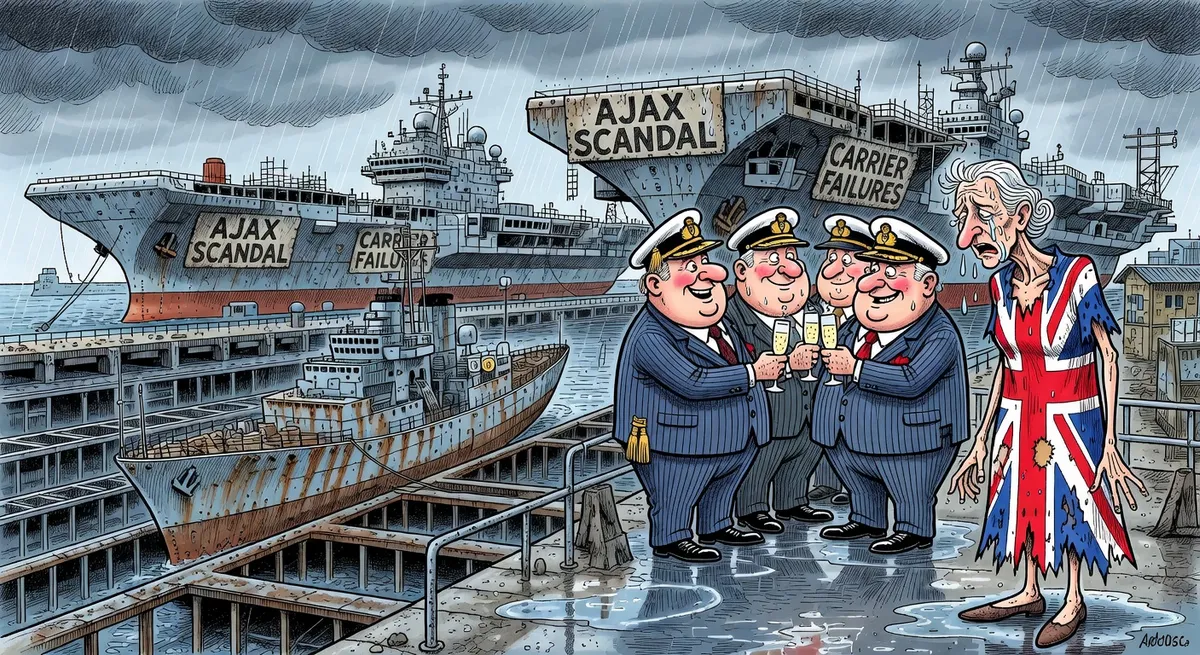
£13 billion in carriers and Ajax yield breakdowns, not readiness
HMS Dragon sailed as the Royal Navy’s only available destroyer to shield UK interests in the Middle East. It required repairs almost immediately upon arrival. This exposes a fleet too depleted for basic deployments.
The navy’s flagship carriers, Queen Elizabeth and Prince of Wales, sat unavailable. Taxpayers funded them at over £6 billion, exceeding the £4 billion estimate. Maintenance alone consumed another £1 billion amid chronic mechanical failures.
Ajax armoured vehicles consumed £6 billion yet remain eight years late. Vibrations and noise during trials sickened soldiers and caused hearing loss. The army faces scrapping the programme without deployable vehicles.
Astute-class submarines suffer repeated breakdowns. Dreadnought replacements for Trident missiles encounter delays and cost surges. These patterns trace back through multiple governments.
Procurement flaws persist despite National Audit Office and public accounts committee rebukes. The Ministry of Defence ignores lessons on waste and outdated systems. Senior officers, often later employed by arms firms, resist shifts to cyber and drone threats.
Keir Starmer approved £1 billion for 12 US F-35 fighters equipped with nuclear weapons. This followed George Robertson’s review, which omitted such systems. Successive defence secretaries across parties deferred to military preferences.
The 2024-25 defence budget stands at £60.2 billion, rising to £73.5 billion by 2028-29 with 3.8% annual growth. Yet the MoD demands an extra £28 billion for “war-fighting readiness.” Treasury hesitation reflects justified scepticism.
Vested Interests Block Reform
Top brass prioritise legacy hardware like heavy tanks over adaptable technologies. Post-retirement arms industry roles insulate them from scrutiny. Whitehall mandarins and ministers fail to enforce change.
This mirrors procurement disasters from Challenger 2 tanks to Nimrod aircraft. Costs balloon while capabilities lag. No senior figure faces demotion or dismissal.
Security Gaps Widen
Britain’s air defence near home remains under-resourced. Carriers serve public relations deployments but fill no gaps. Emerging threats from Iran or Russia exploit these voids.
Public spending diverts to failed projects. Ordinary citizens fund breakdowns without recourse. Institutional inertia spans Labour and Conservative tenures.
Defence exemplifies UK decline: billions squandered on unready forces, unaccountable elites, and repeated errors. Governments promise strength; reality delivers vulnerability. National security erodes as procurement rot festers unchecked.
Commentary based on UK’s armed forces are in a sad state – and they have only themselves to blame at the Guardian.
← Back to commentary