£23,662 Funds Surfing and 76 Beauty Sessions
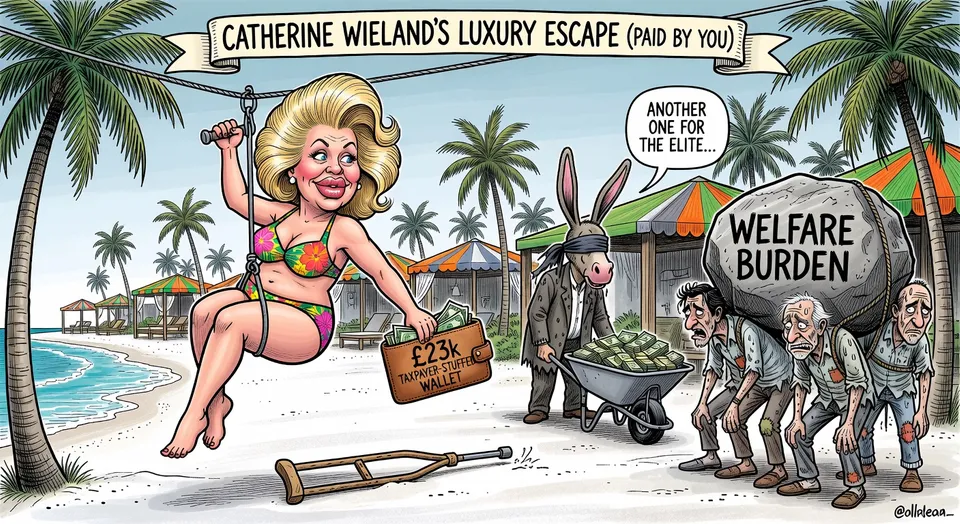
Suspended sentence follows two years of housebound lies
Catherine Wieland's £23k PIP fraud via fake anxiety claims reveals welfare system's fraud vulnerabilities. Suspended punishments and low detection rates burden taxpayers amid rising costs.
Commentary Based On
BBC News
Goring-by-Sea benefit cheat Catherine Wieland caught ziplining in Mexico
Catherine Wieland claimed crippling anxiety kept her housebound.
She collected £23,662 in Personal Independence Payments from 2021 to 2024.
Investigators found her surfing in Cancun, ziplining in Mexico, and visiting Thorpe Park three times.
Bank records exposed 76 beauty appointments, 60 pub and restaurant visits, manicures, tanning, and a private Harley Street dentist.
Wieland spent benefits on luxuries while declaring she could not cook or wash herself.
After her Mexico trip, she filed a review claiming worse symptoms.
DWP confronted her with statements.
She responded: “I didn’t realise you’re not allowed to leave your house.”
Wieland pleaded guilty to failing to notify changes in circumstances.
Judges imposed a 28-week prison term, suspended for 18 months.
She must repay the full £23,662.
No immediate custody followed.
Fraud’s Scale Beyond One Case
DWP publicised this detection.
Related cases include an army veteran jailed for £36,000 fraud and a gang convicted over £50 million in benefits scams.
These expose recurring abuse in disability payments.
PIP targets mobility and daily living aids, yet mental health claims like anxiety prove hard to verify.
Fraud costs taxpayers £8.6 billion yearly across benefits, per 2024 government estimates.
Detection lags far behind.
Detection Relies on Basic Checks
DWP used bank statements and travel evidence.
This caught Wieland after two years of payments.
Most fraud evades such scrutiny.
Only 3% of PIP claims face investigation, despite rising over-claims.
Mental health diagnoses surged 40% since 2019, coinciding with easier online applications.
Cross-party governments expanded PIP without matching safeguards.
Punishment Signals Low Deterrence
Suspended sentences dominate benefit fraud cases.
In 2023, 78% of convictions avoided jail.
Repayment orders often go unpaid; only 45% recover full sums.
Wieland walks free after 18 months’ supervision.
Taxpayers bear the loss until enforcement.
This pattern persists under Labour and Conservatives alike.
Taxpayer Burden in Tight Times
Genuine PIP recipients number 3.5 million.
Fraud dilutes funds for them.
Every £23,662 diverted equals 1,000 hours of nurse overtime or 200 hospital meals.
Amid £1,972 energy bills and 6 million on disability rolls, abuse erodes public support.
Ministers like Andrew Western label it an “insult.”
Yet systemic fixes stall.
Institutional Inertia Rules
Governments pledge crackdowns yearly.
Conservatives targeted £7 billion savings in 2010; fraud rose.
Labour now reviews refugee benefits but spares PIP.
No party mandates income cross-checks or travel bans for claimants.
Officials detect isolated cases for headlines.
Root vulnerabilities endure.
Benefit fraud exemplifies welfare’s unchecked expansion.
Politicians buy votes with loose eligibility.
Taxpayers fund the consequences.
Ordinary workers subsidise ziplines and salon trips.
This fracture in social contract accelerates Britain’s institutional decay.
Commentary based on Goring-by-Sea benefit cheat Catherine Wieland caught ziplining in Mexico at BBC News.