Prescription Drugs Spawn 250 Addictions Without Doctor Warnings
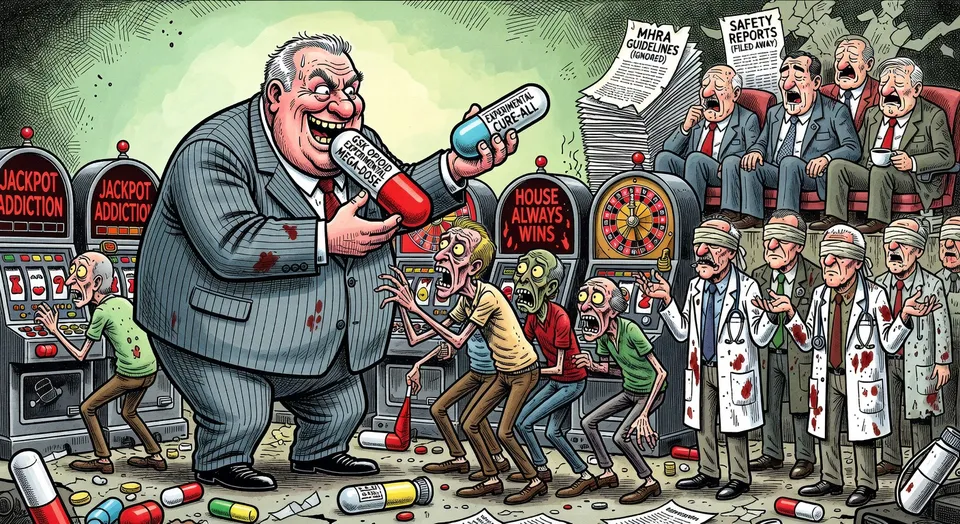
Dopamine agonists trigger gambling and sex compulsions in one in six patients
Over 250 Britons report life-ruining addictions from unwarned NHS prescriptions of dopamine drugs. Regulators delayed alerts for years while GPs ignore side effects, exposing public health oversight collapse.
Commentary Based On
BBC News
Hundreds tell BBC that medication triggered gambling and other addictions
Over 250 Britons contacted the BBC after dopamine agonist medications triggered gambling debts, sex compulsions, and shopping sprees.
Many lost tens of thousands of pounds, shattered marriages, and faced criminal charges.
Doctors prescribed these drugs for restless legs syndrome and Parkinson’s without mentioning the risks, even as patients reported symptoms.
Dopamine agonists like GSK’s Ropinirole boost brain reward chemicals to control movement.
They overstimulate motivation pathways, leading to impulsive acts in one in six Parkinson’s patients—a rate regulators classify as “very common.”
Yet patient leaflets describe effects vaguely as “increased libido” or “harmful behaviour,” omitting specifics like pornography addiction or theft.
Emma developed a gambling habit during pregnancy-related restless legs syndrome treatment.
She lost £30,000 over a year before her husband linked it to Ropinirole via BBC reporting.
Her GP ignored the connection despite her listing the drug and addiction on intake forms.
A solicitor stole £600,000 from clients to fund sex workers and antiques, contributing to two family suicides.
Michael, married with no prior infidelity, slept with 20 people including men, feeling trapped without disclosure options.
Older wives reported long-term husbands turning sexually coercive for the first time.
GSK identified a paedophilia case tied to Ropinirole in 2000—a 63-year-old imprisoned for assaulting a child.
The firm called it “deviant” sexual behaviour in a 2003 internal report shared with regulators in 2004.
Public warnings appeared only in 2007, listing milder terms like “altered sexual interest.”
Regulator Excuses Trail Evidence
The MHRA explains the delay as needing “all available evidence,” claiming leaflets cannot list every “individualised” behaviour.
GSK pursued Ropinirole approvals for restless legs in parallel and tested it for sexual dysfunction in 2005.
Prescriptions in England show no decline despite downgrading the drugs as first-line restless legs treatment.
GP issuance persists nearly a year after BBC’s initial exposure.
The Health Select Committee chair demanded warning reviews last week.
Government officials labelled findings “hugely concerning” but offered no immediate action.
Patients Lack Recourse in UK
Affected Britons report no justice paths for unwarned side effects.
Abroad, a Belgian court acquitted a grandfather of child assault citing the drugs.
A French suit against GSK seeks damages for €90,000 gambling losses and relationship ruin; judgment pending.
UK charities like Parkinson’s UK urge doctor consultations, but patients describe disclosure fears.
Professionals—a police officer, nurses, doctors, bank risk director—suffer silently alongside ordinary citizens.
This pattern exposes NHS gatekeeping failures.
Doctors treat symptoms without side-effect vigilance, turning consultations into risk vectors.
Regulators shield vague warnings while pharma firms expand indications.
The outcome: ordinary patients fund personal ruin through taxes and copays.
Historical precedent marks decline.
Pre-2007, no alerts existed despite early signals.
Post-warnings, prescription volumes and ignorance endure.
Cross-party governments sustained this: Labour and Conservatives oversaw MHRA inertia since dopamine drugs launched decades ago.
Functional oversight would mandate specific warnings, prescription audits, and patient registries.
Instead, 250 cases surface via BBC hotline, not official monitoring.
Broader public health erodes as NHS prioritises volume over safety.
Impulsive behaviours cascade into debt, crime, and mental collapse, straining welfare and courts.
One in six Parkinson’s cases means thousands affected yearly, untracked.
Pharma profits from approvals; regulators cite process; doctors cite guidelines.
Patients bear costs alone.
Regulatory sclerosis and clinical detachment reveal institutional priorities.
Britain’s health system dispenses known harms without accountability, mirroring service decay across sectors.
Citizens become collateral in a machine that values compliance over cure.
Commentary based on Hundreds tell BBC that medication triggered gambling and other addictions at BBC News.