Referendum Result Locks UK From EU Return
Polling records Brexit regret yet institutional rules and party incentives block any path back inside the EU for a generation.
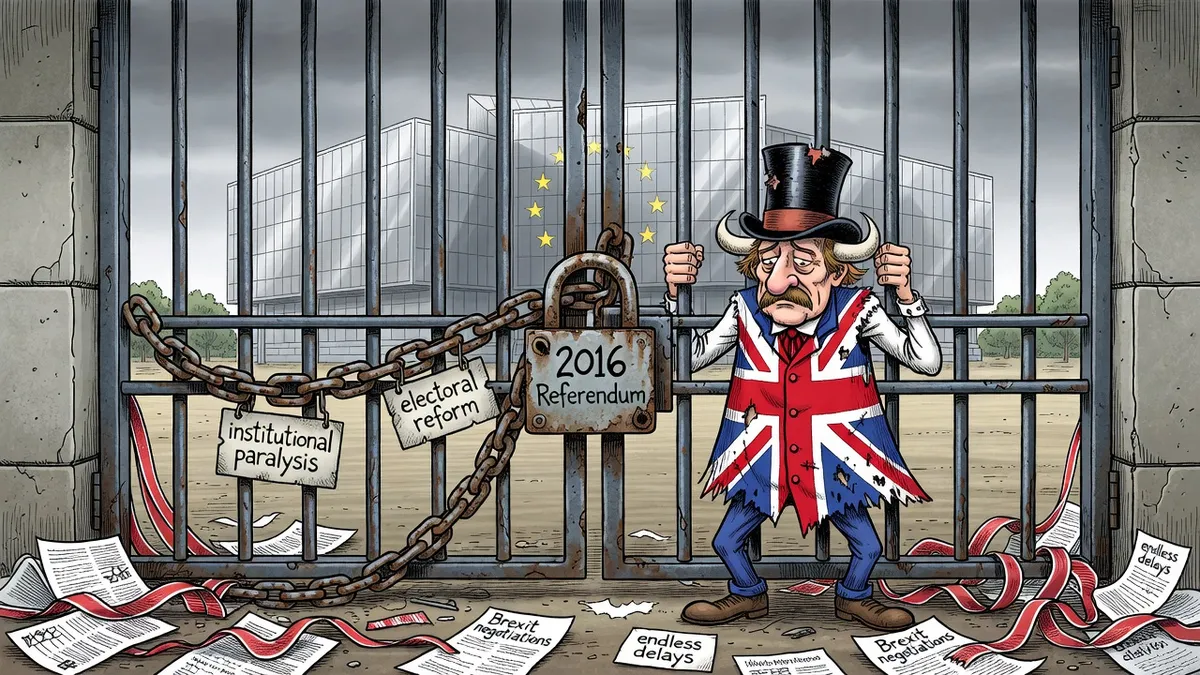
Majority regret meets eight structural barriers with no reversal mechanism
Polls show a majority of UK voters now regard Brexit as a mistake, yet eight interlocking barriers make any reversal impossible within a generation.
The barriers begin with the 2016 referendum itself. Its result continues to confer legitimacy on departure even after documented campaign inaccuracies and subsequent economic data. No mechanism exists to revisit that outcome without triggering accusations of overturning democracy.
A second referendum would reopen the same divisions that have persisted since 2016. Political parties therefore treat the issue as toxic rather than revisable.
Manifesto and Coalition Constraints
Any government seeking re-entry would first require an explicit manifesto commitment. Labour has shown no inclination to adopt one. Smaller pro-EU parties lack the numbers to force the question without electoral reform that remains blocked.
Reform and Conservative factions would gain from any renewed membership debate. Free movement of people would again dominate the campaign, rendering the four freedoms politically untenable in current UK conditions.
Terms and Process
Re-entry terms would exclude the rebate secured in 1984 and any opt-outs previously held. Accession talks would place the UK behind existing candidates and expose it to vetoes from member states recalling past friction over budgets, regulation and foreign policy.
The EU side harbours institutional memory of the UK as a difficult partner. It also faces the risk that any future UK government could repeat the 2016 process and seek partial exit. This transactional pattern distinguishes Britain from the political commitment shown by most existing members.
These constraints do not arise from any single administration. They reflect the absence of institutional pathways for correcting large-scale policy choices once enacted through referendum. Data on trade frictions, regulatory divergence and labour shortages accumulate, yet the structure prevents adjustment.
Britain therefore operates with a fixed external relationship that its own polling indicates no longer matches majority preference. The gap between recorded opinion and feasible action widens with each electoral cycle.
Commentary based on Eight reasons why the UK will not rejoin the EU in my lifetime by Blog Team on LSE European Politics - Bridging research, policy and public debate on Europe.
← Back to commentary