Retail Executives Demand Police Resources After Daily Staff Assaults
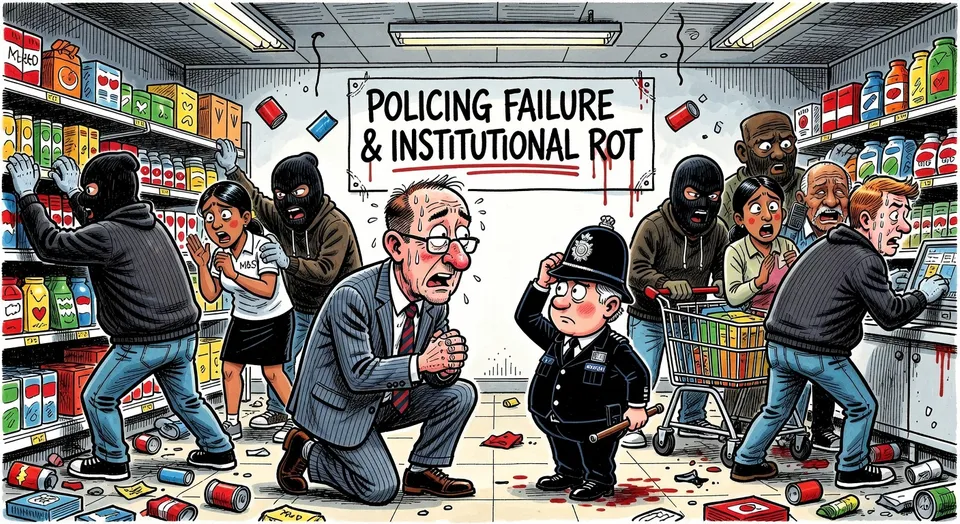
519,000 shoplifting offences and ammonia attacks expose frontline policing void
M&S leaders detail gang assaults on staff amid surging retail crime, as police and ministers offer plans over action. This underscores cross-party failures in enforcement, leaving workers vulnerable and stores ransacked.
Marks & Spencer executives report staff facing violence every day, from headbutts to ammonia attacks, as organised gangs strip locked shelves bare.
Retail crime surges unabated despite government claims of new powers.
Thinus Keeve, M&S retail director, details a single week’s toll: gangs forcing cabinets, brazen steak thefts, youth mobs ransacking stores and assaulting guards, one colleague headbutted, another hospitalised by ammonia.
These incidents follow Clapham High Street disorder, where hundreds of youths targeted an M&S amid fires and fireworks.
Police dispatched 100 officers, arrested six teenage girls for anti-social behaviour, but assaults hit five people including four officers.
Shoplifting offences reached 519,381 in England and Wales last year, up 5% from prior figures.
Escalating Frontline Toll
Customer-facing staff endure abuse as routine.
The Institute of Customer Service survey logs 43% experiencing hostility in six months to October, risen from 36% the year before.
Twenty-six percent took sick leave as result.
M&S invested tens of millions in security, yet executives concede limits without police intervention.
Policing Response Lags
Met Police cite data-driven targeting of prolific offenders and doubled West End officers.
London Mayor Sadiq Khan promises meetings with M&S and continued work with the Met.
Crime minister Sarah Jones labels incidents “disgraceful,” touts ending theft immunity under £200.
Executives counter that crime grows more brazen, organised, aggressive—demanding faster use of existing tools on repeat offenders.
Patterns Beyond London
Rochdale saw dispersal orders after youth harassment of staff and damage.
Solihull imposed 36-hour gathering bans on children and teens causing criminality.
British Retail Consortium deems Clapham scenes “deplorable,” urges doubled efforts.
Iceland’s executive chairman pushes arming guards like in Spain.
Institutional Paralysis Exposed
Retail leaders wrote to Mayor Khan and Home Secretary Shabana Mahmood before Clapham, seeking coordinated action across government, police, industry.
Responses emphasise plans, renewals, promises—not arrests or deterrence.
This mirrors youth mob incursions in Wembley and repeated Clapham breaches, where minimal arrests follow bold disorder.
National crime data shows theft prosecutions halved since 2016, even as offences climb.
Cross-Party Enforcement Void
Labour ends low-value theft immunity, builds on Conservative police funding hikes.
Yet frontline policing yields to capacity strains, with officers assaulted yet few follow-up arrests expected.
Businesses absorb costs, staff quit or call in sick, consumers face locked products and higher prices.
Repeat offenders evade hotspots through inconsistent pursuit.
Britain’s retail sector, once policed effectively, now funds private defences while public order erodes.
Executives’ pleas reveal a justice system issuing powers without enforcement muscle.
Staff hospitalisations and empty shelves signal civic retreat, where commerce funds security states cannot provide.
This retail breakdown documents deeper policing atrophy, cross-party failures leaving workers exposed and high streets hollowed—symptomatic of institutional collapse strangling everyday commerce.
Commentary based on M&S boss calls for more action on crime and abuse of staff at BBC News.