RMT Drivers Reject Voluntary Four-Day Weeks
Half of tube drivers halt services rejecting a voluntary four-day week endorsed by rivals, exposing union splits and chronic transport unreliability amid £1bn TfL deficits.
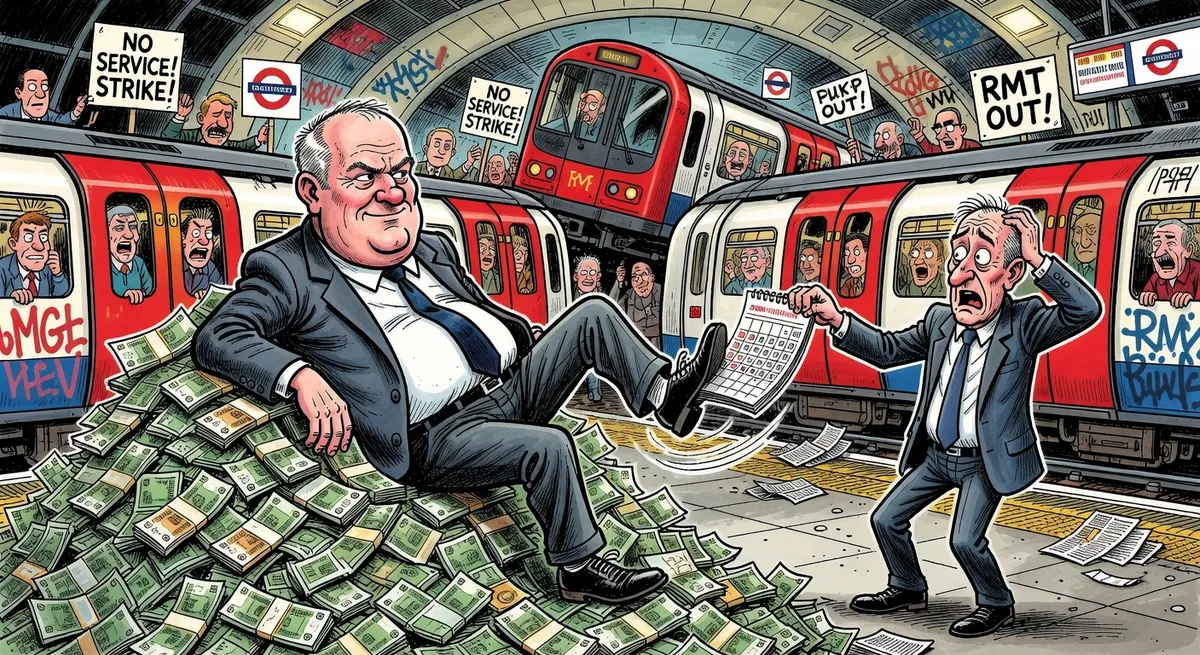
Strikes cripple London despite 35 extra days off offered at no cost
Just under half of London Underground’s drivers, RMT members, launch strikes this week despite TfL’s offer of a voluntary four-day pattern.
The proposal delivers 35 extra days off annually with no pay cut or hour reduction. Aslef, representing the majority, endorses it as a clear gain.
TfL frames the change as matching other rail operators, boosting reliability via electronic systems at zero extra cost.
Strikes hit from midday Tuesday 21 April, then Thursday, slashing services on Piccadilly, Waterloo & City, Circle lines entirely.
Central and Metropolitan segments also halt. Buses and alternatives overload, with roads set to clog from fleeing commuters.
This follows RMT’s 2025 strike for a 32-hour week, deemed unaffordable by TfL.
March action paused for talks, but RMT now accuses TfL of reneging, locking in May and June dates absent resolution.
London loses full tube operation across four days. Cycle hires spiked last strike; fine weather aids walkers, but millions face gridlock.
Union Fracture Exposed
RMT’s solo push ignores Aslef’s backing, splintering driver ranks over a perk both could claim voluntarily.
Eddie Dempsey demands concessions, yet TfL insists no added cost. Aslef calls the action baffling.
Public sympathy wanes as drivers, already on five-day patterns with opt-outs preserved, block peers’ gains.
Transport Reliability Crumbles
London Underground carried 1.2 billion passengers last year amid chronic delays.
Strikes recur: 12 days lost in 2024-25, per TfL data. Each shutdown costs the economy £50-100 million daily in lost output.
Commuters absorb fares funding 40% of operations, cross-subsidized by national taxes.
Funding Trap Tightens
TfL deficits hit £1 billion yearly since Covid, propped by bailouts from Tory and Labour governments alike.
Drivers earn £60,000 median, above national averages, yet patterns lag private rail.
Reform stalls as unions veto efficiencies, mirroring national rail disputes unresolved since 2010.
Pattern of Entrenched Dispute
Post-1997 privatization fragments left rail unrest unresolved.
Cross-party governments concede pay rises—12% in 2024—while dodging work rule overhauls.
Result: 20 lost strike days yearly on average, eroding punctuality to 75% from 90% in 2000.
Ordinary Londoners pay via congestion and lost wages. Firms shift hours or remote work, hitting high streets.
Systemic Paralysis
TfL’s voluntary model sidesteps mandates, yet RMT entrenches opposition.
No binding arbitration exists; talks collapse routinely.
This dispute reveals public transport’s core pathology: unions prioritize maximalism over modernization.
London’s veins clog again, stranding workers as productivity stagnates.
The episode underscores Britain’s transport sclerosis. Strikes persist across administrations because incentives reward deadlock, not delivery. Commuters endure the cost of un reformed public sector fiefdoms.
Commentary based on Tube strikes: how disruptive will action by London Underground drivers be? at the Guardian.
← Back to commentary