Royal Mail First-Class Deliveries Miss Target for Fourth Straight Year
Royal Mail's Q2 first-class on-time rate reached 82.5 percent against the 90 percent target. Ofcom has levied £37 million in fines since 2023 even as parent revenue grew to £6.85 billion.
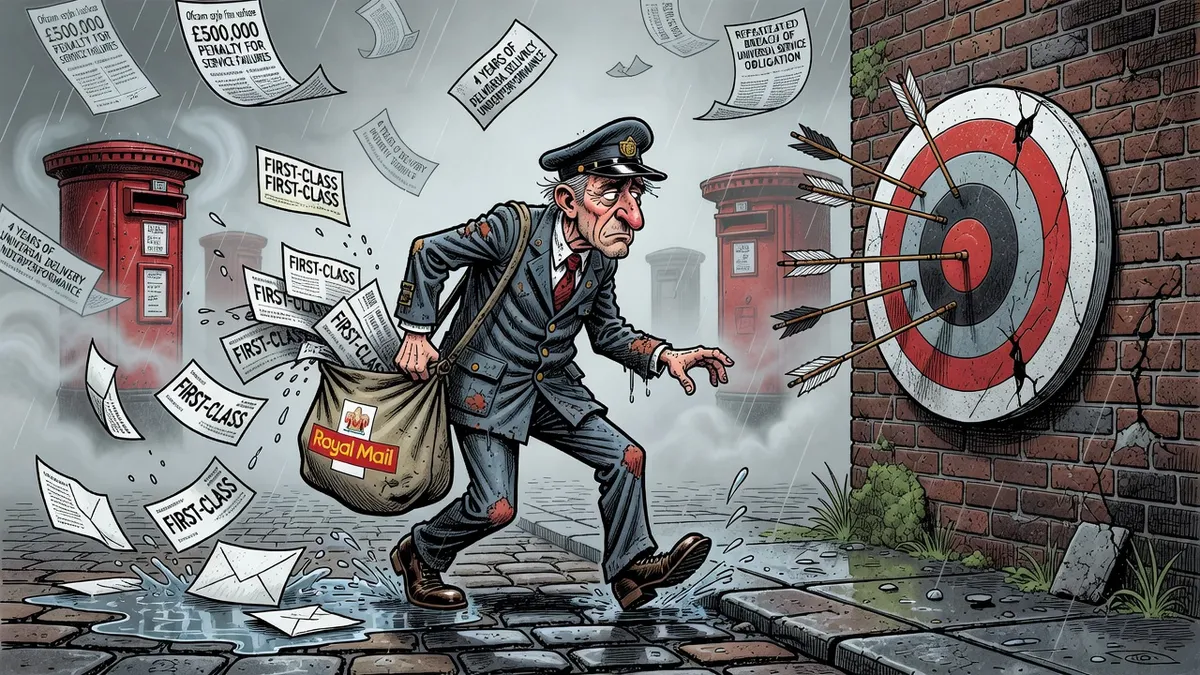
Royal Mail delivered 82.5 percent of first-class letters on time in the second quarter of this year. The regulatory target stands at 90 percent. Performance has now fallen short for four consecutive years.
The company last met its first-class standard in 2017. Ofcom has already imposed £37 million in fines since 2023. An active investigation examines whether parcel traffic receives priority over letters, an allegation raised by unions and whistleblowers.
Revenue Growth Amid Service Shortfall
International Distribution Services, the parent company acquired last year by Czech billionaire Daniel Křetínský, reported revenue of £6.85 billion for the six months to September. Royal Mail itself posted £4.13 billion, a 3.9 percent increase. Letter volumes have halved over the past decade to 6.7 billion items while the number of addresses served rose by four million.
Stamp prices increased again in April, with first-class now at £1.80. The company plans to cut 2,500 head-office and support roles. It hired 22,000 seasonal workers ahead of peak demand.
Regulatory Adjustments and Reduced Obligations
Ofcom permitted a downgrade to the universal service obligation last year. Second-class deliveries now run on alternate weekdays only, with no Saturday service. Despite this concession, second-class performance fell to 87.2 percent against a 95 percent target.
Citizens Advice described the outcome as a “pot luck service.” The regulator’s targets exist to protect the public monopoly element of the postal network. Repeated breaches have produced fines but no structural correction.
Patterns Across Ownership and Policy
The service operated under public ownership until 2013. Performance shortfalls predate the current owner and continued through pandemic suspensions. Each government since has accepted lower delivery standards rather than enforce restoration.
The incentive structure now rewards volume growth in parcels while the statutory letter obligation receives secondary attention. Citizens in rural areas and those reliant on timely post for official documents bear the direct cost.
This record illustrates how essential public functions degrade when measured primarily by revenue and cost metrics. Successive adjustments to targets and fines have normalised substandard delivery without restoring prior levels of reliability.
Commentary based on ‘Pot luck service’: Royal Mail on course to miss delivery targets for fourth year in a row by Lauren Almeida on the Guardian.
← Back to commentary