Sanctions on Settlement Goods Prompt Israeli Consulate Closure and UK Partisan Split
Britain's targeted trade restrictions on occupied territories draw Israeli retaliation and opposition criticism, revealing narrow diplomatic margins and domestic divisions without broader policy shifts.
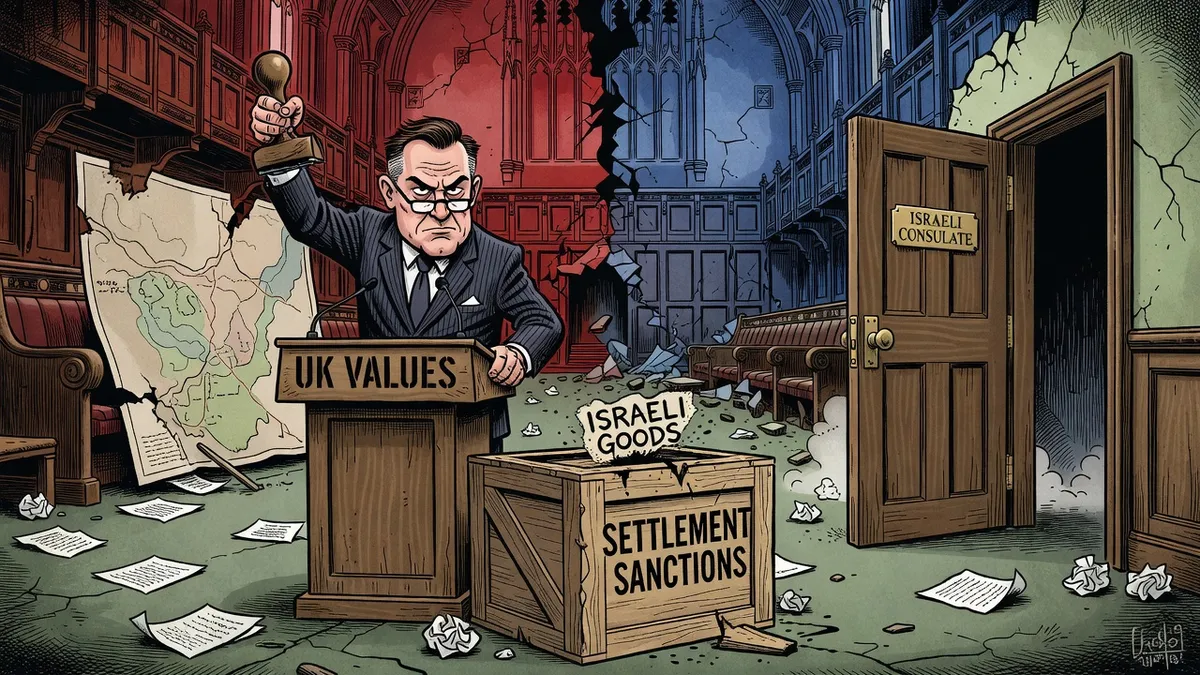
Britain’s sanctions on Israeli settlements arrive framed as defence of universal values. The measures target goods from occupied territories and join Canada and France in a limited trade ban. Yet Israeli authorities responded by closing the British consulate in East Jerusalem and barring twelve UK figures from entry.
The announcement rests on repeated assertions that Britain will lead in support of a two-state solution. Official statements cite Palestinian suffering and insufficient aid as justification. No data is supplied on how the new restrictions will increase aid flows or alter settlement construction rates on the ground.
Enforcement Mechanics
Customs systems already distinguish settlement goods from those originating inside Israel for tariff purposes. HMRC checks originating status on items including produce and processed foods. A full ban adds criminal penalties and forces returns of mislabelled shipments, raising costs for traders who previously faced only extra duties.
Nine additional European states issued statements but stopped short of immediate bans. The joint declaration therefore covers three active participants out of twelve signatories. Israeli voters show little reaction according to local analysts, who note domestic security and election timing dominate public attention.
Political Division at Home
Conservative leader Kemi Badenoch labelled the policy antisemitic in published remarks. Israel’s foreign minister publicly thanked the opposition for its stance and recorded ongoing contact with shadow ministers. This exchange confirms the sanctions have widened domestic partisan splits without securing cross-party backing.
Labour figures present the measures as consistent application of international law. Critics note the same government maintains free trade provisions with Israel proper and has not altered broader defence or intelligence cooperation. The gap between targeted trade restrictions and comprehensive rupture remains unaddressed in official statements.
Limited External Leverage
Retaliatory closure of the East Jerusalem consulate removes one established diplomatic channel. Entry bans on sitting MPs and legal advocates further reduce direct observation capacity. These outcomes illustrate the narrow margin available to UK policy once measures move beyond rhetoric.
The episode fits a longer pattern in which successive governments issue declarations on distant conflicts while measurable domestic indicators on infrastructure, public order and service delivery continue to deteriorate. International gestures substitute for visible restoration of internal capacity.
Britain’s foreign policy statements now operate against a backdrop of reduced economic weight and fractured political consensus at home. The sanctions register as procedural adjustments rather than decisive shifts in regional outcomes.
Commentary based on Burnham says Britain will ‘continue to act in support of our values’ after UK launches sanctions on Israel – as it happened at the Guardian.
← Back to commentary