Scotland Logs Sixth-Highest Drug Death Toll as Nitazenes Triple in Impact
Scotland recorded 1,133 drug-related deaths in 2025, an 11 percent rise, with opiates in 78 percent of cases and nitazenes appearing in 247 deaths. Fatalities remain concentrated in deprived areas.
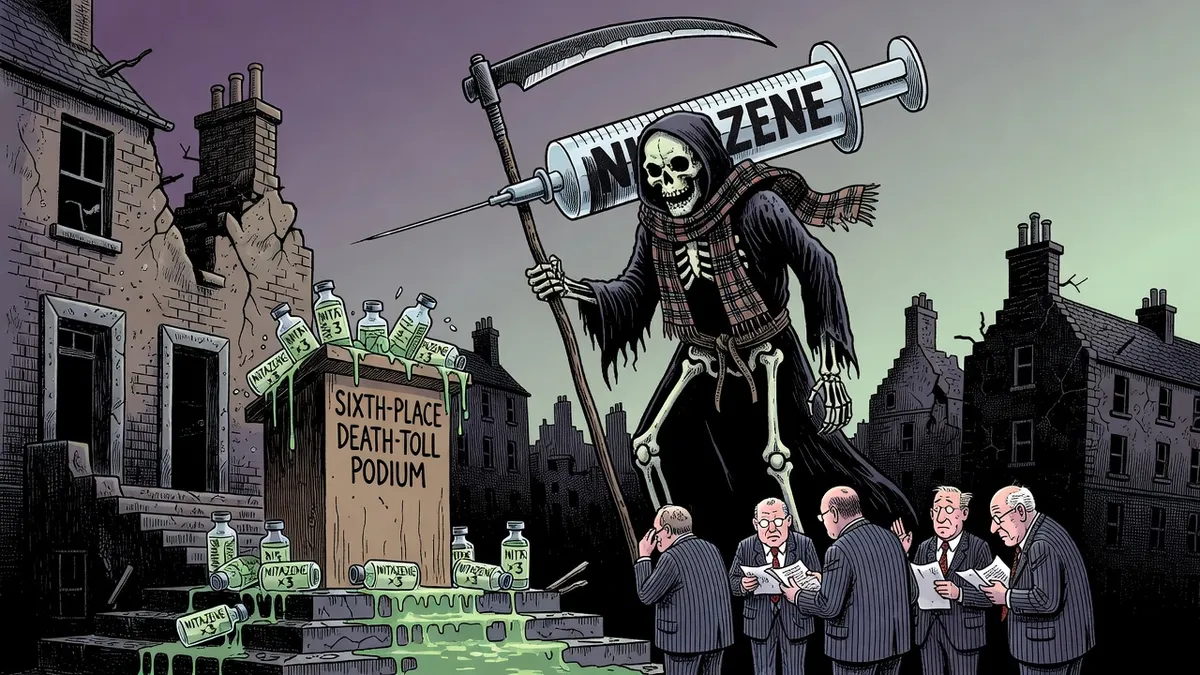
Scotland recorded 1,133 drug-related deaths in 2025. This marked an 11 percent rise from the prior year and the sixth-highest annual total on record.
National Records of Scotland data show opiates and opioids implicated in 78 percent of cases. Nitazenes, laboratory-made synthetics hundreds of times stronger than heroin, appeared in 247 deaths, more than triple the 76 recorded the year before.
These substances enter the illicit supply through illegal production networks. Users often encounter them unknowingly when mixed with other drugs, raising lethality without warning.
Deprivation patterns
Deaths occurred at 15 times the rate in Scotland’s most deprived areas compared with the least deprived. Male fatalities rose 19 percent, with the average age at death remaining 46.
The concentration in poorer communities aligns with longstanding gaps in housing, mental health services, and economic opportunity. Official statements link the rise to poverty and trauma yet provide no reversal in those underlying metrics.
Policy response limits
The Scottish government funded over 1,100 residential rehabilitation placements and plans new drug-checking services in Glasgow, Aberdeen, Dundee, and Edinburgh. Ministers described the supply as increasingly toxic and called for more coordinated action.
Last year’s lower figure was already flagged by the Scottish Drugs Forum as likely temporary. The subsequent reversal shows that expanded treatment slots and testing facilities have not altered the upward trajectory.
Scotland continues to hold Europe’s highest drug death rate. Successive administrations have documented the same drivers—unpredictable supply, deprivation gradients, and limited treatment reach—without closing the gap to peer nations.
The pattern indicates institutional capacity to register deaths and announce incremental programs exceeds the capacity to reduce them.
Commentary based on New powerful synthetic opioids behind sharp rise in Scottish drug deaths by Eve Livingston on the Guardian.
← Back to commentary