Scotland Records 742 Bank Branch Closures Since 2015
Rural towns lose physical banking while post offices operate under strict limits and digital alternatives exclude vulnerable users.
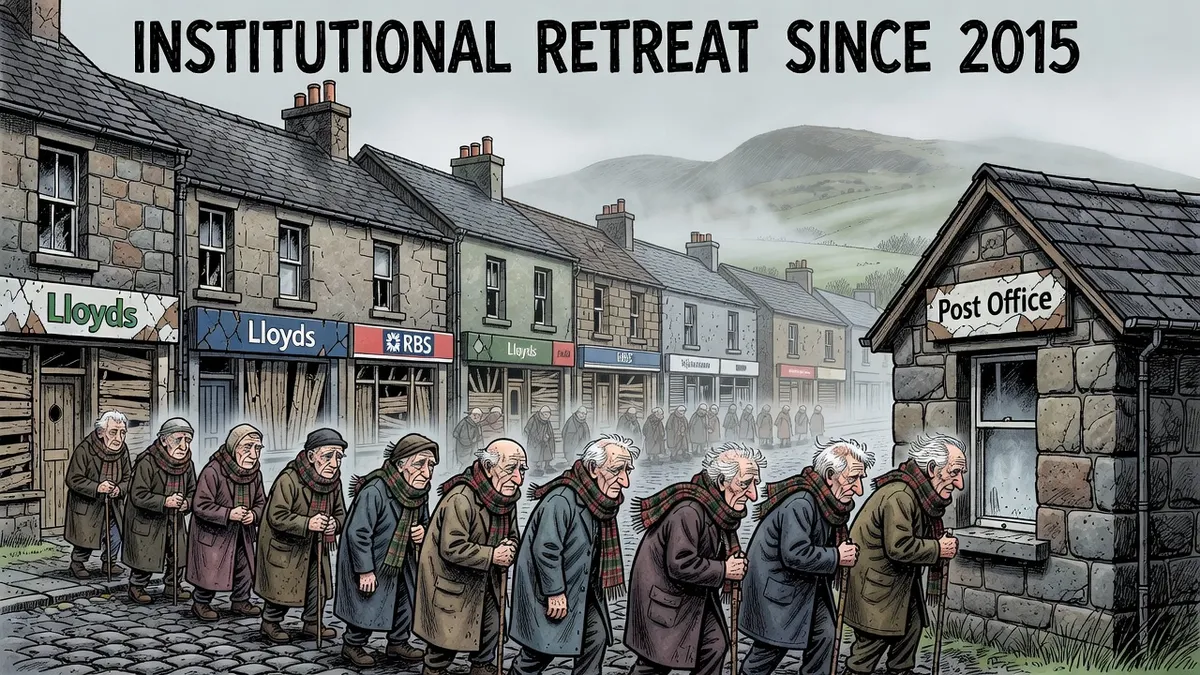
Final Lloyds exit in Lochgilphead strands elderly customers 37 miles from services
Last bank branch closure in Lochgilphead leaves 84-year-old residents without local access to accounts they have held for decades. Their nearest alternative sits 37 miles away in Oban. Lloyds Banking Group, owner of Bank of Scotland, states the branch is no longer viable because most customers now prefer online services.
Scotland has recorded 742 bank branch closures since 2015. The Argyll, Bute and South Lochaber area alone accounts for 25 of those losses. Constituencies such as Caithness, Sutherland and Easter Ross have seen 30 closures in the same period.
Maggie Dodd, a customer since 1976, reported immediate distress over the loss of face-to-face banking. She has joined an informal buddy scheme with another resident to handle transactions at the local post office. The post office sub-postmaster confirms strict limits on cash withdrawals, deposits and cheque handling that full bank branches do not impose.
Local businesses report practical failures with card machines and ATMs. The Argyll Café has twice in a single day dealt with customers whose cards failed, forcing staff to extend credit for food. The Community Shop warns that delayed cash deposits raise insurance costs and increase on-site cash holdings.
Argyll and Bute Council submitted a request for a shared Banking Hub. Link, the body responsible for assessing cash access, rejected it on the grounds that existing ATMs and the post office already provide sufficient coverage. A government review into face-to-face banking access remains due to report in October.
The pattern shows repeated institutional preference for digital migration over maintained physical infrastructure. Residents without reliable internet, smartphones or fraud-protection skills bear the direct costs through travel, anxiety and restricted transaction options. Similar withdrawals continue across rural constituencies regardless of which bank group initiates them.
This outcome follows the same trajectory seen in other essential services where cost calculations override measured demand from older and less mobile populations. The result is permanent removal of basic financial facilities from towns that once supported them without external subsidy or special pleading.
Commentary based on How many banks have closed in your area? See our chart at BBC News.
← Back to commentary