Scotland's Ex-Mining Districts Trap Generations in Stagnation
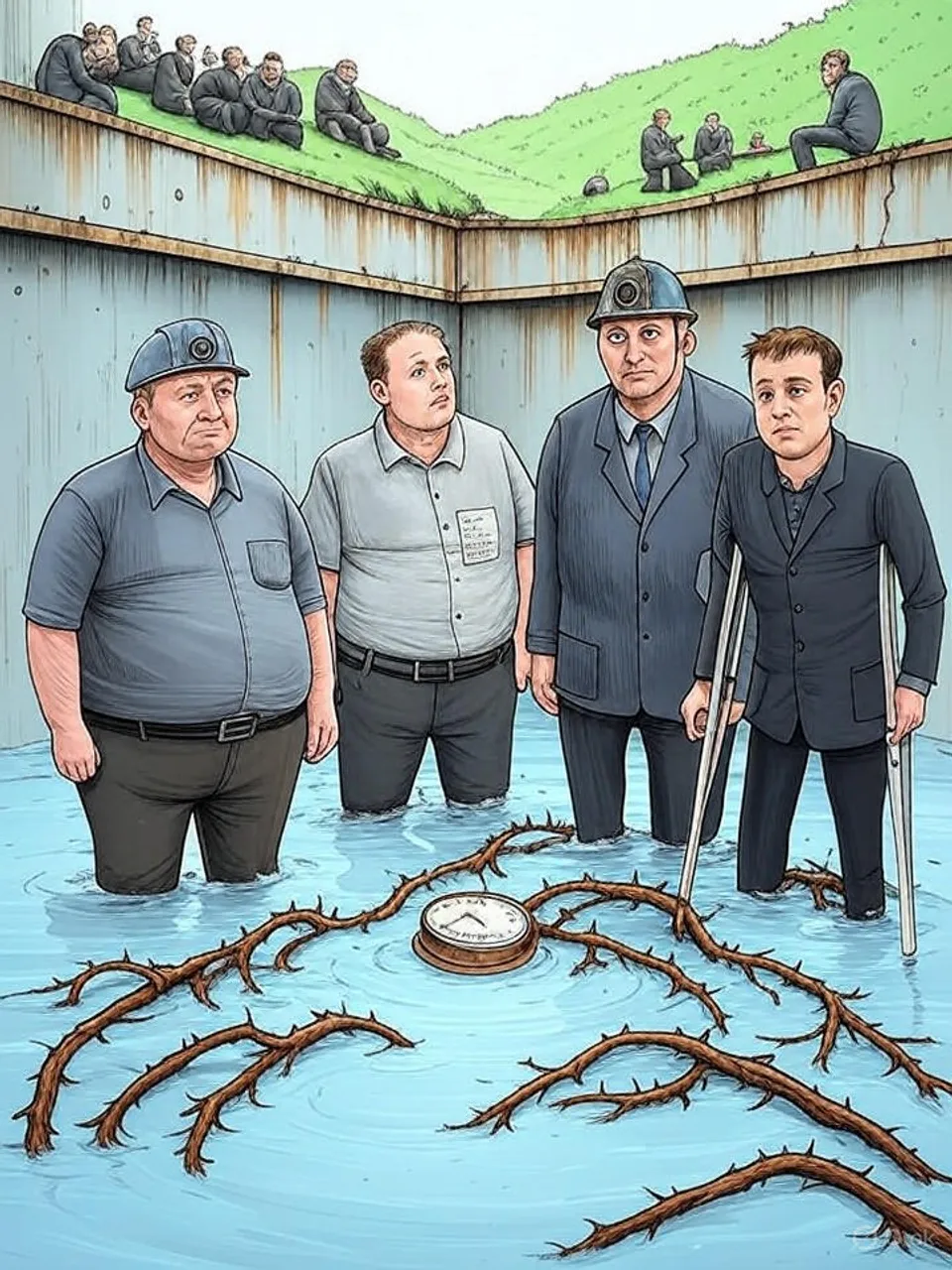
Social Mobility Commission data shows zero progress since 2000s in Ayrshire and Lanarkshire
Fifty years after mine closures, Scotland's industrial heartlands show entrenched disadvantage in jobs and childhood outcomes. Governments across decades failed to regenerate, widening UK mobility gaps.
The Social Mobility Commission’s latest report documents zero progress in Scotland’s former industrial heartlands since the early 2000s. Areas like Ayrshire, Lanarkshire, and West Dunbartonshire register persistent disadvantage in jobs, income, and childhood conditions. Officials label these “scars” from 1980s mine closures, now 50 years old.
Deindustrialisation hollowed out these communities. Coal and manufacturing sustained them for generations until rapid shutdowns in the 1980s. Governments since replaced few jobs with equivalents.
East Ayrshire shifted from unfavourable to middling childhood conditions between 2000 and 2024. North Lanarkshire, West Dunbartonshire, and North Ayrshire slid the other way. North Ayrshire holds “entrenched disadvantage” status for job prospects, locked in the worst category since 2000.
These metrics track occupation, income, education, housing, and wealth. Decline means children face worse prospects than two decades ago. The report pins this on deindustrialisation’s “long shadow.”
Rural Scotland compounds the problem. Young people in Moray, Dundee, Fife, Argyll & Bute, the Borders, Shetland, and Na h-Eileanan Siar saw labour market conditions worsen. Long commutes to education or work crush low-wage starters.
UK-wide trends amplify Scotland’s malaise. Absolute income mobility peaked for those born in the mid-1970s, then fell. Fewer now out-earn parents at the same age, with sharp drops since 2010 tied to stagnant wages and housing costs.
Relative mobility ranks the UK below Nordic countries, Australia, Canada, and New Zealand. Housing access deteriorated most. Inheritance now dictates life chances more than ever.
Cross-Party Neglect Sustains the Divide
Every government since 1980s closures promised regeneration. Thatcher accelerated pit shutdowns; Blair targeted deprivation funds; SNP pursued green jobs. Outcomes stayed flat.
The Commission calls persistence “deeply shocking.” Gaps widened in the 21st century’s first two decades. No administration reversed entrenched patterns.
Cities like Edinburgh and Manchester show gains through professional class growth. Post-industrial zones lag because opportunities cluster elsewhere. Governments redistribute little.
Alun Francis, Commission chair, urges faster change at larger scale. He notes innovation shifts locales but UK concentrations leave communities behind. Data contradicts optimistic rhetoric from Holyrood and Westminster.
Inheritance Trumps Effort
Housing mobility collapsed as prices soared. Professional expansion slowed, capping upward paths. Young Scots inherit disadvantage or distance from opportunity hubs.
Rural youth bear commuting costs on entry wages. Urban ex-mining areas offer few local prospects. Both feed national mobility slump.
This exposes governance failure. Functional systems rebuild economies post-shock. UK variants deliver vague funds, training schemes, and wind farms that employ hundreds, not thousands.
Citizens pay via taxes for distant successes while locals claim benefits. North Ayrshire exemplifies fiscal drag from perpetual disadvantage.
Half a century proves deindustrialisation’s wounds self-perpetuate under successive regimes. Scotland’s heartlands document Britain’s mobility machine’s breakdown—no party fixed it, none will without dismantling clustered gains. Citizens inherit locked fates in a nation that preaches fairness but engineers divides.
Commentary based on Scotland still feeling 'scars' of mine closures 50 years ago by Gabriel McKay on The Herald.