Sheep Virus Cases Multiply as Surveillance Stays Fixed
Bluetongue spread exposes unchanged disease response capacity amid shifting environmental conditions and strained farm finances.
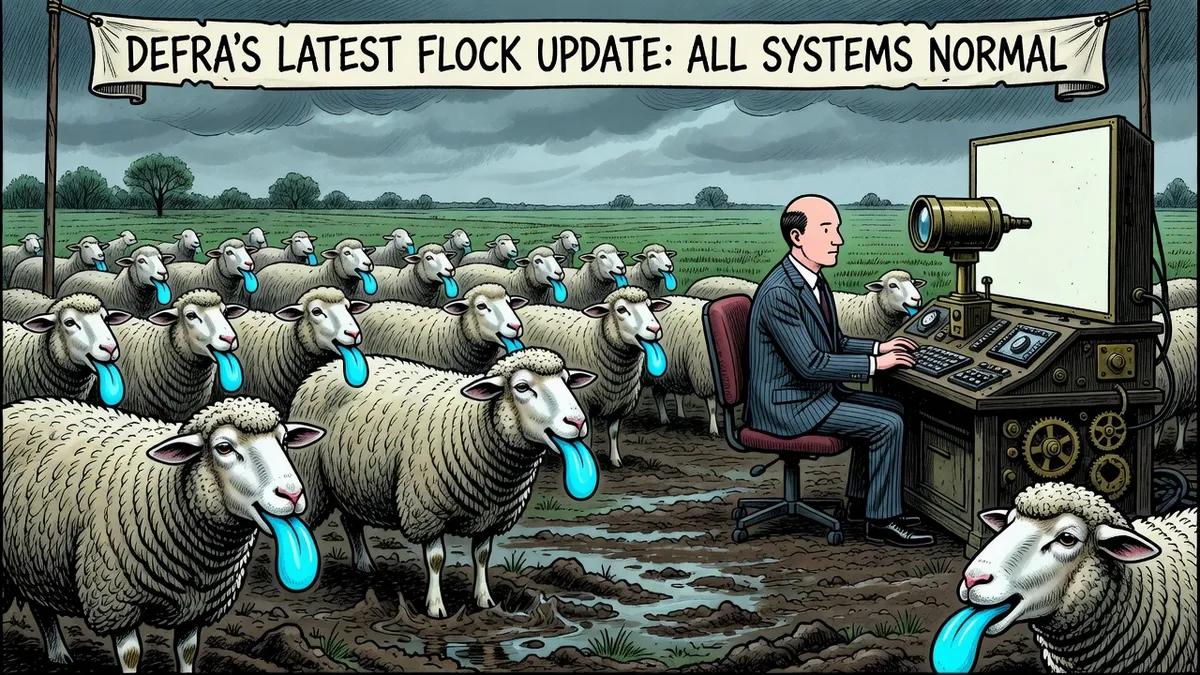
Weekly reports jump from 115 to 590 while testing and reporting systems lag
Sheep disease cases rose from 115 to more than 590 in a single week across southern England and parts of Wales. The increase coincides with sustained hot, humid conditions that boosted midge populations carrying the bluetongue virus.
The virus produces fever, lip and tongue swelling, and extended recovery periods in affected animals. It does not always kill outright, yet Dutch data from late 2023 showed mortality exceeding 4 percent of the national flock during a comparable outbreak. UK farmers now face the same pattern without equivalent scale of recorded deaths.
Reporting relies on self-notification to the Animal and Plant Health Agency. Farmers describe overloaded phone lines and delays that likely suppress the true case count. Testing protocols limited to three animals per holding further restrict visibility into infection levels on individual premises.
A National Audit Office assessment published last year already flagged insufficient preparation for serious animal disease events. Current operations show continued dependence on the same surveillance model despite the documented northward movement of bluetongue since the late 1990s.
Farmers operate under simultaneous financial constraints. Basic payment closures and reduced agri-environment budgets have already reduced margins for upland sheep operations. Vaccination requires 28 days for full immunity, and supply logistics now compete with peak midge activity through autumn.
Defra statements emphasise monitoring and industry liaison. These responses contain no new resource commitments or changes to testing thresholds. The pattern matches prior episodes where official language described vigilance without corresponding expansion of field capacity.
The episode illustrates how environmental range expansion meets static administrative systems. Livestock keepers absorb the direct costs while surveillance and support structures remain calibrated to earlier climatic conditions.
Commentary based on Alarming surge in bluetongue disease reported among UK sheep at the Guardian.
← Back to commentary