Sixteen Percent Youth Joblessness Dwarfs National Rate
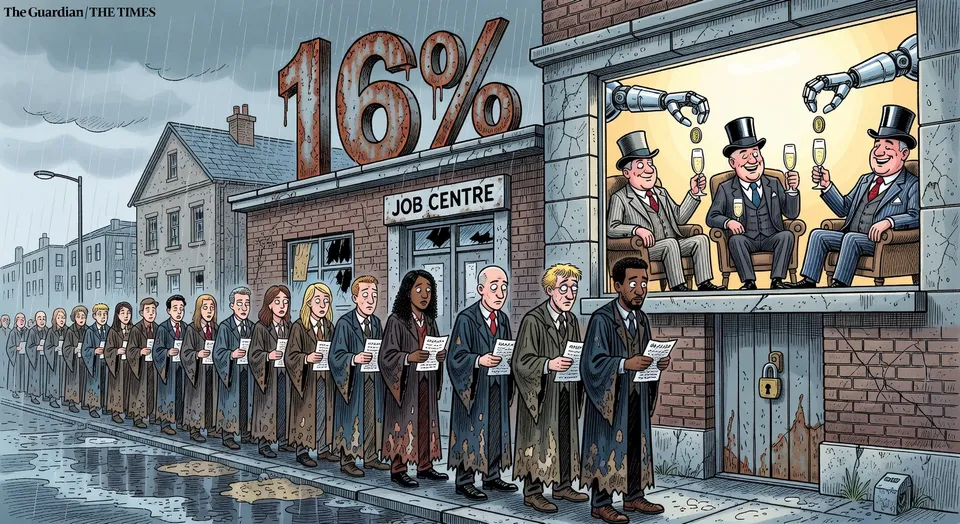
ONS data triples national average as graduates queue for cafe shifts
16.1% of 16-24 year-olds cannot find work, triple the UK rate, as policy pledges exclude graduates and AI erodes entry roles. This locks a generation out of productive careers amid stagnant growth.
The Office for National Statistics reports 16.1% of 16- to 24-year-olds unable to find work, triple the national unemployment rate of 5.1%. This figure excludes those inactive due to illness or study, masking a deeper crisis. Official narratives of economic recovery clash with this youth exclusion from the labour market.
Young people absorb the sharpest cuts. Retail and hospitality sectors, traditional entry points, shed starter roles amid rising costs. A Cambridge University graduate now serves coffee in London after 50 fruitless applications yielded one interview.
Entry barriers demand impossible experience. Employers reject fresh talent lacking prior jobs, creating a self-reinforcing cycle. Graduates from elite institutions join those from agricultural colleges in unanswered pleas to farms and firms.
Artificial intelligence accelerates the squeeze. AI handles data processing, reports, and basic tasks once assigned to juniors. Financial analysts note this scarcity hits first-time workers hardest, with hiring teams now using algorithms to cull CVs.
Even AI-resistant roles evade the young. A 21-year-old in County Durham applied to 40 care, retail, and hospitality positions over four months before one offer. Job centres provide monitoring, not meaningful aid.
Policy Responses Fall Short
The government’s Youth Guarantee targets only 18- to 21-year-olds who are NEET for 18 months. It promises apprenticeships or paid work but ignores university graduates facing identical barriers. A 24-year-old linguist lives on Universal Credit with parents, her degree sidelined by rejections.
Retail employers dismiss degree-holders as flight risks. Professional roles require years of experience graduates cannot accrue. This leaves skilled youth in limbo, applying to any paying job.
Businesses blame minimum wage hikes for staffing restraint. Costs force selectivity toward proven hires. Yet wage growth trails productivity stagnation that predates recent rises.
Patterns of Persistent Decay
Youth joblessness echoes historical laggards. The UK labour market has trapped young entrants since the 2008 crash, with entry rates below pre-1990s norms. Governments of all stripes pledge activation but deliver fragmented schemes.
Productivity growth, at 0.5% annually since 2008, lags G7 peers by over 20 points. This underpins employer caution and automation shifts. Young Britons emigrate at net rates of 111,000 yearly, per recent data, fleeing low-wage traps.
Institutions capture the dysfunction. Job centres enforce compliance over placement, as claimants report. Support groups like the Platform Project fill gaps nonprofits cannot sustain.
Ordinary citizens bear the toll. Families subsidize idle graduates on benefits. Taxpayers fund guarantees that reach few while economic output stagnates.
This youth lockout exposes Britain’s core economic pathology: a labour market that discards its future amid cross-party neglect. Degrees devalue, skills atrophy, and dependency entrenches. Decline compounds as the young generation forfeits its prime earning years.
Commentary based on 'Soul-destroying': Young jobseekers on the struggle to find work at BBC News.