Supported Housing Profits Flow to Overseas Investors Amid Substandard Tenant Conditions
Britain's supported housing channels benefits into inflated sales for foreign buyers, leaving residents in mould-ridden properties with minimal care, as seen at Castleview House.
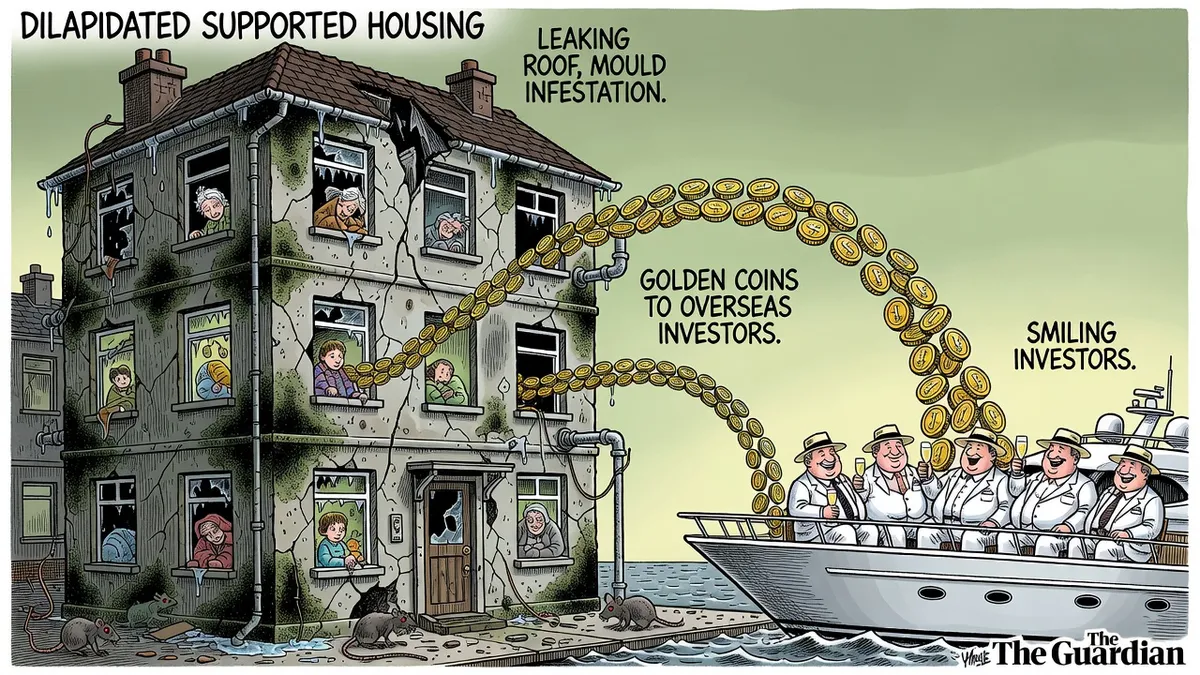
Britain’s supported housing system now channels public benefits into inflated property sales for overseas investors while tenants receive substandard conditions and minimal care.
Castleview House in Runcorn illustrates the pattern. Residents report black mould, rats, and overflowing rubbish. One tenant, Phil, lives there on benefits yet states he has received no support or visits from the housing provider Nurture despite the property’s classification as supported exempt accommodation.
Marketing materials sold the same flats at double the local value. A Czech buyer paid £163,150 for a unit comparable flats in the block sold for around £75,000. The estate agent Britské Reality described the property as government-funded, well-maintained, and delivering secure returns. Similar promotions targeted buyers in Hong Kong, Nigeria, Turkey, and the Netherlands.
Developer and Provider Links
Developer Lee Jones converted the former office block into over 200 flats in 2019. His company granted Nurture a 25-year lease on selected units. Jones and Nurture chief executive Chris Smith share directorships in other housing firms. Jones’s developments using the same model appear in Doncaster, Rotherham, Stockton-on-Tees, and Bradford.
Nurture’s marketing claimed specialist supported housing under Section 117 of the Mental Health Act. The Regulator of Social Housing later stated Nurture was not registered for that category at Castleview and described the claim as shocking. Nurture now says the block operates under a general housing model and attributes misleading foreign adverts to third parties.
Regulatory and Accountability Gaps
Supported exempt accommodation permits providers to exceed standard housing benefit caps on the basis of extra costs for care and supervision. The amount and quality of that support remain undefined in statute. Multiple residents at Castleview reported receiving nothing beyond basic tenancy management.
Over 40 companies market comparable properties. The structure requires a registered provider to claim the higher payments, yet private developers and overseas owners capture the capital gains from inflated sale prices. Tenants fear eviction if they complain.
This arrangement repeats across England. Public funds intended for vulnerable people with mental health issues, addiction, or domestic violence histories instead underwrite asset values sold abroad. No single entity holds direct responsibility for the gap between marketed promises and delivered conditions.
The system sustains itself through weak definitions, fragmented oversight, and the absence of consequences for developers or providers when standards collapse. Ordinary citizens fund the returns while living standards in the properties deteriorate.
Commentary based on Mouldy, infested housing for vulnerable people sold as ethical investments abroad at BBC News.
← Back to commentary