Swap Rates Breach 4.52 Percent as Oil Shocks Reach UK Mortgage Holders
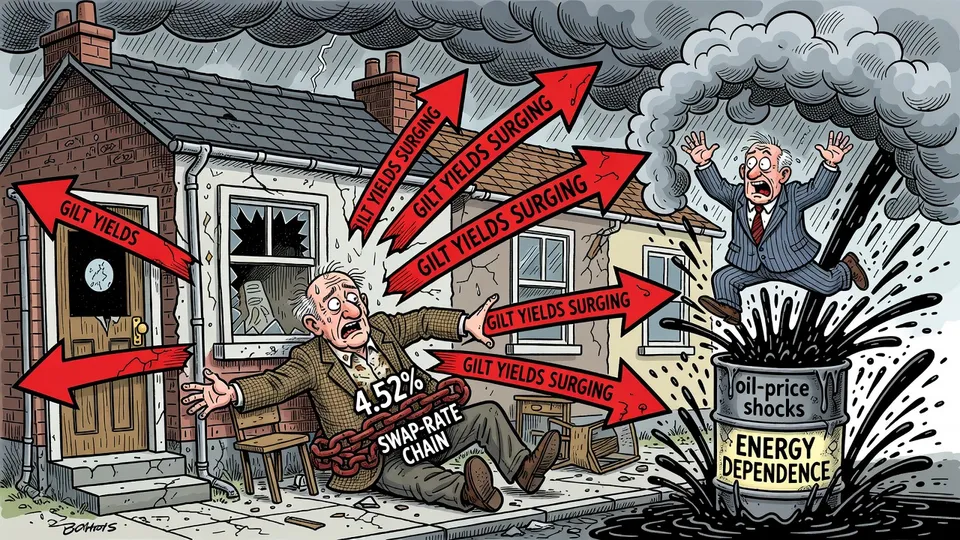
Gilt yields hit 2008 levels while lenders begin passing costs to borrowers
Rising five-year swap rates force mortgage adjustments after oil-driven bond sales expose UK energy dependence and fiscal limits.
Commentary Based On
the Guardian
UK mortgage borrowers brace for rate jump amid global bond sell-off
UK swap rates climbed above 4.52 percent this week, the highest since October 2023, pushing fixed mortgage rates higher for new and existing borrowers.
The five-year rate directly influences how lenders price loans. Coventry Building Society responded first by lifting rates across its residential and buy-to-let ranges. Average two-year fixed deals now sit at 5.59 percent while five-year fixes reach 5.63 percent.
Oil price spikes triggered the move. US-Iran exchanges drove Brent crude higher, reviving inflation fears and prompting investors to sell government bonds. UK gilt yields rose more sharply than those in peer markets, lifting swap rates that banks use to hedge mortgage books.
The Bank of England faces internal pressure to respond. Chief economist Huw Pill argued for decisive action to cut through uncertainty, repeating his July call for a rate increase that was outvoted. Markets currently price no change at the next policy meeting, yet higher borrowing costs for households continue to build.
Government borrowing costs compound the pressure. Ten-year gilt yields touched their highest level since 2008 on consecutive days. The new prime minister pledged fiscal responsibility in his first prime minister’s questions appearance, yet elevated debt service expenses limit room for any spending adjustments in the autumn budget.
These movements expose repeated UK exposure to external commodity shocks. Energy import dependence converts distant geopolitical events into immediate domestic cost increases for households already managing elevated mortgage payments. Lenders protect margins by passing yield rises directly to borrowers, while central bank divisions and government borrowing constraints reduce policy flexibility.
The pattern shows structural fragility rather than temporary volatility. Successive administrations have left the economy sensitive to oil and bond market swings, with households absorbing the resulting rate adjustments without offsetting domestic buffers.
Commentary based on UK mortgage borrowers brace for rate jump amid global bond sell-off at the Guardian.