TalkTalk Sheds Broadband Business in Discounted Sale to Avoid Administration
Facing a 60 percent customer drop since 2019, TalkTalk sells its broadband operations and PXC wholesale unit at reduced prices, with owners absorbing around £1 billion in losses.
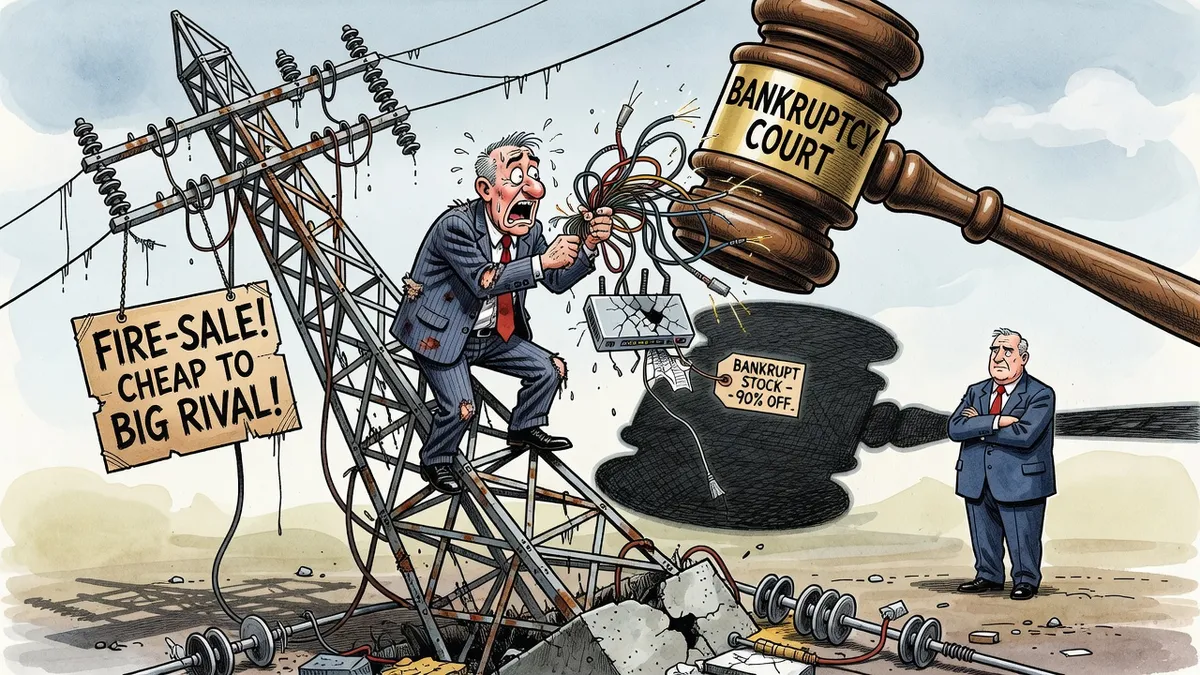
TalkTalk is selling its consumer broadband business and wholesale arm PXC at heavily discounted prices to avoid administration, with owners including founder Charles Dunstone set to write off roughly £1 billion in debt.
The company has lost more than 60 percent of its customers since 2019, dropping from 4 million to around 1.5 million. This contraction occurred in a market where scale and network investment determine survival. The resulting revenue shortfall left the business unable to service its debts.
Customer and Job Exposure
TalkTalk ranks as the UK’s fourth-largest broadband provider. Its collapse would directly affect 1.5 million households, including 250,000 classified as vulnerable. The proposed buyer, Opus Broadband, has stated that maintaining connections and protecting 900 jobs forms its priority. Industry analysts note that Ofcom oversight would aim to limit service disruption during any platform migration.
PXC supplies services to the Ministry of Defence through a third-party reseller. Regulations require backup providers, reducing immediate operational risk. Still, the sale process itself signals that core UK telecom capacity is being reallocated under distress conditions rather than through organic growth.
Market Structure Outcomes
TalkTalk entered the market in 2003 as a disruptive entrant from the Carphone Warehouse stable. Two decades later, intense price competition combined with high fixed costs for infrastructure has produced repeated consolidation. The current fire sale transfers assets at fractions of historical investment, transferring value from original shareholders to new owners while leaving the underlying network capacity unchanged.
This pattern repeats across several UK sectors where domestic operators struggle to achieve sustainable margins against larger or more efficient rivals. Customer numbers alone do not guarantee viability when debt accumulates faster than revenue can be defended.
Systemic Pattern
The episode illustrates how UK businesses in competitive infrastructure markets reach terminal debt levels without earlier corrective intervention. Regulators focus on service continuity after distress emerges rather than on conditions that sustain multiple viable operators. Owners absorb the capital loss, employees face uncertainty, and customers transfer to whichever platform absorbs the accounts.
No structural change in market incentives or capital allocation appears on the horizon. The same competitive pressures that reduced TalkTalk’s base will continue to test remaining providers.
TalkTalk’s trajectory records another instance of UK commercial capacity being dismantled by debt and market selection, with the costs borne by investors and the operational base passed to new hands without restoring broader sector resilience.
Commentary based on TalkTalk races to sell consumer and broadband arms as administration looms at the Guardian.
← Back to commentary