Thames Water Creditors Prepare Full-Claim Assault on Nationalisation
Lenders signal court action to recover the full debt if Burnham proceeds with public ownership of Britain's largest water utility.
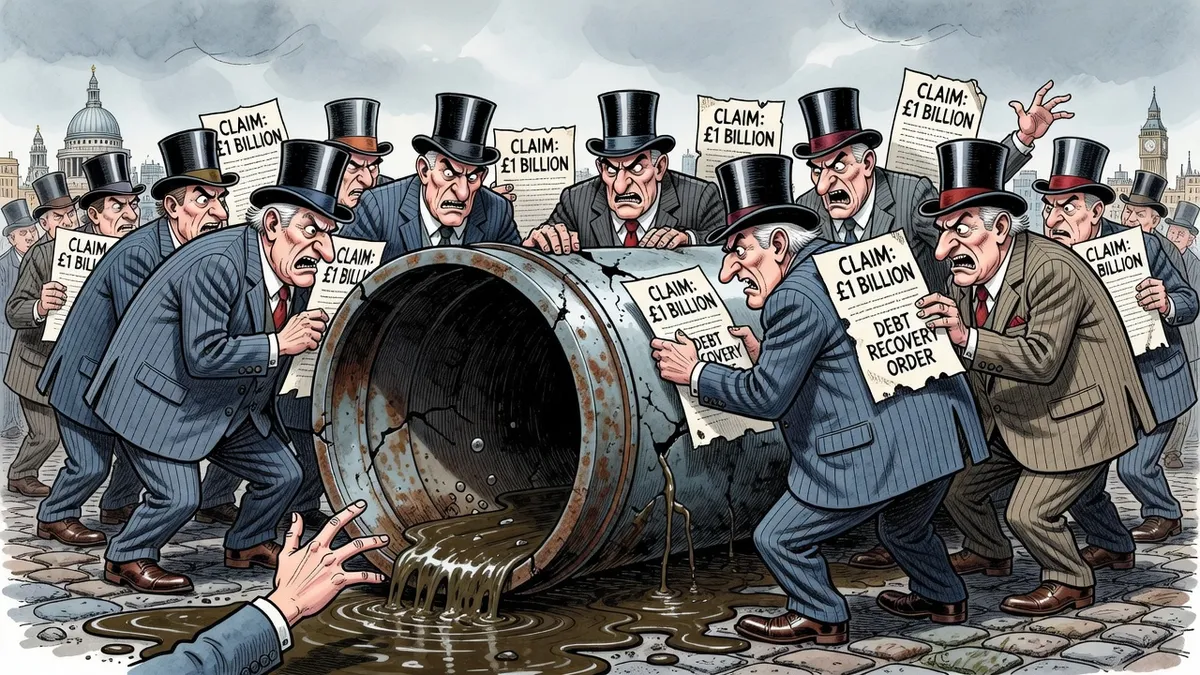
£20bn debt structure leaves incoming government exposed to immediate legal recovery demands
Thames Water’s creditors have signalled they will sue for full repayment of nearly £20 billion if the incoming government moves to nationalise the company. This stance directly confronts Andy Burnham’s stated intention to place water utilities under greater public control after he assumes the premiership on Monday.
The lenders had offered to write off £9.4 billion and inject £3.35 billion in fresh capital. In return they sought reduced exposure to future pollution fines. Ministers rejected the proposal as insufficient for consumers and the environment.
Under either special administration or outright nationalisation, the creditors intend to pursue complete recovery of the outstanding debt. Precedents in earlier cases show this approach can shift multi-billion-pound liabilities onto the state.
Thames Water currently has cash reserves sufficient only until the end of the year. Management estimates a further £2 billion shortfall by the close of 2027 if operations continue without restructuring.
The company serves 16 million customers. Its £20 billion debt load stems from years of dividend extraction and limited capital investment under private ownership since privatisation.
Labour ministers have described privatisation as a failed model that raised bills without delivering infrastructure upgrades. Yet the same government now confronts the practical consequence: any transfer of ownership risks crystallising losses that private lenders refuse to absorb.
Regulatory oversight has failed to prevent this accumulation of debt while performance metrics on leakage and pollution deteriorated. Successive administrations approved the structure that allowed financial engineering to outpace operational resilience.
Nationalisation would not erase the underlying shortfall. Taxpayers would inherit both the operational deficits and the legal claims already prepared by creditors.
The episode reveals how privatised utilities transferred upside to shareholders and downside to the public balance sheet. Burnham’s administration inherits the same constraint that blocked earlier rescue attempts.
Commentary based on Thames Water lenders preparing legal challenge to potential nationalisation at BBC News.
← Back to commentary