Thirty Thousand Dosed After Kent Meningitis Kills Two
A meningitis cluster at University of Kent claims two young lives and hospitalises eleven, exposing failures in campus safeguards and reactive public health responses amid NHS strains. Over 30,000 receive antibiotics too late to prevent tragedy.
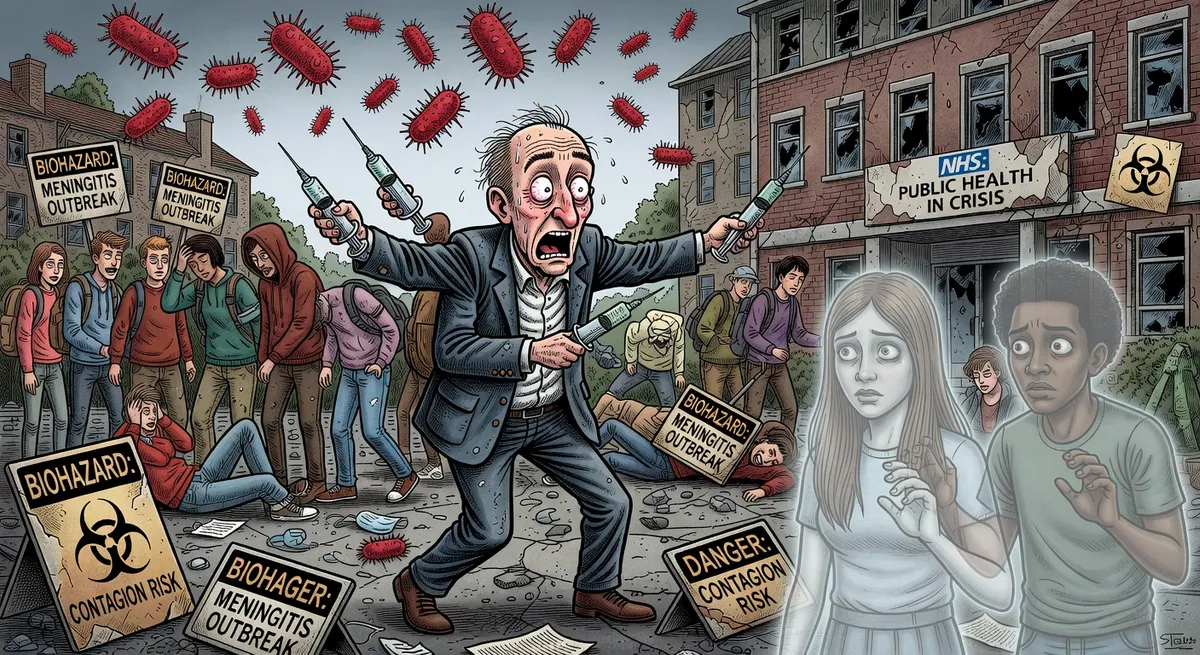
University social event sparks outbreak, eleven students critical
Meningitis kills two 18-to-21-year-olds linked to a University of Kent social event, leaving eleven more students critically ill in Canterbury hospitals.
The UK Health Security Agency now races to distribute antibiotics to over 30,000 students, staff, and families on campus.
University leaders cite safety as their top priority, yet the outbreak spread unchecked in close-quarters halls.
Reactive Public Health Scramble
Meningitis thrives in environments like university accommodations, where young adults share air, food, and social spaces.
UKHSA specialists interview cases to trace contacts, but the strain remains unidentified.
Prophylactic antibiotics target specific blocks, confirming dorms as ground zero.
This response arrives after deaths, not before.
Awareness Gaps Endanger Students
Officials warn that symptoms mimic hangovers or flu, a confusion lethal for 18-to-21-year-olds.
Meningitis Now highlights higher risk in crowded student settings.
Vigilance campaigns urge A&E visits or 999 calls.
Yet baseline education on prevention falls short in an overstretched system.
Vaccination uptake for meningococcal strains lags behind historical peaks.
University Vulnerabilities Exposed
The University of Kent hosts over 30,000 in its orbit, amplifying outbreak scale.
A single social event ignited the cluster, underscoring failures in event oversight and hygiene enforcement.
Campus blocks now under lockdown for dosing reveal routine safeguards proved inadequate.
Institutions prioritize enrollment growth over health infrastructure.
NHS Frontline Under Siege
Eleven serious cases demand urgent hospital care amid national A&E backlogs averaging 12 hours.
UKHSA coordinates, but frontline capacity strains under chronic understaffing.
Patients face mottled skin, seizures, and confusion—hallmarks untreated spell death.
Public health nets, once tighter, now patch holes reactively.
Pattern of Preventable Crises
Past decades saw targeted vaccines slash invasive meningococcal cases from 1,500 annually in the 1990s to under 200 today.
Outbreaks persist in universities, signaling localized control breakdowns.
Cross-party governments cut public health budgets by 20% real terms since 2010, eroding surveillance.
Universities absorb international student surges without matching safety investments.
Institutional Incentives Misaligned
Universities chase fees, packing halls beyond optimal densities.
UKHSA manages nationwide threats on diminished resources post-COVID.
No senior figure faces scrutiny for prior lapses.
Accountability evaporates in crisis mode.
This Canterbury toll lays bare decaying protections for the young: universities breed risks, health agencies chase fallout, and ordinary families bury children in a system that prioritizes survival over prevention. Britain’s public health architecture crumbles under repeated neglect, turning campuses into contagion zones.
Commentary based on Two die including Kent uni student in meningitis outbreak at BBC News.
← Back to commentary