UK Food Exports Sink Near Pandemic Lows as Deficit Hits £21bn
Britain's food and drink trade deficit reached £21 billion in the first half of the year, the widest since 2000, with export volumes down 11.7 percent and imports at near-record levels.
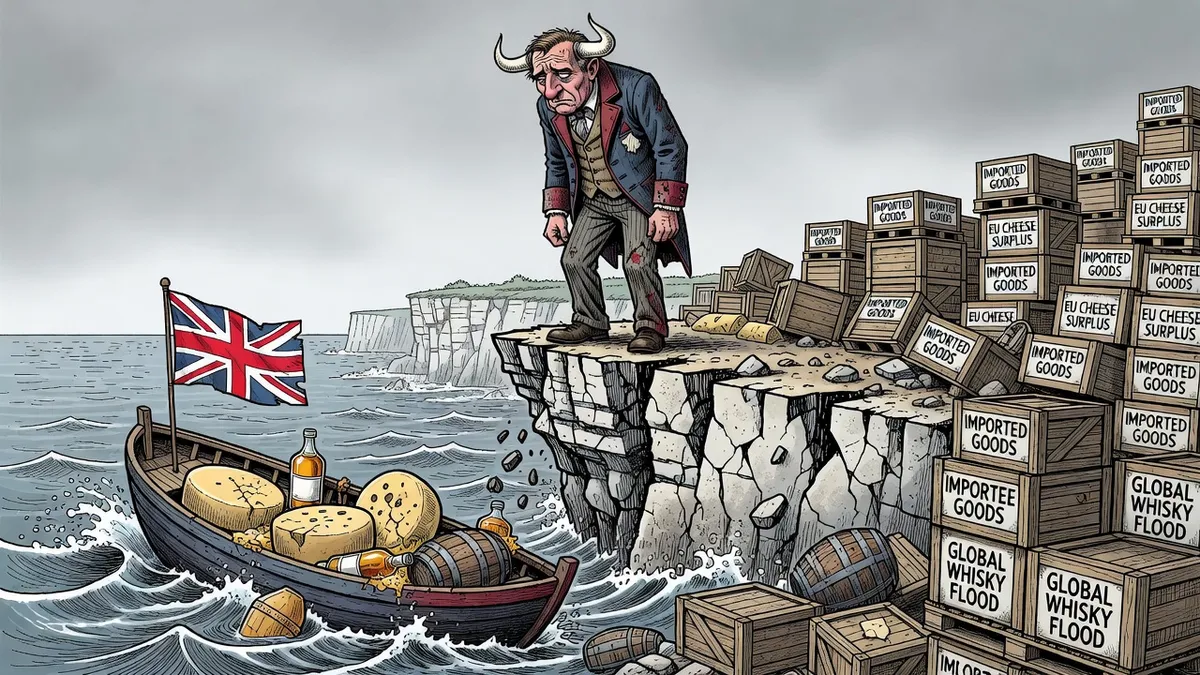
Britain’s food and drink trade deficit reached £21 billion in the first half of the year, the widest margin recorded since 2000.
Export volumes fell 11.7 percent to 4 billion kilograms. This placed shipments only marginally above the lows seen during the 2020 pandemic and the 2001 foot-and-mouth outbreak.
EU export values dropped 0.9 percent while non-EU sales declined 6.9 percent. Disruptions in the Middle East cut shipments to the UAE by nearly a quarter, and a 10 percent US tariff reduced transatlantic sales by 16.5 percent.
Import Surge
Imports totalled 19.1 billion kilograms, the second-highest volume on record. Non-EU imports rose more than 21 percent since 2023, aided by new trade arrangements including a 25 percent increase in value from Australia.
Tariff suspensions on items such as chocolate and biscuits further lifted inflows from outside the bloc. EU suppliers also increased deliveries by 0.8 percent in value terms.
Production Capacity
Domestic output has not kept pace with import growth. Industry bodies note that energy, labour and regulatory costs continue to rise for UK producers while overseas competition faces fewer immediate barriers.
The National Farmers’ Union and Food & Drink Federation both described the figures as evidence that food security requires deliberate policy support for home production. No such sustained increase in domestic capacity has materialised under successive governments.
Britain now sources a larger share of its food and drink from abroad than at any point in the past quarter-century. This shift occurred through a combination of post-Brexit trade frictions, selective tariff reductions and external shocks that reduced export access.
The result is measurable dependence on foreign supply chains for staple goods at a time when global volatility has increased. Domestic production has not expanded to offset the gap.
Commentary based on UK food and drink trade deficit largest since 2000 at £21bn by Sarah Butler on the Guardian.
← Back to commentary