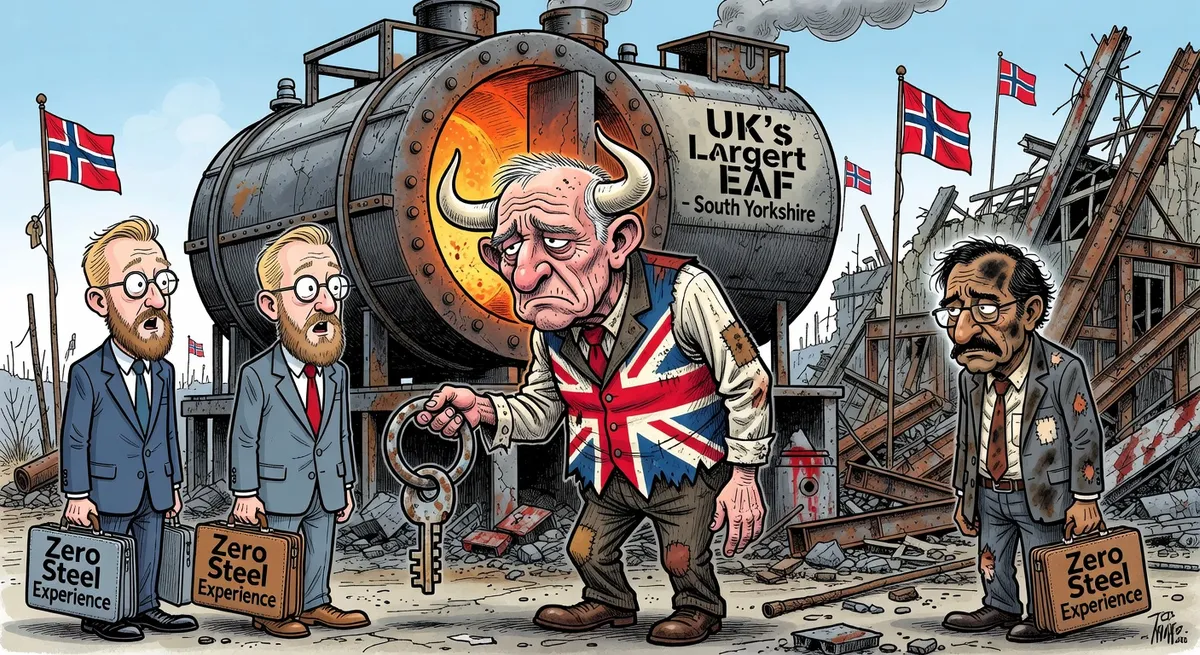
UK hands largest electric arc furnace to Norwegian startup without steel experience
Official receiver prefers Blastr, a novice Norwegian firm, for SSUK assets amid repeated state bailouts. This foreign sale exposes chronic failure to sustain domestic steel control.
Rotherham and Stocksbridge sites enter five-week exclusive talks after Gupta insolvency
The UK’s official receiver locked in exclusive talks with Blastr, a Norwegian-owned firm, to acquire Speciality Steel UK sites in Rotherham and Stocksbridge.
Rotherham hosts Britain’s biggest existing electric arc furnace, a key asset for low-carbon steel production.
SSUK entered receivership in August after Sanjeev Gupta’s Liberty Steel group lost court control. London judges deemed it “hopelessly insolvent” from chronic cash shortages.
Gupta clung to the sites amid his global empire’s contraction. Insiders long viewed SSUK as viable, starved only of raw material funds.
Government Footprint Expands
Ministers seized parallel control of Chinese-owned British Steel in Scunthorpe a year prior. Officials now eye full nationalisation there, after merger hopes with SSUK faded.
The state prefers Blastr over domestic bids. Talks grant five weeks for negotiations, with a push to close fast.
Blastr, under Vanir Green Industries, runs zero steel plants today. It develops green hydrogen ironmaking in Finland; CEO Mark Bula brings steel executive history from India and the US.
Startup Risks Surface
Blastr requires external financing to proceed. Union leaders, including GMB’s Charlotte Brumpton-Childs, demand due diligence for operational guarantees.
Workers endured years of uncertainty under Liberty. Any deal must secure South Yorkshire steelmaking long-term.
This follows decades of UK steel attrition. Capacity halved since 2000; output lingers below 7 million tonnes yearly versus 18 million peak.
Ownership Patterns Repeat
Strategic assets shift abroad repeatedly. Tata Steel (Indian) dominates via Port Talbot; Jingye (Chinese) runs Scunthorpe remnants.
Norwegian novices now target Rotherham. Domestic champions evaporate amid import floods and energy costs.
Cross-party governments pumped £1.3 billion into steel since 2016. British Steel got £500 million in 2019 aid; Liberty accessed £100 million green loans.
Results stayed flat. No revival scaled; jobs dwindled from 32,000 in 2015 to under 20,000.
Strategic Vulnerabilities Exposed
Electric arc furnaces promise decarbonisation. Rotherham’s unit could anchor UK green steel, yet receivership underscores funding gaps.
Foreign buyers dictate terms. Blastr eyes rapid progress, unburdened by Gupta debts.
Ordinary workers bear the cost. Rotherham sites employ hundreds; Stocksbridge adds specialty rail steel for UK infrastructure.
National security hinges on supply chains. Steel self-sufficiency eroded as policy chased net zero without capacity builds.
Institutional Paralysis Persists
Procurement and subsidies recur across Labour and Tory tenures. No administration forged lasting domestic ownership.
Courts enforce insolvency, but states prop failures. Blastr’s inexperience mirrors Jingye’s 2019 Scunthorpe takeover—promises, then furnace idles.
Taxes fund interventions; benefits flow overseas. UK citizens lose control of foundational industry.
South Yorkshire steelmaking survives on Oslo’s bet. This handover cements industrial dependence, stripping Britain of another core capability amid global tensions. Strategic decline now welcomes unproven foreigners to run the remnants.
Commentary based on Norwegian group in talks to buy former Liberty Steel works in South Yorkshire by Jasper Jolly on the Guardian.
← Back to commentary