UK Payments Secure Ten French Interceptions While 12,000 Still Cross
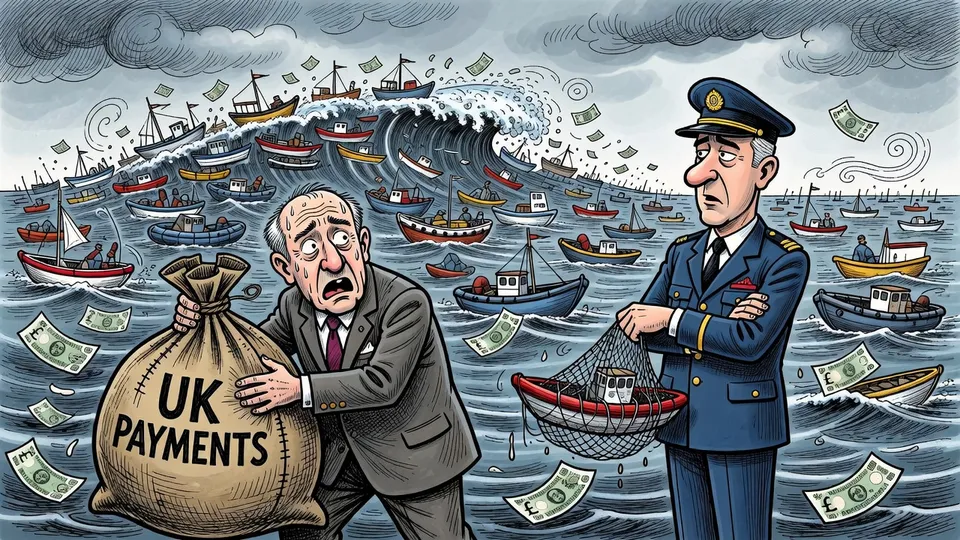
Additional £660 million produces partial results as smugglers extend launch zones and adopt larger vessels
French sea interventions remain limited despite UK funding, with crossings down 43 percent yet still numbering over 12,000 this year.
UK payments to France have produced ten sea interceptions since spring while 12,469 people still reached British shores by mid-July. The 43 percent year-on-year drop coincides with an additional £660 million transfer, yet officials refuse to declare any sustained control. Smugglers have already shifted launch points and vessel sizes in response.
French maritime officers now board or turn back inflatable craft under revised tactics. Each operation requires on-site risk assessments balancing officer safety against group agitation and armed escorts. Ten documented cases represent the total recorded interventions across several months of crossings.
Funding and measurable outcomes
The latest payment round followed earlier deals that produced no lasting reduction. Crossings fell from 21,690 last year to 12,469 in the comparable period this year under calmer weather that normally increases attempts. UK officials attribute the change to disrupted launch economics rather than any structural barrier at the French coast.
Gangs responded by extending departure zones to Belgium and Dieppe. Some now deploy larger motorised dinghies carrying over 170 people. One such vessel caught fire this week, requiring mass rescue. The pattern shows enforcement pressure displaces rather than eliminates the trade.
Political claims versus recorded activity
Opposition figures filmed French officers stating they were ordered to let boats depart. Reform and Conservative statements framed this as outright refusal to act. The ten recorded interventions contradict blanket inaction narratives but also confirm that most launches proceed without sea interception.
Border Security Command statements emphasise French effort and risk to officers. They do not address why repeated funding rounds have not produced interception rates sufficient to deter the remaining volume. The gap between expenditure and throughput remains unclosed.
Persistent dependence
Britain continues to purchase operational capacity from a neighbouring state rather than maintain independent interception or removal mechanisms. Launches now originate from a wider coastline, increasing distances and vessel requirements. Each adaptation raises the probability of fatalities while preserving the underlying route.
The sustained volume after £660 million in new spending demonstrates that external payments alone do not restore border integrity. Smuggler networks retain the initiative to adjust tactics faster than bilateral agreements can be renegotiated or expanded.
Commentary based on French officers halted small boats at sea 10 times since spring at the Guardian.