UK Plants Defer Electric Model Upgrades Pending Mandate Shift
Carmakers suspend UK factory commitments while the government prepares to ease electric vehicle sales targets it introduced to drive the transition.
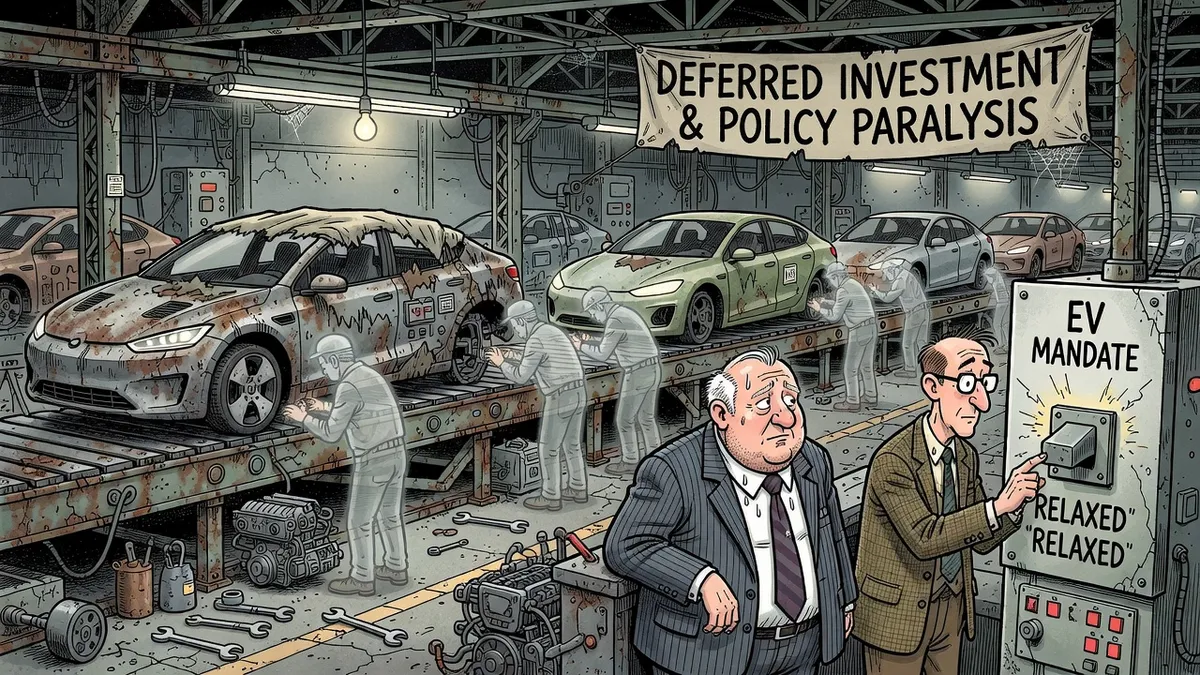
Production falls 7.5 percent as investment waits on policy adjustment
UK car production fell 7.5 percent in the first half of 2026, reaching 386,000 vehicles. Manufacturers have suspended final investment decisions on new models and electric conversions at existing plants while they wait for changes to the zero emission vehicle mandate.
The Society of Motor Manufacturers and Traders confirmed the pattern. Chief executive Mike Hawes stated that companies with UK operations are holding back on next-generation projects until the sales targets are eased. BMW has already postponed electric Mini production at its Oxford site. Toyota and Nissan face similar unresolved choices on future output.
Business secretary Jonathan Reynolds has signalled that the mandate will be diluted. The government introduced the rules to force rising electric vehicle shares through 2030, yet now treats them as adjustable once production and export pressures materialise. This reversal follows direct industry lobbying citing competition from China and US tariffs.
Production and Capacity Trends
Vehicle output has declined despite repeated policy claims that the UK would lead in electric manufacturing. The drop coincides with unresolved questions over battery supply chains and rules of origin that affect tariff-free access to the EU market. Carmakers must source components within Europe or face duties on exports, their largest market.
No new large-scale battery plants have reached firm commitment under the current framework. Existing facilities continue to assemble models whose electric successors remain unapproved for UK sites.
Policy Reversal Pattern
The mandate required manufacturers to meet escalating electric sales quotas or pay penalties. Industry data now shows output and investment responding to the threat of those penalties rather than to market demand. Reynolds acknowledged the need to adjust targets to prevent plant closures or relocation.
Environmental groups and charging firms opposed further weakening. Their objections rest on projected additional emissions, yet the underlying constraint remains the same: UK factories cannot meet the mandated volumes without new capital that investors have withheld.
Investment and Location Decisions
Foreign-owned plants dominate UK car production. Decisions on model allocation now rest with parent companies weighing UK policy stability against alternatives in Europe, North America and Asia. Nissan discussions over a Chery-badged vehicle in Sunderland illustrate how output can shift toward non-UK brands when local conditions change.
The same firms continue to expand electric capacity elsewhere. UK sites receive deferred status until rules align with commercial timelines.
This episode records another instance where stated industrial targets meet operational limits and are revised downward. The adjustment preserves short-term output at the cost of policy credibility and long-term manufacturing depth.
Commentary based on Carmakers ‘delaying investment in UK factories until EV sales rules relaxed’ by Jasper Jolly on the Guardian.
← Back to commentary