UK Schools Hit 40C in June Heatwave, Losing 15 Million Pupil Hours
Over 1,700 schools closed early as temperatures soared, affecting 760,000 pupils with sharp rises in absences and nearly 2,900 excess deaths recorded during May and June heat events.
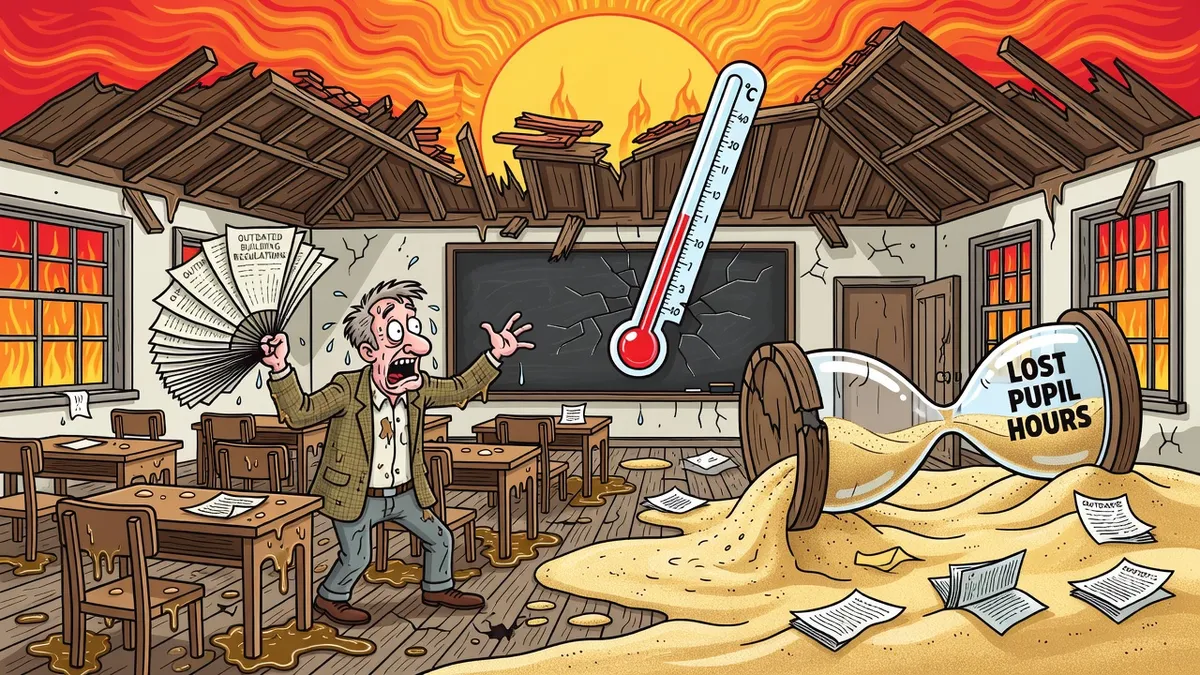
UK school buildings reached 40C during the June heatwave, forcing more than 1,700 schools to close or finish early. At least 760,000 pupils in England and Wales lost over 15 million hours of lessons as a result.
Government absence data showed sharp rises in unauthorised absences during the eight-day period. Parents kept children home when reports of heat stress, nausea and fainting spread. Official records also logged nearly 2,900 excess deaths linked to the May and June heat events.
Building standards exposed
Many classrooms lack insulation, ventilation or shading capable of handling recorded temperatures. Teachers described pupils lying on floors with water bottles, unable to concentrate or complete work. One school reported staff taken to A&E after collapse.
The Department for Education stated that schools performed well and cited a £710 million renewal programme plus almost £20 billion for rebuilding 750 schools. These figures cover a fraction of the estate. Most existing buildings predate current heat thresholds and have received only piecemeal upgrades over successive administrations.
Cumulative learning loss
Nicola Gray’s prior research on pandemic closures showed measurable drops in exam performance and mental health after extended absences. Charlotte O’Regan of the Sutton Trust noted that deprived areas already face wider attainment gaps and cannot match private funding for cooling measures. Heat-related disruption adds another layer that hits the same cohort hardest.
Pattern of repeated shortfalls
Five heatwaves occurred this summer alone. Red health alerts, cancelled hospital operations and workplace hour reductions accompanied the school closures. Each event produced similar outcomes without corresponding changes in capital allocation or maintenance rules.
The response treats each summer as an isolated incident rather than evidence of fixed infrastructure limits. Funding announcements remain smaller than the documented backlog and do not address the full stock of schools still operating without basic thermal controls.
This episode confirms that core public buildings cannot maintain minimum operating conditions under conditions already encountered multiple times in recent years. The gap between stated resilience and recorded performance continues to widen.
Commentary based on Pupils missed 15m hours of school time during UK’s June heatwave, study finds at the Guardian.
← Back to commentary