Uniserve's £1.4 Billion Freight to Faulty PPE
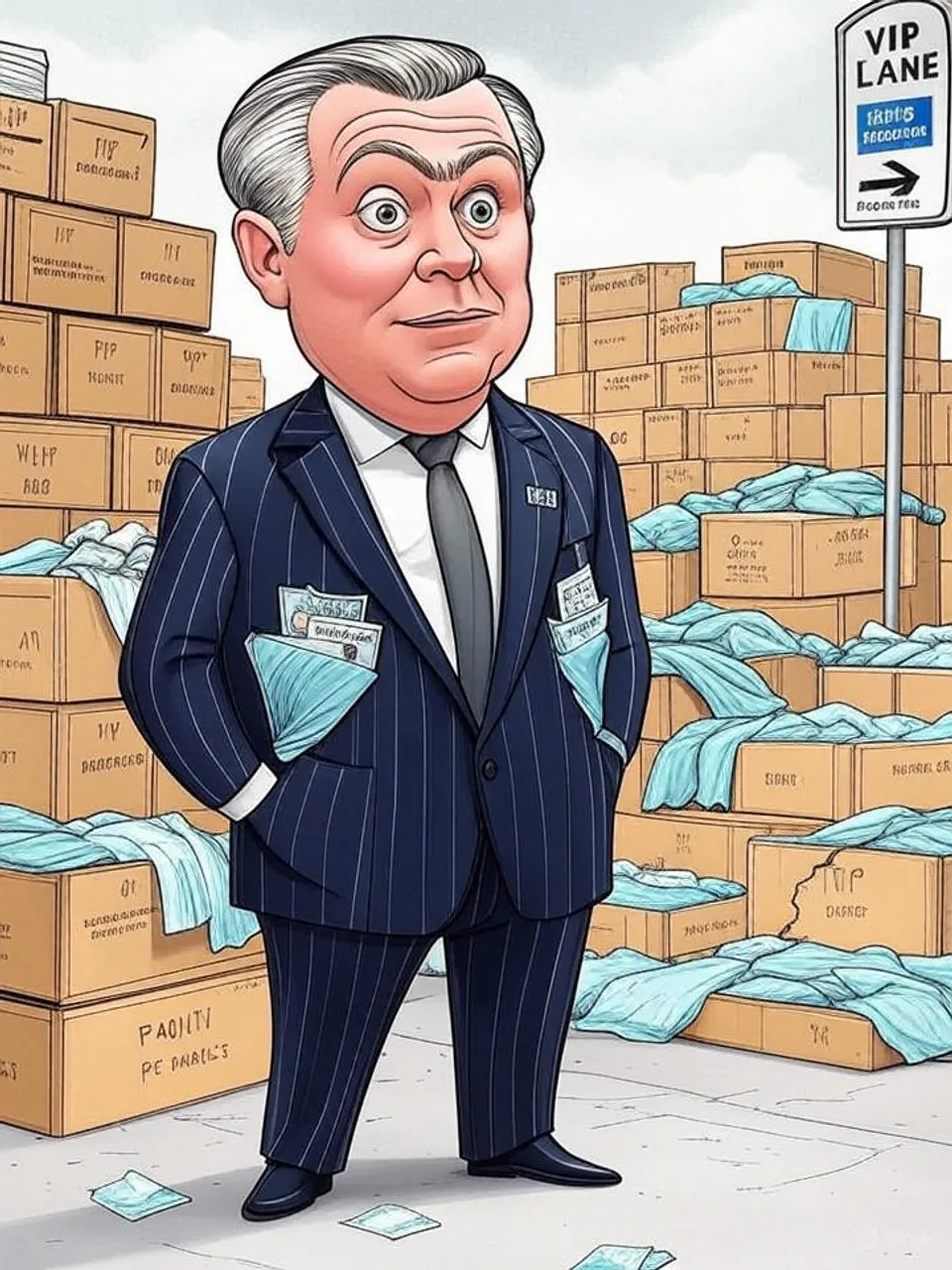
VIP Lane Deal Exposed in High Court Ruling
A logistics firm pocketed £1.4bn in Covid contracts via political referrals, shipping unusable PPE without inspections and wasting £3.3bn in public funds overall. This reveals procurement voids that prioritize speed and connections over safeguards.
Uniserve secured £1.4 billion in government contracts for Covid PPE logistics and supply, yet a High Court judgment exposed its role in shipping unusable equipment without proper checks. Officials paid £122 million upfront for gowns that failed basic certification, only discovered after arrival in England. This gap between rushed procurement and quality oversight reveals how emergency spending bypassed safeguards, leaving taxpayers to foot the bill for waste.
The contracts began in March 2020 as a freight deal to transport ventilators from China, expanding to £573 million for PPE shipping by December 2021. Uniserve then won seven direct supply contracts worth £304 million through the VIP lane, reserved for politically connected firms. Department of Health and Social Care records show these deals dwarfed smaller scandals like PPE Medpro’s £122 million payout, yet Uniserve’s name faded from public memory.
Mrs Justice Cockerill’s ruling pinpointed Uniserve’s obligation to inspect PPE Medpro gowns in China before shipment. The company claimed no such requirement existed until August 2020, a position echoed by DHSC’s legal team in court. Contract documents support this, but the initial four months of spending—£9.35 billion total—lacked any quality controls, resulting in £3.3 billion for unusable items across suppliers.
Procurement consultant Chris Smith calculated that early haste prioritized volume over verification, with payments made upon approval for shipping. A single public health official, Zarah Naeem, flagged the gowns’ invalid sterile labelling only after they reached England. Had inspections occurred, the £122 million loss might have been avoided, underscoring how subcontracted operations in China evaded European standards without consequence.
Access to these contracts traced back to Conservative peer Theodore Agnew, who introduced Uniserve via the VIP lane in February 2020. At the Covid inquiry, Agnew called himself the lane’s “godparent” but admitted ignorance of the firm: “I don’t even know what Uniserve is.” This disconnect highlights how ministers greenlit billion-pound deals on referrals without due diligence.
Julia Lopez, Conservative MP for Upminster, maintained an office on Uniserve’s site, with the company’s founder Iain Liddell as her landlord. Lopez praised Uniserve publicly in 2018 as the UK’s top logistics provider, and she joined the Cabinet Office in 2020, though on maternity leave during initial awards. Both Liddell and the Cabinet Office denied her involvement, stating no contact occurred over bids.
Liddell’s response to The Guardian affirmed no outreach to Lopez or other officials for contracts. Yet the proximity and political ties raise questions about informal networks in procurement. Agnew’s referral, combined with Lopez’s location, illustrates how local connections fed into national spending without transparent trails.
The VIP lane funneled contracts to firms like Uniserve, bypassing competitive tenders amid the pandemic scramble. Government data later confirmed politically referred companies received 63% of PPE deals, far exceeding open-route awards. This structure, defended as necessary for speed, instead amplified risks of substandard supply and unchecked costs.
Uniserve’s windfall persisted despite scrutiny; the firm reported no losses from the gowns case, while DHSC struggles to recover funds from insolvent partners like PPE Medpro. Liddell contested the judgment’s inspection findings through lawyers, but the broader pattern endures: £3.3 billion wasted on unusable PPE reflects systemic procurement flaws. Officials shifted blame to subcontractors, yet the contracts’ scale demanded higher oversight.
This episode exposes enduring weaknesses in UK public spending controls, where urgency excuses accountability. Billion-pound deals flowed to obscure logistics firms via elite referrals, with ministers forgetting details post-award. The result—wasted funds and eroded trust—mirrors repeated failures in crisis response, from equipment stockpiles to border management.
Procurement lapses like Uniserve’s reveal how institutions prioritize connections over competence, a pathology spanning governments. Taxpayers absorbed £1.4 billion for services that included £178.5 million in unused equipment, while no senior figures faced repercussions. This opacity sustains decline, turning public money into private gain without reform.
Britain’s governance machinery grinds on, awarding vast sums to the connected while basic checks vanish. Uniserve’s story documents not isolated error, but institutional design that rewards haste and hides waste. Ordinary citizens bear the cost, as trust in fair allocation fractures further.
Commentary based on Revealed: the billion-pound PPE contractor with a Tory MP on site by David Conn on The Guardian.