Vistry Abandons Southeast Private Sales After £661 Million Loss
A major UK housebuilder reports steep losses, workforce cuts, and regional contraction despite government funding for affordable units.
Debt climbs to £469 million while unsold stock lingers at £220 million
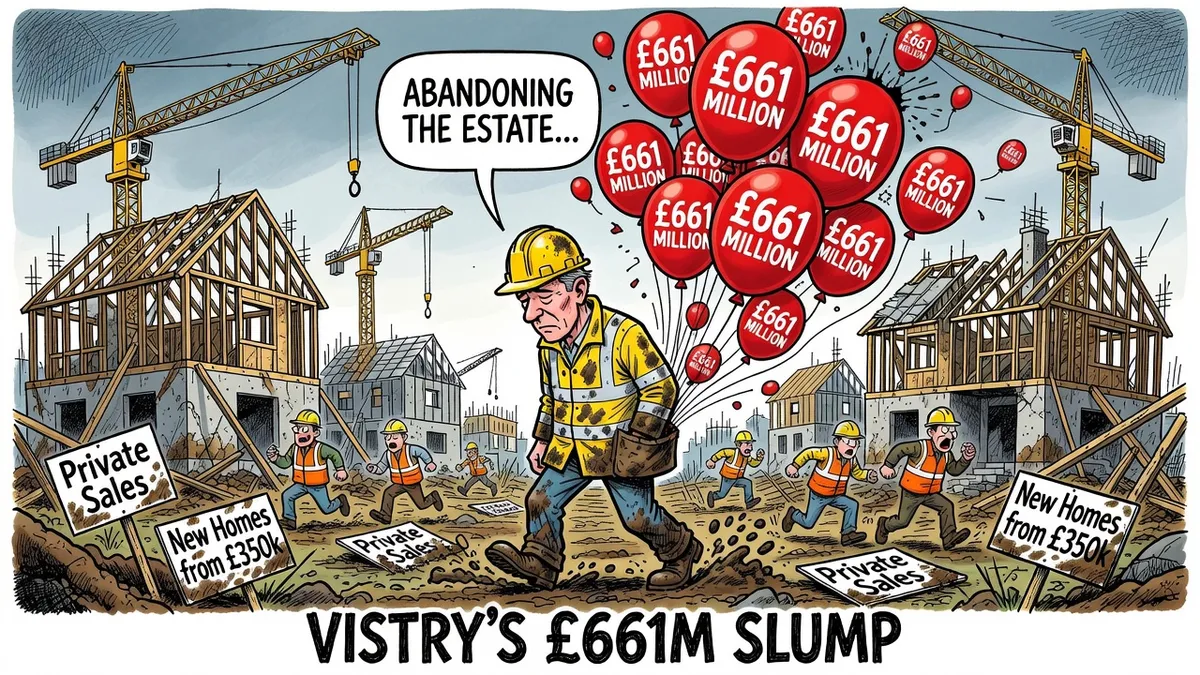
Vistry Group posted a £661.3 million pre-tax loss for the first half of the year after writing down £475 million in asset values and setting aside £73 million for safety works. The company now forecasts an adjusted full-year profit of £165 million, a sharp reversal from earlier expectations. It holds £220 million in unsold homes after offering average discounts of 7.1 percent.
The firm completed 6,304 homes in the period, an 8 percent decline from the prior year. Revenues fell 9 percent to £1.7 billion while net debt rose from £293.1 million to £468.8 million. Vistry is reducing its land bank from 51,000 plots to 36,000 and cutting its operating regions from 25 to 12.
Workforce Reductions Underway
The company has already trimmed its headcount to 4,150 after 350 departures since summer. Additional savings of £50 million are planned on top of an earlier £25 million redundancy programme. Operations in southeast England will shift away from private sales toward a narrower focus on affordable housing.
Vistry attributes the downturn to weak summer demand for private homes and higher input costs linked to recent energy price spikes. It received £350 million in government funding in August to deliver 3,000 affordable units under the national social housing programme.
Sector-Wide Pressures Visible
Similar warnings have come from Crest Nicholson and other listed builders facing the same combination of elevated interest rates, stretched affordability, and buyer hesitation. The pattern shows private housebuilding volumes contracting even as public money flows into selected affordable schemes.
UK construction employment and output data have remained flat or declining for several years despite repeated ministerial targets for new supply. Large builders now adjust product mix, geography, and staffing rather than expand capacity to meet those targets.
Funding Does Not Close Delivery Gap
Government allocations to strategic partners such as Vistry provide short-term cash but do not alter underlying demand constraints. Private buyers face mortgage costs that have risen with swap rates above 4.5 percent. The resulting inventory overhang forces further discounts and writedowns.
This leaves the sector dependent on state contracts while private market activity contracts. Output per region falls as offices close and land holdings shrink.
Persistent Shortfall in Homes
Britain continues to record annual completions well below stated requirements. Major builders respond by contracting their footprint rather than scaling production. The gap between policy announcements and recorded delivery widens with each reporting cycle.
Commentary based on Housebuilder Vistry slashes profit forecasts as losses balloon at the Guardian.
← Back to commentary