Wales Upskirting Complaints Hit 219 with Only 18 Charges Amid Rising Reports
Over three years Welsh police forces logged 219 upskirting incidents with charges in just 18 cases. Eleven involved children under ten, highlighting enforcement gaps despite the 2019 law.
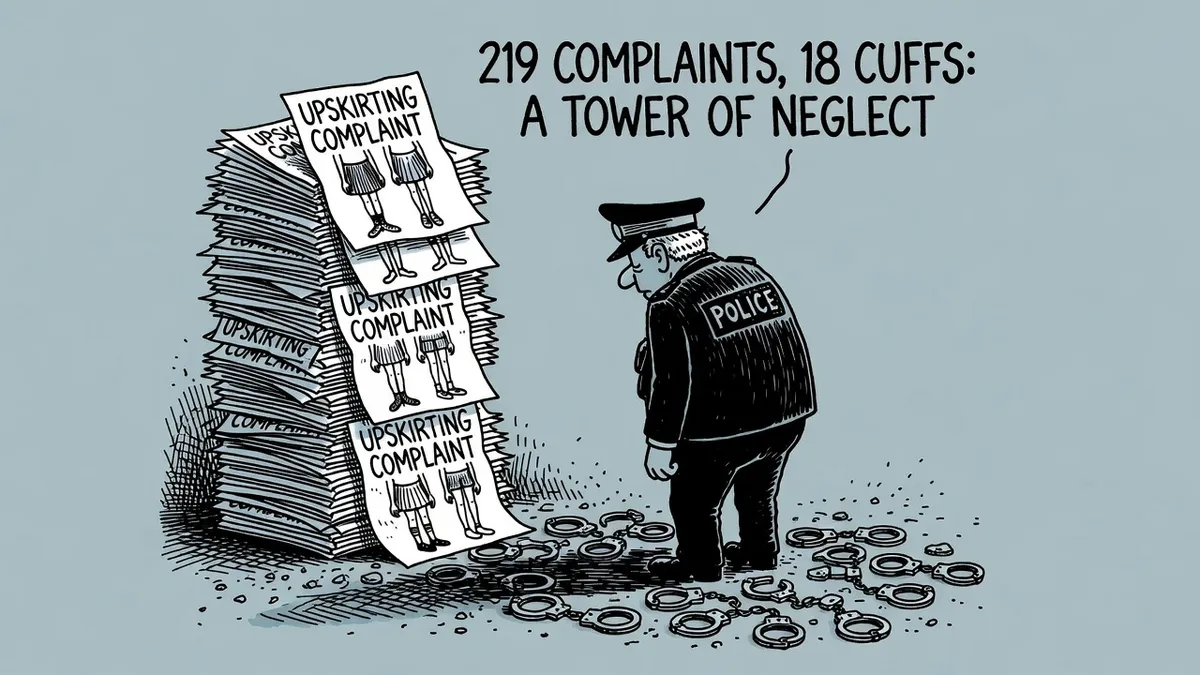
Girls as young as five now feature in official records of upskirting complaints in Wales. Police forces logged 219 incidents over three years, yet secured charges in just 18 cases. The 2019 law that criminalised the practice has produced minimal deterrence.
Eleven complaints involved children under ten. Sixty-seven came from girls aged eleven to seventeen. These figures span Dyfed-Powys, North Wales, South Wales and Gwent, with charging outcomes varying sharply between forces and reaching zero in Gwent.
Low enforcement yield
Only eighteen individuals faced charges from 219 complaints. Earlier data from Greater Manchester and the West Midlands show similarly modest results relative to reported volume. The gap between reports and prosecutions indicates limited investigative follow-through despite repeated ministerial emphasis on sexual offence prioritisation.
Perpetrators have included serving and former police officers as well as teachers operating inside classrooms. One former detective constable admitted voyeurism and evidence tampering after targeting a child. A supply teacher received a six-year sentence for more than one hundred images taken in school settings. These cases demonstrate that positions of authority have not prevented offending.
Normalisation and escalation
Victims describe routine adaptation of clothing and movement to avoid recording. Several report wearing shorts beneath skirts from primary school onward. Others restrict alcohol consumption or avoid crowded public spaces. These adjustments occur among teenagers and students who view the behaviour as common yet rarely serious in the eyes of peers.
Prosecutors note that upskirting frequently forms part of wider patterns of sexual offending. The Dominique Pelicot case originated from a supermarket upskirting detection before revealing sustained domestic abuse. Libby Squire’s murderer had prior voyeurism convictions. The pattern shows non-contact offences can precede contact violence when detection remains inconsistent.
Institutional continuity
The Voyeurism Act set a two-year maximum sentence. Reporting volumes have risen since its introduction, yet charging rates stay low. Teachers and police officers have been among those convicted, indicating that vetting and internal oversight have not eliminated the risk inside institutions responsible for child safety.
The Children’s Commissioner has highlighted the particular breach when school staff offend. Victim accounts record repeated incidents within the same educational settings, with limited immediate intervention. This suggests monitoring systems inside schools and forces have not kept pace with the offence’s documented persistence.
The data records hundreds of girls altering daily routines because basic public spaces no longer guarantee privacy. Charging rates remain a fraction of complaints. Offenders in positions of trust continue to appear in case files. These outcomes have held across multiple police areas and successive years.
Commentary based on Girls as young as five targeted for upskirting as charges continue to rise at BBC News.
← Back to commentary