Wealthier Districts Now Lead Youth PIP Claims for ADHD and Autism
Surrey Heath recorded a 630 percent rise in youth PIP claims for ADHD and autism since 2019, outpacing deprived areas as private diagnoses bypass NHS waits and expand the claimant base.
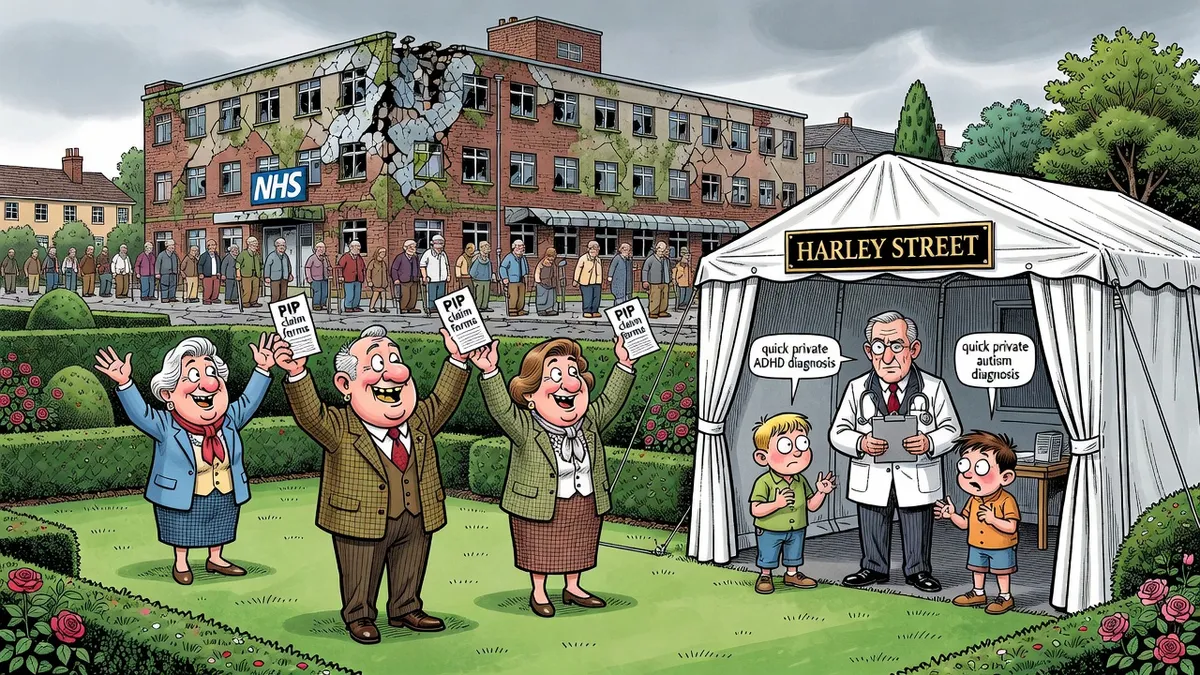
Affluent districts now record the steepest increases in youth PIP claims for ADHD and autism. Surrey Heath recorded a 630 percent rise since 2019, while deprived areas such as Mansfield and Great Yarmouth posted 30 percent and 50 percent increases. The pattern reverses the longstanding concentration of such claims in high-poverty postcodes.
Wealthier families secure clinical diagnoses through private routes that bypass NHS waiting lists. These diagnoses strengthen PIP applications, since eligibility hinges on documented impairment in daily tasks. Researchers at the Nuffield Trust identify this access differential as the main driver behind the narrowing gap between rich and poor areas.
Claim Volumes and Costs
Some 205,000 people aged 16 to 24 now receive PIP for ADHD or autism-related conditions. The total has more than tripled since 2019. Annual spending for this group alone reached £1.36 billion in the current financial year, with an average award of £8,800 per claimant.
The growth remains confined to neurodevelopmental conditions. No parallel acceleration appears in claims for learning disabilities, depression, anxiety or physical impairments. GP records confirm higher diagnosis rates in higher-income districts, consistent with the ability to pay for assessments unavailable on the public system.
Ethnic and Geographic Patterns
Claims also run higher among white applicants than other ethnic groups. Areas with large minority populations, including Newham, Brent and Leicester, show lower than expected uptake. This distribution tracks documented differences in private diagnostic uptake rather than underlying prevalence.
The shift carries direct fiscal consequences. Working-age disability spending is projected to rise from £14 billion in 2019 to £34 billion by 2030. Faster access by better-resourced households compresses the queue for limited assessment capacity while expanding the claimant base.
Institutional Effects
NHS diagnostic bottlenecks create a two-tier pathway. Families with resources convert private medical reports into state payments, while others remain on waiting lists that stretch years. The mechanism rewards those able to navigate both private medicine and the PIP application process.
This outcome follows repeated failures to expand public diagnostic capacity or reform eligibility rules. The same incentive structure operates across successive governments, with no mechanism to align diagnosis supply with the volume of claims it generates.
The data show that material advantage now determines speed of entry into disability benefits for these conditions. Public provision continues to contract while private alternatives convert into higher welfare expenditure.
Commentary based on Young people’s Pip claims for ADHD and autism ‘rising fastest in affluent areas’ by Will Parman on the Guardian.
← Back to commentary