Welfare Systems Shrink Birth Rates Among the Employed
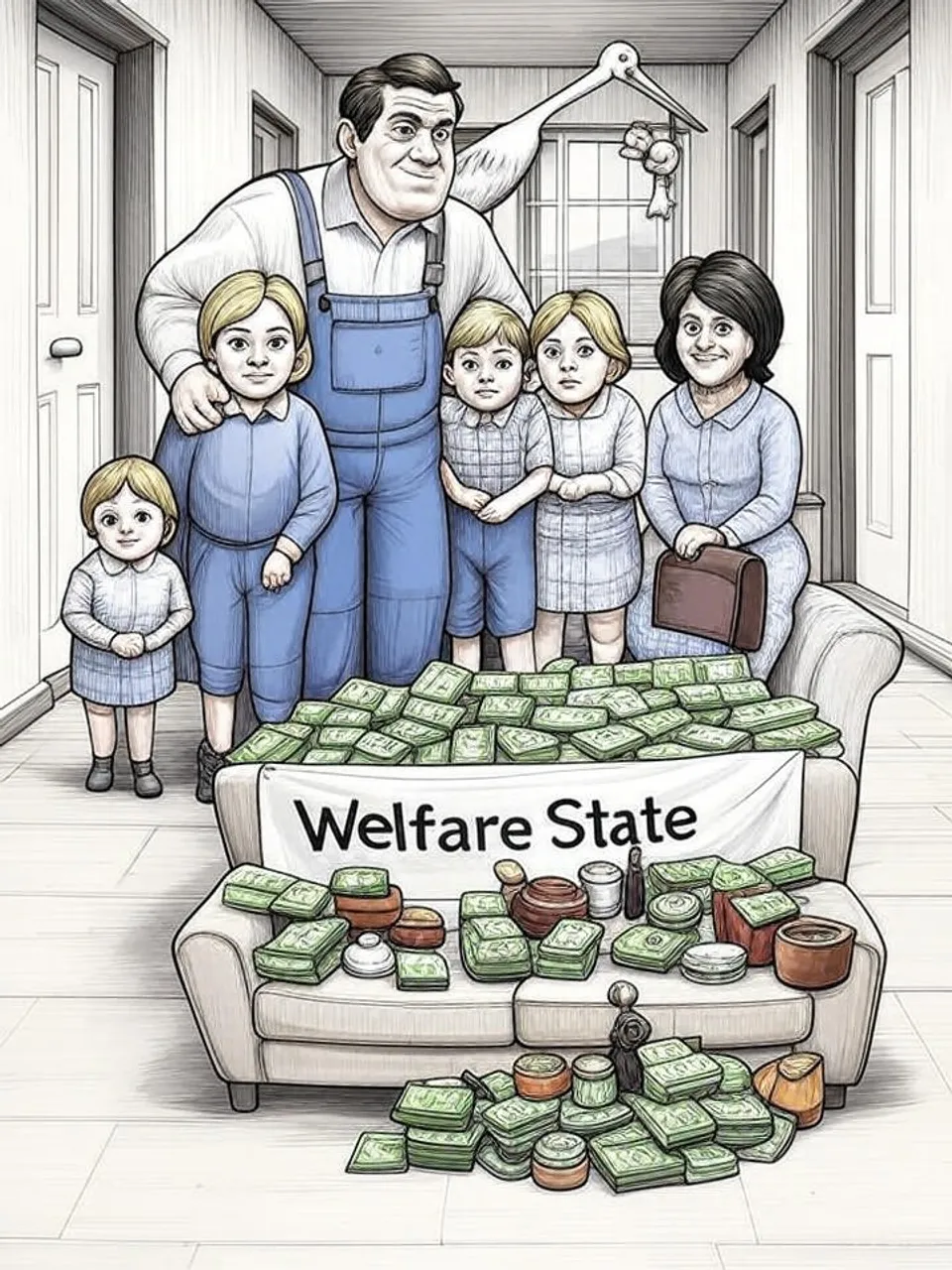
£141 Billion in Benefits Funds Larger Families on Claims, Deterring Taxpayers from Parenthood
UK welfare policies favor multi-child benefit households over working parents, inverting incentives and contributing to fertility declines among the middle class. This sustains intergenerational dependency amid fiscal strain.
Commentary Based On
The Telegraph
Hard-working families are being destroyed to pay for the benefits class
Universal Credit data reveals a stark divide: families with four or more children dominate benefit claims and social housing allocations, while working households with incomes above £100,000 often fare worse financially than non-working peers in subsidized homes. This setup inverts traditional incentives, where effort yields stability but delivers less family growth. The Telegraph’s analysis exposes how state policy quietly rations parenthood for taxpayers to subsidize others.
The two-child benefit cap, introduced in 2017, failed to curb overall generosity. It limited only specific child elements in Universal Credit, leaving housing benefits and child allowances intact for larger families. As a result, total welfare spending on children and working-age adults hit £141 billion annually, drawn directly from employed contributors.
Deprivation metrics sharpen the picture. In the most deprived areas, fertility rates exceed those in affluent zones by notable margins, correlating strongly with involuntary unemployment. Benefit-dependent households show a spike in multi-child families, per official statistics, while economic pressures—high taxes, childcare costs, and housing shortages—deter similar expansion among the middle class.
This dynamic creates a counterfactual burden. The £141 billion does not vanish if redirected; working families would likely channel it toward their own children, potentially reversing Britain’s fertility rate, which lingers below 1.5 births per woman. Instead, current structures foster restraint among earners, who balance mortgages and taxes against family plans.
Intergenerational Lock-In
Welfare receipt patterns persist across generations. Studies confirm children of benefit claimants enter similar dependency at higher rates, entrenching a cycle that strains public finances. Without caps or work incentives, this molds a population less equipped for productivity, echoing historical shifts where family size drove economic traits like diligence and planning.
The article invokes Gregory Clark’s work on pre-industrial England, where larger families from stable backgrounds propagated success-oriented behaviors. Modern policy inverts this: unchecked benefits reward unplanned expansion, while fiscal extraction from workers curtails theirs. Britain now tests the reverse, risking cultural and economic erosion.
No policy remains neutral. State frameworks inherently tilt toward one parental model—here, the non-employed with unlimited support—over the responsible planner. This favors dependency over self-reliance, a choice embedded since the welfare state’s expansion post-1945, sustained across Labour and Conservative governments.
Fiscal math underscores the unsustainability. With 76% of voters pessimistic about Britain’s future amid rising taxes and stagnant wages, welfare’s share devours resources needed for infrastructure or debt reduction. Ordinary citizens face the squeeze: longer work hours fund others’ choices, while their own family aspirations shrink.
Politicians evade reform. The cap’s partial rollback signals continued prioritization of immediate needs over long-term viability, ignoring how generosity without limits burdens the productive base. Accountability gaps persist; ministers promise fiscal discipline but expand entitlements, repeating patterns from Blair’s expansions to recent freezes.
This reveals Britain’s core institutional pathology: systems designed for equity devolve into traps that penalize effort and amplify decline. Working families forfeit children to sustain a welfare class, hollowing out the demographic and economic core. The nation drifts toward a future where dependency defines success, not contribution.
Commentary based on Hard-working families are being destroyed to pay for the benefits class by Sam Ashworth-Hayes on The Telegraph.