Whitbread Converts Restaurants to Bedrooms, Axing 3,800 Jobs
Whitbread shutters Beefeater and Brewers Fayre outlets, cutting 3,800 jobs amid Labour tax hikes and stagnant demand. Closures hollow high streets and expose policy burdens across governments.
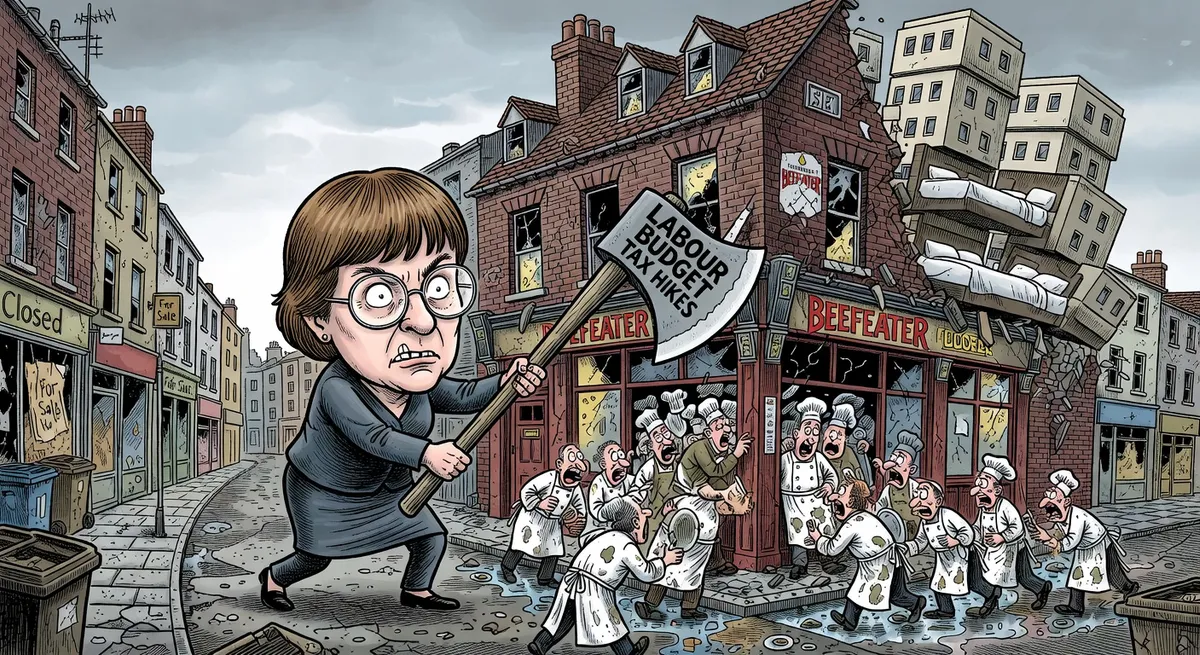
Nearly 200 sites close nationwide under tax and cost pressures
Nearly 200 Beefeater and Brewers Fayre outlets shutter across the UK, with Whitbread cutting 3,800 positions from its 30,000-strong workforce.
These sites, often attached to Premier Inn hotels, face conversion into integrated hotel dining and extra rooms.
Chief executive Dominic Paul frames the move as aligning with guest preferences for profitability over standalone eateries.
Tax hikes compound the strain.
Whitbread cites “additional tax pressure” on hospitality, coinciding with Labour’s October budget increases: employer National Insurance up by 1.2 percentage points to 15%, and minimum wage rising 6.7% to £12.21 hourly.
These changes add £250 million annually to sector wage bills, per UKHospitality estimates.
Businesses absorb costs as customer spending stagnates.
Regional Fallout
Closures span England, Scotland, Wales, and Northern Ireland.
Brewers Fayre lists include Abergavenny, Barry Island, Derry City, and Swansea Vale.
Beefeater hits Anchor in Lincolnshire, Eureka Park in Kent, and London Woolwich.
Provincial towns lose anchors amid high street vacancies already at 15% nationally.
Job losses strike low-wage workers in areas with few alternatives.
Cumbria sees three sites go: Cockermouth, Lakeland Gate, Howgate.
Kent four: Bobbing Apple, Duke of York, Beacon, Malta Inn.
This disperses unemployment into communities recovering from prior shocks.
Profit Over Plates
Whitbread prioritizes hotel extensions.
Underperforming restaurants yield to bedrooms generating higher margins.
The firm plans to sell £1.5 billion in freehold properties and lease them back, freeing capital for core operations.
Premier Inn captures market share as rivals falter.
Yet this signals retreat: food and drink, once 20% of revenue, now deemed unviable standalone.
Hospitality output lags pre-COVID levels by 5%, Office for National Statistics data shows.
Policy Pressures Accumulate
Sequential governments load hospitality with costs.
Conservatives oversaw COVID lockdowns erasing £100 billion in sector turnover.
Energy bills quadrupled post-Ukraine invasion under their watch.
Labour’s fiscal reset now extracts £25 billion more from businesses via NI and thresholds.
No party delivers productivity growth to offset: UK trails G7 by 0.5% annual gains since 2008.
Chains respond by shedding non-core assets.
Worker Impact
Affected staff enter consultation.
Many earn near minimum wage, facing redundancy in a 4.4% unemployment market.
Hospitality employs 3.5 million, with youth and migrants overrepresented.
3,800 losses equal 0.1% of sector jobs, but cluster in 200 locales.
Government claims wage hikes boost living standards; reality forces hours cuts or exits.
British Chambers of Commerce reports 60,000 hospitality vacancies persist amid closures.
High Street Hollowing
Pub and restaurant density falls.
UK had 45,000 in 2019; now under 40,000, British Beer and Pub Association counts.
Whitbread’s move accelerates the trend.
Town centres lose evening economies, denting retail symbiosis.
Vacant units invite decay, as seen in 14% of England shops empty.
Institutional Indifference
Ministers tout growth plans.
Chancellor Reeves promises £20 billion infrastructure spend, yet small businesses cite taxes as top concern in 70% of Federation of Small Businesses polls.
No relief targets hospitality’s 12% VAT rate, highest in Europe for food.
Cross-party pattern holds: policy burdens without demand support.
Functional governance would index taxes to inflation, ease energy levies.
Instead, firms like Whitbread bunker down.
Whitbread’s cull exposes a service economy cracking under compounded fiscal loads. Ordinary workers in forgotten towns absorb 3,800 redundancies while elites pivot to hotel profits. This is Britain’s high street reality: contraction disguised as strategy, with governments of all stripes fueling the squeeze.
Commentary based on Two UK restaurant chains to close with nearly 200 locations and 3,800 jobs cut - full list at GB News.
← Back to commentary