Wuhan Coach Crossed UK Unchecked While Borders Stayed Open
Inquiry shows Britain permitted free entry from high-risk regions until June 2020, with no scalable testing or tracing in place despite prior exercises flagging the gaps, resulting in over £25bn spent after the window for control had closed.
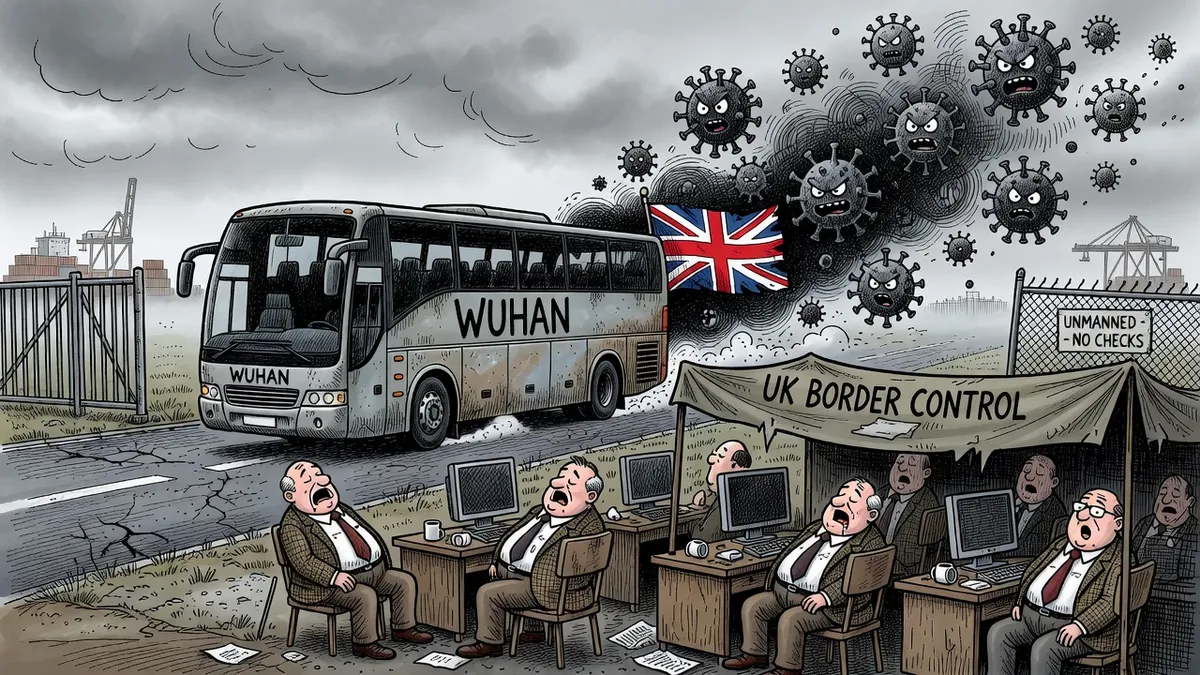
Britain entered 2020 with no operational border controls against a novel respiratory virus already circulating abroad. Official policy permitted unrestricted entry from high-risk regions until June, even as 93 percent of countries had already imposed flight suspensions or mandatory isolation by April.
The inquiry records that on 18 February, when only nine cases had been confirmed domestically, travel restrictions could still have contained imported infections. Instead, a coach from Wuhan travelled freely through England, Scotland and Northern Ireland that month. Decision-makers lacked mass testing or contact tracing at the time, leaving healthcare systems exposed to rising community transmission.
Ministers had spent years conducting pandemic exercises that identified exactly these gaps. No scalable test-and-trace infrastructure existed when the emergency arrived. The resulting system, launched after the window for early control had closed, consumed more than £25 billion in England alone and delivered limited containment value.
Testing and Tracing Shortfalls
Community testing was halted on 12 March despite earlier public claims of “fantastic testing systems.” Without widespread diagnostics, officials operated without reliable data on infection scale or location. Contact tracing capacity remained minimal, allowing the virus to move unchecked through workplaces, households and transport networks.
The same pattern of delayed implementation repeats across multiple preparedness failures documented by the inquiry. Warnings from prior exercises were filed rather than acted upon. When the crisis materialised, systems had to be built from scratch under time pressure and at maximum cost.
Persistent Institutional Gaps
Current laboratory capacity has since been dismantled and equipment sold. No standing national testing network or funded local tracing teams remain in place. Financial support mechanisms for isolation also lapsed, removing the practical means for households to comply with future restrictions.
These outcomes reflect structural incentives that reward short-term fiscal restraint over sustained readiness. Successive administrations deferred investment in scalable public health infrastructure. The result is a recurring cycle: crisis response absorbs large sums after damage has already occurred, while baseline capabilities are allowed to erode.
The inquiry’s findings confirm that early inaction on borders and testing left the country without effective tools during the critical first wave. Similar vulnerabilities persist because the underlying failure to maintain operational systems between emergencies has not been corrected.
Commentary based on Lack of early border controls made UK ‘extremely vulnerable’ to Covid, inquiry finds by Jessica Murray on the Guardian.
← Back to commentary