Youth Mobs Gut Wembley Shops, Police Yield Zero Arrests
Masked youths ravage Wembley shops with impunity as police offer probes but no arrests. This exposes frontline policing collapse amid national crime surges and institutional inaction.
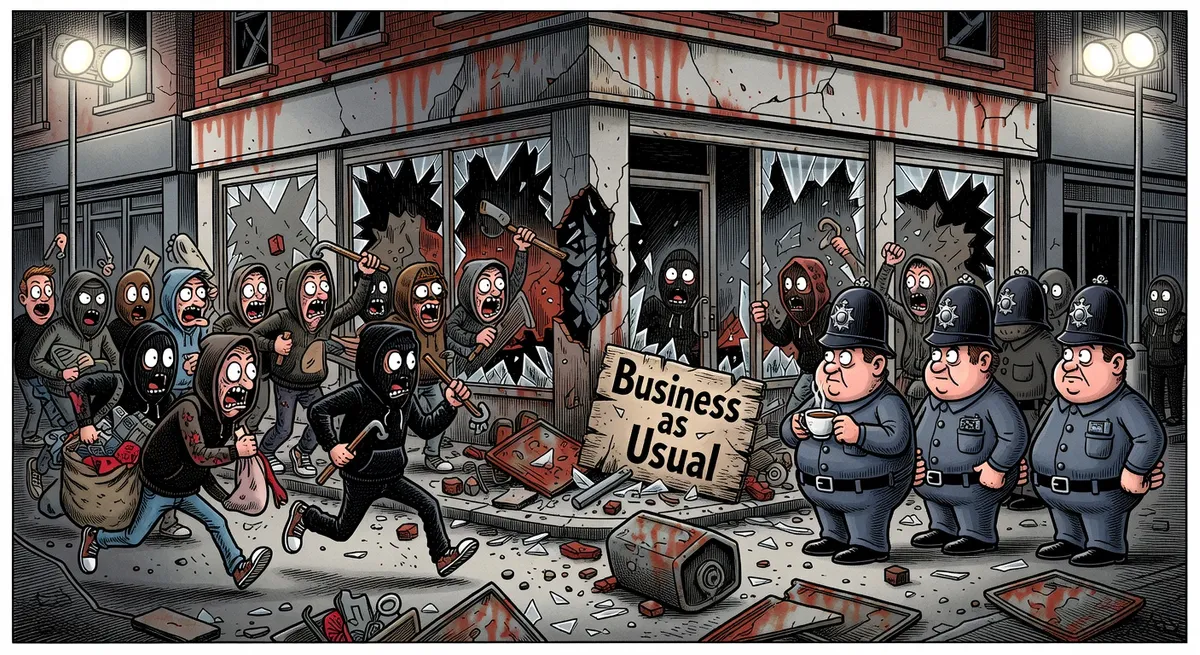
Three outlets trashed, businesses close early, Met makes no arrests
Business owners on Wembley’s Ealing Road shutter premises hours early each night.
Masked groups of young men stormed three outlets this month: Suraj Sweet Mart, Panesar Food and Wine, and Manek Chowk Indian restaurant.
Videos capture the destruction—staff pelted with objects, interiors trashed. No arrests followed repeated police callouts.
The Metropolitan Police logged incidents, including one at Manek Chowk on 5 March at 20:54 GMT.
Owners report sleepless nights and fleeing staff. One described the force’s response as “useless,” declaring “no safety, no law and order.”
Business losses mount from closures and customer flight.
Traders whisper of targeted attacks on Hindu-owned sites. Police inquiries confirm some Hindu businesses hit, others not.
Ch Insp Yu Zhang promises extra patrols and community talks with faith groups.
Brent Council labels the violence “utterly unacceptable” and “deeply concerning.”
No concrete actions announced beyond words.
This follows national patterns. Retailers nationwide now cage chocolate amid 5.5 million shop thefts by organised gangs.
Policing Vacuum
Metropolitan Police deployments shrink amid budget strains and reprioritisation.
London officers handled 1.3 million “faces” in facial recognition trials but netted only 48 arrests in one Essex operation.
Reactive probes dominate: “investigations ongoing” substitutes for prevention.
Youth offenders face minimal deterrence. A recent drug-driver killed three, served one-third of sentence, then deported for prison space.
Economic Ripples
Wembley’s traders absorb direct hits. Early closures slash revenue; staff shortages compound damage.
Small businesses, often immigrant-run, bear urban crime’s brunt without recourse.
National data shows shop theft costs retailers billions yearly, passed to consumers via higher prices.
Productivity stalls as owners divert time to security over sales.
Community Fracture
Fear grips residents and staff alike. Hindu traders eye ethnic motives, eroding local cohesion.
Police vagueness on targeting fuels suspicion, not reassurance.
Trust in institutions plummets. Polls record policing confidence at two-decade lows across London boroughs.
Civic engagement wanes; volunteers once planted bulbs, now councils shred efforts amid silos.
Systemic Paralysis
Cross-party governments expanded police numbers yet crime persistence reveals deeper rot.
Labour’s Shabana Mahmood curbs Afghan study visas at 95% asylum abuse rates, but street-level enforcement lags.
Conservatives promised 20,000 more officers; delivery fell short amid sickness absences double private sector norms.
Met Commissioner failures recur: unaccountable Civil Service promotions reward jargon over results.
Incentives misalign. Officers chase targets, neglect patrols; politicians tout stats, ignore streets.
The Pattern Endures
Functional policing once meant swift arrests post-incident.
Today, Wembley exemplifies reversion: report crime, await vague probes, endure repeat attacks.
Power shields the unruly while businesses crumble.
This microcosm unmasks UK decline’s street face—law and order yields to mob impunity, cross-party neglect ensuring ordinary citizens lock doors ever earlier. Economic vitality drains, social bonds fray, and institutional facades crack under youth-led chaos. Britain’s urban cores hollow out, one unchecked rampage at a time.
Commentary based on 'No law and order' after Wembley shop attacks at BBC News.
← Back to commentary