Fourteen Days Absent from Catterick Garrison
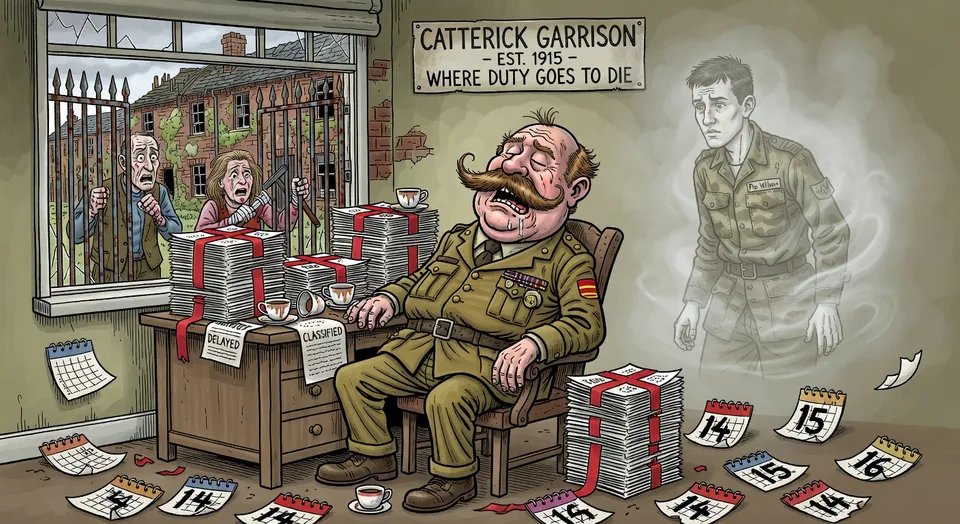
L/Cpl Ryan Rudd's unnoticed absence hinders police search
Catterick Garrison failed to detect a soldier's two-week absence, delaying police by fourteen days and erasing evidence. This exposes procedural collapse in a core UK institution amid broader public service decay.
L/Cpl Ryan Rudd last appeared on CCTV in Selby on 15 February 2026. Catterick Garrison registered no alarm over his absence until 1 March. Parents Ken and Kerstin Rudd fielded the first call that day from a senior Army officer asking if their son was home.
The gap spanned two full weeks.
Ken Rudd, an ex-Army man, outlined standard procedures. Bases maintain nominal roll calls and electronic checks. These cross-reference soldier locations, courses, and duties every Monday.
Neither check flagged Ryan’s void.
Parents pinpoint the lapse directly to lost investigative time. Police entered the case fourteen days late. Any traces from that February night—footprints, witnesses, evidence—vanished under rain or time.
North Yorkshire Police now consider the River Ouse a possibility. They remain open-minded but lead the search.
The Army’s statement confirms the 1 March report to police. An internal investigation runs alongside. No further details emerge.
This occurred in a 15,000-strong garrison, one of Britain’s largest military bases. Roll calls enforce discipline as core Army doctrine. Yet a lance corporal slipped through undetected amid daily routines.
Procedural Breakdown
Electronic systems track personnel in real time. Nominal rolls verify presence manually. Failure on two consecutive Mondays signals total breakdown in both.
Ken Rudd stressed cross-checking duties. Ryan held no exemptions. The base simply failed to notice.
Such oversights erode operational readiness. Soldiers expect accountability from command. When it falters, trust fractures.
Investigation Hindrance
Parents deem the delay fatal. “Potentially cost my son his life,” Ken stated. Kerstin noted evidence “washed away with the rain.”
Police confirm Ryan split from a friend that night. The friend departed for a course, contact unknown. Two weeks erased leads in Selby pubs and streets.
CCTV from the New Inn survives. But witnesses fade, memories blur. The Army handed police a cold trail.
Institutional Echoes
The Ministry of Defence oversees 140,000 personnel. Budgets topped £50 billion in 2025. Core functions like accountability underpin national security.
Yet gaps mirror civilian sectors. Police yield zero arrests in youth mob cases. Councils shred volunteer efforts. Civil servants dodge dismissal despite failures.
Cross-party governments sustained Army underfunding since 2010. Troop numbers halved from 2010 peaks. Readiness reports flag persistent shortfalls.
This case exposes frontline execution rot. Not just budgets—procedures collapsed.
Accountability Void
No officer faces named consequences. The senior call came late, reactive. Investigation details stay sealed.
Parents appeal publicly for Selby witnesses. Family insists Ryan always returns, enjoys Army life. No voluntary disappearance fits his profile.
Army protocol demands immediate missing persons reports. Fourteen days breached it outright. Precedent shows swift action in past cases, like 2023 recruit vanishings.
Systemic incentives reward opacity. Officials probe internally, shield details. Public learns last.
Britain’s Army symbolizes order amid national fray. Catterick’s lapse registers as negligence in a vital service.
Parents grieve a son potentially lost to institutional blindness. Police chase echoes of a night long faded.
This reveals core public institutions hollowing out. Even the military, forged for precision, now tolerates voids that cost lives. UK’s decline embeds in such everyday failures—unseen, unreported, unpunished.
Commentary based on Ryan Rudd: Parents' fury over Army delay in reporting son missing at BBC News.