Fuel Retailers Absorb Public Fury After Ministerial Finger-Pointing
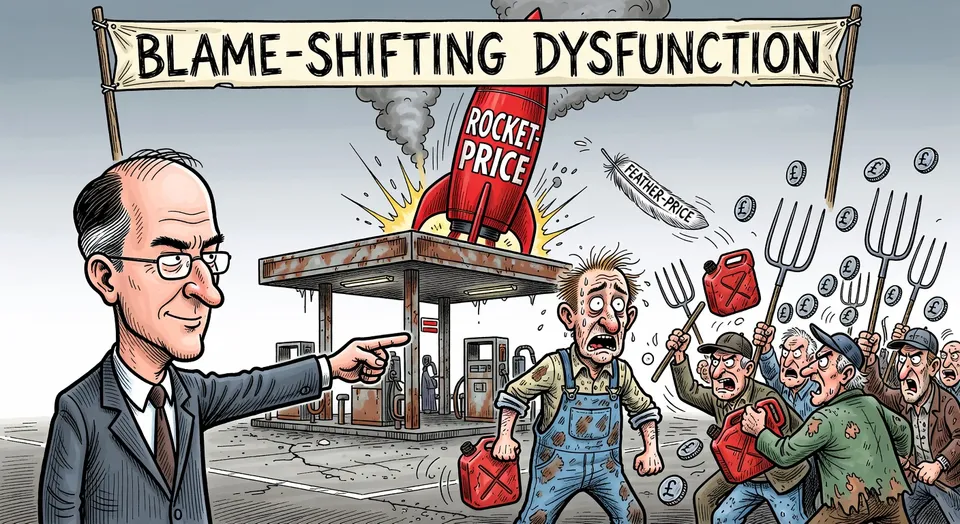
Prices hit 140.60p per litre as net zero blocks supply response
Ministers' profiteering accusations spark retailer backlash and staff abuse amid oil surges, while net zero policies reject new North Sea output to ease bills. Households pay the price of unyielding ideology.
Petrol prices reached 140.60p per litre across the UK, up from 132.83p before the US-Israel war with Iran triggered oil surges. Energy Secretary Ed Miliband and Prime Minister Keir Starmer publicly accused fuel companies of profiteering and rip-offs. Retailers report this rhetoric provoked abuse against forecourt staff.
The Petrol Retailers Association (PRA) threatened to boycott a Downing Street meeting over the language. Members cited incidents of public aggression linked to terms like “profiteering.” The group attended only after assurances on media access.
Prices reflect wholesale oil jumps through the Strait of Hormuz embargo. Diesel climbed to 159.18p from 142.38p in the same period. The RAC notes an 18-month high, with no relief in sight.
Weak Competition Confirmed, Profiteering Unproven
The Competition and Markets Authority (CMA) flagged persistently high retailer margins in December. It documented “rocket and feather” pricing after Russia’s Ukraine invasion: rapid rises on wholesale spikes, slow falls on drops. No ruling exists yet on current surges.
Retailers explain price variations through buying practices. Some secure bulk oil weeks ahead at lower rates. Others purchase daily, passing surges immediately.
Government ministers primed the CMA for intervention. Chancellor Rachel Reeves promoted a Fuel Finder app for cheaper pumps. Yet heating oil users report bills doubling, with no price cap like Ofgem’s for gas and electricity.
Net Zero Locks Out Supply Response
Miliband rejected new North Sea exploration licences. He endorsed output from existing fields but prioritised nuclear fast-tracks and renewables. “Granting new licences will not take a penny off people’s bills,” he stated.
Industry voices urged expanded domestic production for energy security. The effective Hormuz blockade underscores import reliance. Miliband countered that clean power ends the “fossil fuel rollercoaster.”
Fuel duty, frozen now, faces a September rise under review. Shadow transport secretary Richard Holden demanded cuts to energy taxes. Labour holds firm amid household pressures.
This pattern echoes past crises. Ukraine shocks brought similar CMA scrutiny and rocket-feather findings. Governments of both parties maintained net zero trajectories, from Conservative pledges to Labour acceleration.
Retailers bear blame while policy constraints limit wholesale falls. High margins persist amid weak competition, but global shocks drive core increases. Households pay 8p more per litre without structural fixes.
Public services feel the strain. Missed opportunities compound living costs. Postal delays and NHS waits already erode affordability; fuel hikes accelerate the squeeze.
Ministers deflect to retailers, ignoring self-imposed barriers. No new licences ensure prolonged vulnerability to foreign conflicts. Staff abuse reveals how official words fuel street-level tensions.
Cross-party net zero consensus delivers repeated exposure. Conservative frameworks set the course; Labour executes without deviation. Voters face bills that double while production stalls.
The UK imports energy amid operable reserves, then scapegoats distributors. This exposes institutional rigidity: ideology trumps adaptation. Ordinary drivers fund the gap between rhetoric and reality.
Fuel crisis unmasks deeper decay. Governments prioritise distant goals over immediate security, leaving citizens to shoulder global volatility. Decline embeds as policy choices entrench dependence.
Commentary based on Petrol retailers in row with government over 'rip off' accusations at BBC News.