Infrastructure Failures Turn Record Heat Into Mass Casualties
UK systems lacked capacity to handle two heatwaves, producing thousands of deaths and emergency water measures.
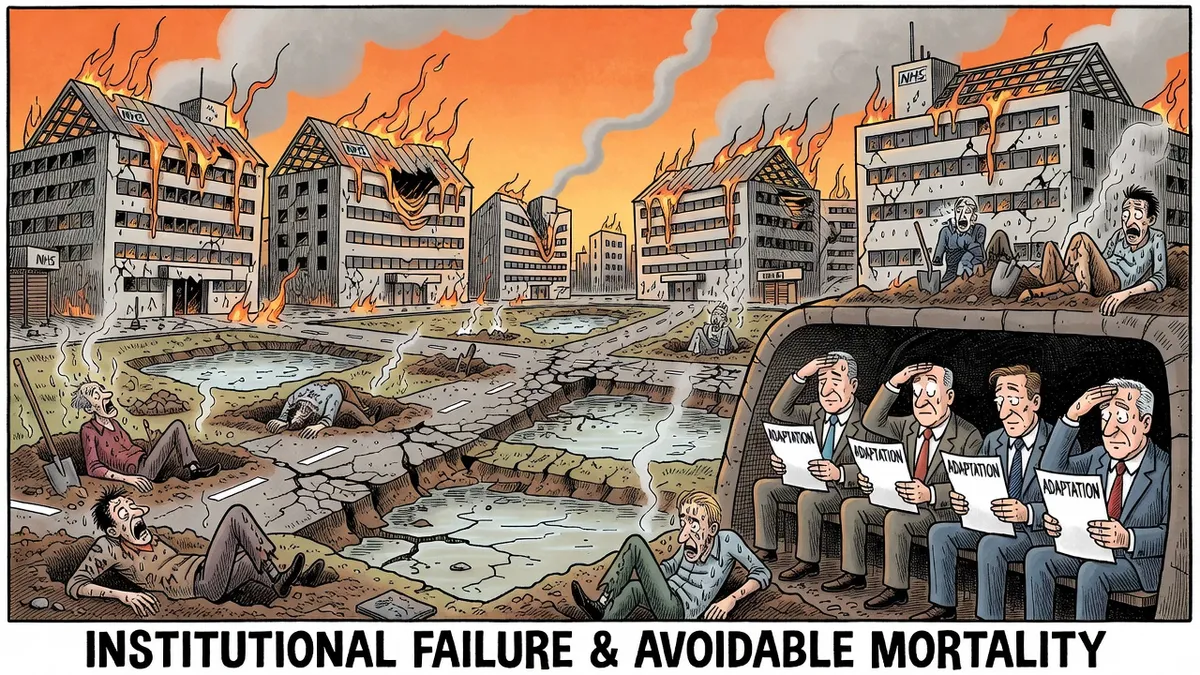
2,700 deaths and Kent water shortages during May and June expose long-term neglect
Britain’s water systems and housing stock failed to protect residents during the May and June heatwaves. More than 2,700 people died from heat-related causes in England and Wales, according to estimates from Imperial College London, the Met Office and the London School of Hygiene and Tropical Medicine. Bottled water stations had to be deployed in Kent after supply disruptions.
The June heatwave produced the highest recorded temperature of 37.7C at Lingwood, Norfolk. Researchers attribute roughly 2,200 of the deaths to that period alone. May added another 550 fatalities when temperatures reached 35.1C at Kew Gardens.
UK housing construction standards have not incorporated sustained heat resistance. Most homes lack adequate insulation, ventilation or shading to manage prolonged high temperatures and humid nights. These conditions increase cardiovascular strain and raise risks of heart attacks and strokes, particularly among older residents and those with existing conditions.
Ambulance services reported being overwhelmed during the June episode. One official described delays of several hours for emergency transport. Heat health alerts and NHS measures reduced some impact compared with prior forecasts, yet the death toll still reached these levels.
Infrastructure investment has prioritised other areas while basic resilience measures lagged. Water networks proved unable to maintain supply under peak demand. Hospitals and care systems operated without structural reserve capacity for concurrent weather and health pressures.
The same vulnerabilities appear across multiple services. Payroll contraction, branch closures and repeated contractor failures in major projects follow parallel patterns of deferred maintenance and capacity erosion. Heat-related mortality now occurs regularly rather than as isolated events.
These outcomes reflect institutional choices made over decades. Successive governments accepted rising exposure to extreme weather without matching upgrades to physical systems. The result is measurable loss of life and repeated emergency interventions when temperatures rise.
Commentary based on Thousands will have died in UK's unprecedented May and June heatwaves at BBC News.
← Back to commentary